








Review Article
Exploring Sociocultural Theory and SLA: A Tribute to James Lantolf


- Abstract
- Full text
- Metrics
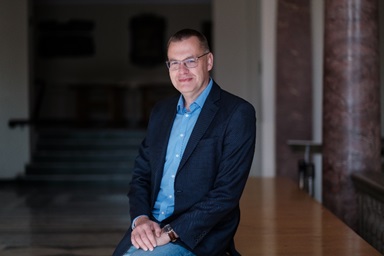
We are very pleased to publish this latest Special Issue in honor of Prof James P. Lantolf. Prof. Lantolf is the Greer Professor Emeritus in Language Acquisition and Applied Linguistics at The Pennsylvania State University. He also served as the Director of the Center for Language Acquisition and the U.S. Department of Education Title VI Center for Advanced Language Proficiency, Education, and Research. Prof. Lantolf is a distinguished scholar in applied linguistics, renowned for his pioneering work in sociocultural theory and second language acquisition (SLA). His five decades of groundbreaking research have significantly advanced our understanding of second language development through the lens of Vygotskian sociocultural psychology (Qin, 2021). Lantolf has authored and co-edited numerous influential books and articles in these areas. His contributions have earned him prestigious accolades, including serving as president of the American Association for Applied Linguistics (2005) and receiving its Distinguished Scholarship and Service Award (2016).

Page 1 of
Download Count : 261
Visit Count : 456
Keywords
Editorial; Special Issue; Sociocultural Theory; James Lantolf

Author(s) Information



Acknowledgments
Not applicable.
Funding
Not applicable.
Conflict of Interests
No, there are no conflicting interests.
Open Access
This article is licensed under a Creative Commons Attribution 4.0 International License, which permits use, sharing, adaptation, distribution and reproduction in any medium or format, as long as you give appropriate credit to the original author(s) and the source, provide a link to the Creative Commons license, and indicate if changes were made. You may view a copy of Creative Commons Attribution 4.0 International License here: http://creativecommons.org/licenses/by/4.0/