







Original Research
Welcome to Haraya! An English Game-Based Learning Environment for Primary Grade Students in the Philippines


- Abstract
- Full text
- Metrics
Blended learning in the Philippines has not fully addressed classroom challenges, such as inadequate student engagement attributed to outdated approaches. Welcome to Haraya! is an educational game that immerses students in an innovative and engaging Game-Based Learning Environment (GBLE) and integrates interactive learning of Bloom’s lower-order and higher-order competencies with game mechanics. The competencies are “to remember and apply arguments for a particular stance when they are identified in a scenario or situation” (LO) and “to organize arguments as ‘for’, ‘against’, or ‘irrelevant’ upon being given a specific scenario and situation” (HO). Framed by Communicative Language Teaching and Game-Based Learning Design, the research employed a mixed-methods approach, including a pretest and posttest quasi-experimental design and a survey involving 6th-grade public school and external play testers. Using the MEEGA+KIDS model, the game’s quality was evaluated. T-test and Wilcoxon test showed a significant difference in the performance between the two groups. While the public school students showed no significant improvement in their posttest scores, suggesting a lack of enhancement of their learning, the external play testers’ performance improved, as shown by their posttest scores. The latter’s baseline language proficiency and age may have led to learning. The findings recommend strengthening the teaching of prerequisite skills and improving the game’s iteration to enhance GBLE-enabled instruction.
Welcome to Haraya! An English Game-Based Learning Environment for Primary Grade Students in the Philippines
Alen Mateo S. Muñoz1,*, Ethan Jared Saquilayan2, Ryan Samuel Dimaunahan2, Kyla De la Cruz2, Lorane Bernadeth Fausto2
1Department of English and Applied Linguistics, De La Salle University Manila, Philippines
2College of Computer Studies, De La Salle University Manila, Philippines
Abstract
Blended learning in the Philippines has not fully addressed classroom challenges, such as inadequate student engagement attributed to outdated approaches. Welcome to Haraya! is an educational game that immerses students in an innovative and engaging Game-Based Learning Environment (GBLE) and integrates interactive learning of Bloom’s lower-order and higher-order competencies with game mechanics. The competencies are “to remember and apply arguments for a particular stance when they are identified in a scenario or situation” (LO) and “to organize arguments as ‘for’, ‘against’, or ‘irrelevant’ upon being given a specific scenario and situation” (HO). Framed by Communicative Language Teaching and Game-Based Learning Design, the research employed a mixed-methods approach, including a pretest and posttest quasi-experimental design and a survey involving 6th-grade public school and external play testers. Using the MEEGA+KIDS model, the game’s quality was evaluated. T-test and Wilcoxon test showed a significant difference in the performance between the two groups. While the public school students showed no significant improvement in their posttest scores, suggesting a lack of enhancement of their learning, the external play testers’ performance improved, as shown by their posttest scores. The latter’s baseline language proficiency and age may have led to learning. The findings recommend strengthening the teaching of prerequisite skills and improving the game’s iteration to enhance GBLE-enabled instruction.
Keywords: Serious Game, English Pedagogy, Learning Competencies, Game-Based Learning Environments (GBLE), English Language Teaching (ELT)
Introduction
Since the dawn of the Internet, video games have boomed in popularity, so much so that people of all ages have spent a significant amount of time or even most of their childhood playing them (Annetta, 2008; Federation of American Scientists, 2006; Plass et al., 2015; Winaldo & Oktaviani, 2022). This has led to research on leveraging video games as teaching tools in education, as there is evidence of their effects on the cognition and motivation of players (Granic et al., 2014; Green & Bavelier, 2012; Plass et al., 2015; Rajendran et al., 2024). Games come with mechanics that a player needs to learn and eventually master, typically through repetition, to improve at the game. In this way, game mechanics have parallels with learning and mastering new concepts. Research about games that have a focus on teaching students specific LOs has been conducted in various educational settings (Boctor, 2013; Gallacher et al., 2023; Li et al., 2021; Tsai & Lin, 2020), and frameworks and methodologies for designing these games have also been introduced (Plass et al., 2015).
Serious Games for Education
Serious games are designed solely for instruction or academic purposes, facilitating formal instruction in various disciplines rather than providing students with entertainment and enjoyment (Abt, 1970; Kalmpourtzis, 2018). According to Rooney and Namee (2013), serious games have huge potential for learning, as they employ constructivist pedagogical approaches that allow learners to engage with lessons while developing higher-order thinking skills. These games have been used for education, health, communication, politics, and defense (Hainey et al., 2016; Kalmpourtzis, 2018; Petri & Gresse von Wangenheim, 2016).
Development and Use of Serious Games to Improve Filipino Students’ Literacy
Philippine education is facing a learning gap caused by the COVID-19 pandemic, poorly built and resource-challenged schools, bloated basic education curricula, and obsolete teaching methods. Education experts and policymakers have deplored the declining literacy, numeracy, and creative thinking of Filipino elementary and high school students (PSA, 2025; Servallos, 2023). In general, English is taught as a second language in the Philippines as it is one of the two official languages of the country. Although the Philippines is a multilingual and linguistically diverse nation overall, English has become an integral part of Filipino culture and society (Espino et al., 2021). In recent years, there has been a growing interest in the development and use of serious games for ELT. The full potential of these strategies has not yet been fully realized, but current research indicates that participating students have improved their understanding and appreciation of teamwork skills and have developed more collaborative learning attitudes (Aguilar-Cruz & Guayara, 2021). Using mobile-assisted language learning (MALL), Lander et al. (2019) investigated the application of gamification in language instruction. Their study showed that MALL tools can improve oral communication skills, reading strategies, and writing abilities. Serious games can also be a powerful tool for long-term learners as a motivation strategy while for new learners, it can be a way to start getting interested in the language (Godwin-Jones, 2014). Educational games for language teaching and reading literacy may be able to help address the Philippine education crisis.
Research Objectives
The general objective of this study is to design mechanics for a game-based learning environment (GBLE), one for a lower-order learning outcome (LOLO) and one for a higher-order learning outcome (HOLO) (Anderson et al., 2001). Specifically, it aims to:
1. identify a higher order and a lower order English LO for 6th Grade level students
that the game’s mechanics will be built on.
2. formulate game mechanics based on pedagogical strategies and design considerations
that fit best the LOs.
3. design a GBLE that teaches both LOs, incorporating the game mechanics
Scope and Limitations of the Study
This research focuses on Grade 6 English, specifically the learning outcomes outlined in the Philippine Department of Education’s (DepEd) English Curriculum Guide’s most essential learning competencies (MELCs) (Department of Education, 2016). This study focuses on MELC number 9: Compose a persuasive essay on a self-selected topic (EN6WC-IVb-2.2.11). Under MELC number 9 are learning outcomes (LOs) that revolve around writing a persuasive essay. Haraya aims to help students recognize arguments that support and oppose the stance of a writer (Toulmin, 2003). This study’s scope covers only the following learning outcomes from Bloom’s revised taxonomy (Anderson et al., 2001):
1. LOLO: Remember and apply arguments for a particular stance when they are identified in a scenario or situation.
2. HOLO: Organize arguments as ‘for’, ‘against’, or ‘irrelevant’ upon being given a specific scenario and situation.
Research Gap and Significance of the Study
This study aims to contribute to the field of serious games research by providing evidence of the value and effectiveness of GBLEs in promoting student engagement and knowledge acquisition when teaching Filipino primary-grade students. Current educational serious games appear to focus on Science, Technology, Engineering, and Mathematics (STEM) and health-related subjects (Boyle et al., 2015; Hainey et al., 2016). We believe this study can make a significant contribution to the growing literature on GBLE in the the Philippine context.
Review of Related Literature
English Pedagogy
Several studies have been conducted to explore various English language teaching techniques that help raise levels of student engagement. Shotte (2013) reported on a campaign aimed at raising the content knowledge of all English and Mathematics teachers in the lower basic education sector in Gambia. This initiative led to the creation of 8 Guides that incorporated music and poetry into teaching concepts related to the “Parts of Speech”. The paper emphasized that all lesson plans derived from the Guides must adhere to a Presentation-Practice-Production (PPP) format from start to finish. It was stated that the PPP approach should put greater emphasis on “pupil participation” rather than on “teacher talk”. The teaching material’s theoretical foundations lie in constructivism. The findings of the study recognized the importance of fostering a stimulating learning atmosphere with making learning”fun”.
Koo (2008) reported an overview of the pedagogic practices employed in Philippine schools. Koo noted that using stories to teach English appears to be a practice emphasized in most schools. Based on a study by Ocampo (2002, as cited in Koo, 2008), phonological processing skills in both English and Filipino languages appear to be very important, as they serve as foundational skills for early spelling and reading development in Filipino children. Karami and Zamanian (2016), another study conducted in the Philippines, revealed that there are three dominant ELT frameworks in the Philippines. These are the English for Specific Purposes (ESP), the Task-Based Language Teaching approach (TBLT), and the Communicative Language Teaching (CLT) approach. Most ELT strategies in the Philippines follow the CLT approach, which is based on the concept of communicative competence, as defined by Hymes (1966). CLT focuses on teaching English as a means of communication rather than emphasizing grammar and structure. This contextualized, meaning-making approach distinguishes between accuracy and fluency in language use (Martin, 2014).
Our GBLE study also examined how teaching practices affect students’ thought processes involved in selecting a topic, brainstorming, formulating a thesis statement, and other pre-writing techniques. The following studies on models for persuasive essay writing offer useful insights to this study’s researchers. The design of this study’s educational game primarily focused on one of the ELT processes in the Philippines, CLT, given the study’s specific LOs and purposes, emphasizing meaning-making interaction and practical communication skills. Furthermore, the Toulmin Argument Model was employed in our Haraya to define arguments (Toulmin, 2003), utilizing the model’s three fundamental components: the claim, the ground, and the warrant. Abdul Aziz and Ahmad (2017) analyzed 79 essays from four different secondary education schools to compare their content and components with those identified by Toulmin’s Model. The paper explained that a number of different models have been historically created for use in persuasive writing. Of these models, they described three. Firstly, they discussed the five-paragraph essay model, which they believed is the most commonly used model in Malaysian schools (Smith, 2008, as cited in Abdul Aziz and Ahmad, 2017). This model breaks an essay down into five paragraphs: one for the introduction, three for the body, and one more for the conclusion. They also discussed the Flower and Hayes Model (Flower & Hayes, 1981). Through this model, Flower and Hayes (1981) theorized that writing is a “cognitive process” involving three phases: planning, translating, and reviewing. In this process, writers do not follow a linear order but rather shifts from one phase to another at any time repeatedly. However, Abdul Aziz and Ahmad (2017) thought that this model is too procedural even though it offers a good basis for organizing essays effectively. Finally, the authors discussed Toulmin’s Model (Toulmin, 2003), which served as the basis for their study’s methodology. Abdul Aziz and Ahmad (2017) employed discourse analysis to examine the essays of 79 students, aiming to determine the presence of the three elements and identify the persuasive components of their sentences, as outlined in Toulmin’s model. Every sentence was coded with the letters “C”, “G”, “W”, “Q”, “R”, and “B”, each corresponding to “claim”, “ground”, “warrant”, “qualifier”, “rebuttal”, and “backing” respectively. These aligned with Toulmin’s Model’s “claim”, “ground”, and “warrant”. Based on their analysis of the essays, Abdul Aziz and Ahmad (2017) concluded that most students demonstrated an understanding of the three primary elements (claim, ground, and warrant), but many students did not tend to use auxiliary elements (qualifier, rebuttal, and backing). If they were used, they were often not used efficiently but, in general, seemed quite rare.
Related Software Studies
This section contains a review of other GBLEs that have been made with English teaching goals. Recently, researchers have investigated the impact of video games on the language learning process. Tsai and Tsai (2018) demonstrated that video games and digital games can be effective tools for learning a second language, particularly when it comes to vocabulary acquisition. It has extended a study by Sudarmaji and Yusuf (2021), who studied how Minecraft, a sandbox video game, can help students learn English vocabulary more effectively than traditional methods and found that students who played the game had a more positive reaction to the learning process and found it to be easier, faster, and more exciting.
There are a variety of games available directly for ELT, covering a range of topics, including vocabulary, grammar, reading, writing, and speaking. Mulder et al. (2021) used Words & Birds to study the intervention effects of word- to-text intervention in ESL. Words & Birds is an online adaptive learning platform for English language learners (ELLs). It was developed by Oefenweb (2015), a Dutch company specializing in educational software, which covers a wide range of English language topics (e.g., vocabulary, grammar) and is designed for students aged 8 to 14. It utilizes a range of engaging and interactive activities, including games, puzzles, and exercises, to help students learn English. Another software developed by Andreani and Ying (2019) to teach ESL to elementary ELLs in Indonesia is called PowPow, a mobile game designed to help students learn English vocabulary through activities such as matching games, quizzes, and fill-in-the-blank exercises. It is based on Indonesian culture, featuring characters and settings familiar to Indonesian children, making it more relatable and engaging for its learners. Their game demonstrated effectiveness in attracting learners' interest in learning English, motivating them to learn and improving their English vocabulary skills. It is considered to be a valuable resource for ELLs of all ages and skill levels. Although Pradhan (2020) pointed out that improvement needs to be considered in increasing the practice time, it shows that there is a need to continue designing the app to meet the needs of its users. In 2020, the National Ministry of Education (MEN, 2020) in Colombia made Bethe1Challenge. It is a mobile application that is designed for students in grades 6 to 11 which covers English vocabulary, grammar, reading, and writing. Aguilar-Cruz and Guayara (2021) made a study on the application. Results showed that it was well-received by both students and teachers in Colombia.
Through regular use in language classrooms, these games have been found to be helpful and effective in teaching students. The gamification elements helped make learning fun and engaging, increasing interactivity and motivating users. They were easy-to-use and straightforward. Most of these games included cultural aspects that added depth and made them informative (Aguilar-Cruz & Guayara, 2021).
Theoretical Framework of the GBLE’s Mechanics
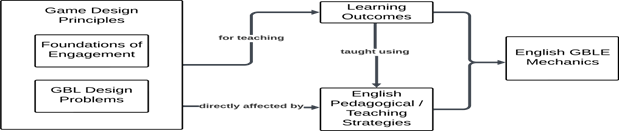
Figure 1 shows the theoretical framework of this study. The framework also presents the game design principles. Plass et al. (2015) introduced four foundations of GBL that facilitate engagement, namely cognition, motivation, effect, and sociocultural. They present these foundations as a balancing act; for example, the goal of a cognitive perspective is to reduce non-cognitive or unnecessary game elements, while a motivational perspective utilizes components from an affective or sociocultural perspective to evoke extrinsic or intrinsic motivations, which may not necessarily be essential information that a player needs. Since the goal, however, will be to learn the LOs through well-encouraged cognitive processes, the game mechanics must not only be good at engaging the student cognitively but also utilize motivational, affective, and socio-cultural game design elements to supplement or inspire greater engagement. Michael and Chen (2005) highlighted some design differences between GBLEs and usual entertainment games. As their purposes for being designed differ, there are other factors that must be considered when designing a GBLE, and their outline of these design issues is useful for this purpose. They highlight that GBLE designers should bring the importance of simulations within a game to the forefront, as teaching within the game is embedded in the presented simulation. Additionally, they emphasize that game processes should be simple and designed to minimize player frustration, thereby avoiding distractions from valuable cognitive processing. Regarding pedagogical strategies, as mentioned earlier, Karami and Zamanian (2016) described the three most common ELT approaches in the Philippines: CLT, ESP, and TBLT. In light of this study’s LOs, one or more of these strategies could have been applied in the design of the game mechanics for each GBLE. However, after conferring with this study’s domain expert, it was agreed that focusing on CLT would be the best course of action given the prolific nature of ELT teaching practices in the Philippines.
Theoretical Framework
Method
Research Design and Data Analysis Methods
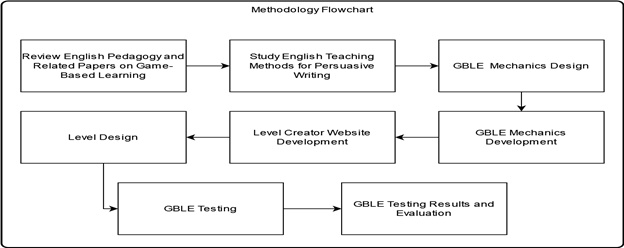
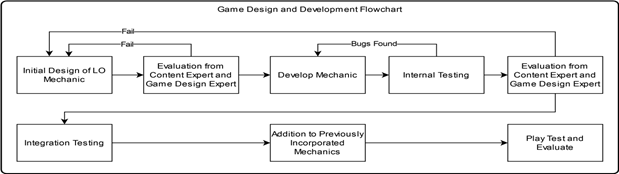
Employing a pre-test and a posttest, a survey, and interviews with student participants, this mixed-methods quasi-experimental study aims to provide Filipino primary-grade students an innovative and engaging way of learning English through the development of a Game-Based Learning Environment (GBLE). The pre-test and posttest scores were analyzed to see the student’s performance before and after playing the educational game. Two methods were used to analyze the quantitative data: a two-tailed t-test and a Wilcoxon signed-rank test. Qualitative data from the survey and interviews were analyzed thematically. Figure 2 illustrates the overall process of design, development, and testing for the GBLE, which was performed separately for the Lower Order Learning Mechanic (LOLM) and Higher Order Learning Mechanic (HOLM). The process began with a survey of the existing literature on language teaching and game-based learning, followed by a review of studies on teaching methods for persuasive writing. Regarding the mechanic's design, a Visual Novel (VN) was chosen because it is the most contextualized learning environment for teaching the chosen learning objectives (LOs), as reading and attention will be required to understand specific scenarios and situations. A visual novel is a narrative-focused piece of interactive fiction that originates from Japan (Camingue et al., 2021; MasterClass, 2021). Unlike traditional video game experiences, visual novels tend to prioritize story rather than gameplay mechanics (Parker, 2024). They tell these stories through a text-based format that often includes static to semi-static character models and backgrounds (MasterClass, 2021; Parker, 2024). As such, they often share a close resemblance to written work (Stegner, 2021), serving as a way for players to experience the enjoyment of reading a novel in a more visual format (Camingue et al., 2021). The visual novel genre shares several common characteristics among its diverse list of games. Some of these include advancement, complexity, interactivity, storyline, and text (MasterClass, 2021).
Methodology Flowchart
The LO mechanics (Sison et al., 2018) were built on top of the VN base, which was designed to work with the LO mechanic as a narrative storytelling tool. The core LO mechanics surrounding the base VN were designed to be supplemental to already learned topics related to the LOs. These mechanics were designed with the guidance and insights of the team’s English domain expert and game design expert and iterated through multiple internal tests. The development of the GBLE strictly followed the framework (see Figure 3) proposed by Sison et al. (2018). Upon completing the design of our LO mechanics, a back-and-forth process between internal testing, evaluation, and consulting with experts occurred to ensure LO centrality within the mechanics.
Outcomes-Based Methodology for Game-Based Learning Environment Development
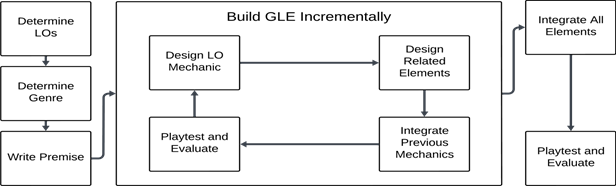
Sison et al. (2018) provided a methodology for the creation of GBLEs which we followed in creating Haraya. This methodology focuses on the integration between the LO mechanics and all the game elements, making the execution of these parts of the GBLE determine overall user engagement from the developed game. The initial steps primarily involve setting up the LOs, namely defining what the player will learn while playing the developed game. The other initial steps prepare the environment in which the player will learn, including how they will learn through the defined environment. The center of the figure illustrates the steps involved in the development of the GBLE itself, which involves a simple loop of creating mechanics, integrating them, and testing and evaluating these mechanics. These steps will continue until the game is considered complete, at which point all elements will be brought together, and the game will be tested once more. The evaluation of player engagement was done through the MEEGA+KIDS (Gresse von Wangenheim et al., 2020) survey questionnaire. This survey was modified to suit the study’s sample, with a version in the Filipino language and multiplayer-dependent questions removed, as the planned game was a single-player experience.
Level Creator Website Development
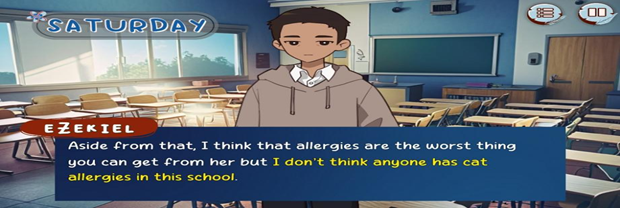
Focusing on the development of GBLEs for primary education, this research aims to address both lower- and higher-order learning competencies in English. Guided by the OB-GaMe framework, the development of the game aimed to cultivate dynamic and adaptable learning ecosystems that cater to the wide-ranging needs and abilities of students. Another critical element of this initiative is the development of a Level Creator Website—a specialized tool designed to empower educators and students to customize game levels and add custom levels, thereby tailoring their educational experiences to their unique learning paths. This Level Creator Website serves as a critical component in achieving the goal of enabling students to attain educational outcomes through interactive and personalized learning environments. By leveraging the OB-GaMe framework, the learning objectives remain at the center of the game mechanics, fostering meaningful engagement and facilitating effective learning. Figure 4 shows highlights in a text that are included, along with a sound effect that plays as it appears on a player’s gadget’s screen.
Text Highlights
Level Design
As shown in Figure 5, given that the game primarily makes use of the VN format, story and writing decisions heavily affected both the flow of the game and the way the levels were created. Notably, topic choice, phrasing, level length, choice of argument model, and the lessons learned from level testing were key determinants of the form and final outcome of each level. Prototyping of the different HO levels and having them play-tested helped in improving the game to a great extent.
Game Design and Development Flowchart
Sample and Data Collection Procedure
The participants in this study were primary-grade incoming Grade 6 students from Inchican Elementary School, a typical resource-challenged Philippine public elementary school. Also part of the sample were a group of external playtesters, aged 16 to 23, who attended high school and college and had relatively good English proficiency, although they used English infrequently in their daily household interactions.
GBLE Evaluation Process Flowchart
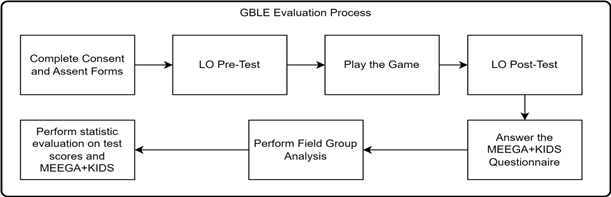
Figure 6 displays the process of data collection. Since there were two types of LOs in this study, the data collection was split over two days, one for the LOLM and another for the HOLM. Ethics clearance was obtained from De La Salle University’s Research Ethics Office prior to data collection. The evaluation for the GBLE involved administering a pretest, a posttest, and a survey using the MEEGA+KIDS questionnaire. The survey was immediately conducted after the participants took the posttest. Each student was given 15 minutes to answer each test, 1 hour to playtest the game, and 5 minutes to answer the MEEGA+KIDS questionnaire. On the third day, a continuation of the data collection occurred, which included a field group analysis (FGA) of the survey data and field notes observational data. The field notes and observations from the pretest, playtest, and posttest were also recorded in writing during the first two days. The participants’ scores were analyzed using a Two-Tail Paired T-Test, and a Two-Tail Wilcoxon Signed Rank Test while the interviews and survey data from the MEEGA+KIDS questionnaire, which used an R script provided by its authors for the player engagement and perceived learning evaluation, were analyzed thematically. After this, the external playtesters took the pretest before the play testing and then the posttest afterward. The purpose of this test was to determine if different results could be obtained from a broader, more general sample set.
Findings and Discussion
Inchican Primary Grade Playtesters
This group of play testers consisted of incoming Grade 6 students, 11 to 13 years old, from Inchican Elementary School in Cavite, Philippines. They completed their 5th-grade curriculum and were preparing to enter 6th grade. The group represented a typical demographic of young learners in a public elementary school setting, with varying levels of proficiency in the English language. Table 1 and Table 2 presents the mean, median, and mode of their pretest and posttest scores for both the LOLO and HOLO.
LOLO Scores of Inchican Elementary Students
|
Lower Order Learning Outcome |
|||
|
|
Pre-test |
Posttest |
Max |
|
Mean |
6.18 |
6.12 |
15 |
|
Median |
6 |
6 |
15 |
|
Mode |
8 |
4 |
15 |
HOLO Scores of Inchican Elementary Students
|
Higher Order Learning Outcome |
|||
|
|
Pre-test |
Posttest |
Max |
|
Mean |
4.12 |
5.40 |
20 |
|
Median |
4 |
4.5 |
20 |
|
Mode |
4 |
4 |
20 |
MEEGA + KIDS Survey Results
The MEEGA + KIDS questionnaire was used to evaluate player engagement with Haraya. This test was only administered to the Inchican players to statistically assess various aspects of user interaction and experience. As shown in Table 3, the results indicate that the LOLM registered scores of 51.19 and 54.80 for the HOLM. The scores on the GBLE learning mechanics, above 42.5 and below 65, indicated that the GBLE has a “good quality” (Gresse von Wangenheim et al., 2020).
MEEGA+KIDS Survey Scores
|
Survey Results |
||
|
|
LOLM |
HOLM |
|
Score |
51.19 |
54.80 |
|
Meaning |
Good Quality |
Good Quality |
Two-Tailed T-Test
Two-tailed t-tests were conducted at a confidence level of 95% and a significance level of .05 to compare the pretest and posttest scores for both LOs. This was used to compare the means of the two groups and to determine if the average scores before and after playing Haraya are significantly greater or less than the pretest scores. Based on the data in Tables 4 and 5, the two-tailed paired T-test yielded a p-value of .87 for the LOLO and .18 for the HOLO. These p-values indicate that there is no significant difference in the results between the pretest and the posttest for both LOs at 95% confidence level.
Inchican Students’ Results of the LOLO’s Two-tailed Paired T-test
|
Lower Order Learning Outcome |
||||
|
SD |
SE |
t |
p |
Result |
|
1.56 |
.39 |
.15 |
.87 |
Fail to Reject H0 |
Inchican Students’ Results of the HOLO’s Two-tailed Paired T-test
|
Higher Order Learning Outcome |
||||
|
SD |
SE |
t |
p |
Result |
|
3.69 |
.92 |
1.38 |
.18 |
Fail to Reject H0 |
Wilcoxon Test
Wilcoxon signed-rank tests were conducted on the pretest and posttest scores at a 95% confidence level and a significance level of .05. This test is a non-parametric alternative that assesses significant differences in median scores before and after playing our GBLE by ranking the differences between the scores.
At a confidence level of 95% and a significance level of .05, the critical value of the Wilcoxon test for the LOLO is 10 with 11 degrees of freedom, and for the HOLO, it is 29 with 16 degrees of freedom (See Table 6 and 7). Since the test statistics are greater than the respective critical values, this indicates that there is no significant difference in the pretest and posttest scores for both the LOLO and HOLO at a 95% confidence level and a .05 significance level.
Inchican Students’ Results of the LOLO Wilcoxon Signed-Rank test
|
Lower Order Learning Outcome |
|||||
|
df |
W+ |
W |
t |
Critical Value |
Result |
|
11 |
35 |
-31 |
31 |
10 |
Fail to Reject H0 |
Inchican Students’ Results of the HOLO Wilcoxon Signed-Rank Test
|
Higher Order Learning Outcome |
|||||
|
df |
W+ |
W |
t |
Critical Value |
Result |
|
16 |
32 |
-104 |
32 |
29 |
Fail to Reject H0 |
Thematic Analysis of Qualitative Data
The field observational notes, MEEGA+KIDS essay responses, and field group analysis were thematically analyzed. Table 8 presents the various thematic patterns identified in the datasets.
Thematic Patterns
|
Themes |
|
Engaged with the game |
|
Enjoyed the game |
|
Had a hard time with the game |
|
Uninterested |
|
Competitive amongst peers |
|
Unfamiliarity with English |
|
Lack of reading comprehension |
External Play Testers
The external play testers were aged 16 to 23, all of whom were either in high school or pursuing higher education. Tables 9 and 10 present the mean, median, and mode of their pretest and posttest scores for both the LOLO and HOLO.
External Play testers’ LOLO Scores
|
Lower Order Learning Outcome |
|||
|
|
Pre-test |
Posttest |
Max |
|
Mean |
14.90 |
16.14 |
15 |
|
Median |
13.5 |
14 |
15 |
|
Mode |
14 |
14 |
15 |
External Play testers’ HOLO Scores
|
Higher Order Learning Outcome |
|||
|
|
Pre-test |
Posttest |
Max |
|
Mean |
12.57 |
13.57 |
20 |
|
Median |
15 |
16 |
20 |
|
Mode |
14.5 |
18 |
20 |
Test Score Statistical Analysis
Two-tailed t-test and Wilcoxon signed rank test was also run on the external play testers’ LOLO and HOLO scores.
Two-Tailed T-Test
Two-tailed t-tests were first used to examine the pretest and posttest scores on both LOs, to find out if average scores were significantly greater or lower before and after playing our GBLE. With a confidence level of 95%, both of the p-values are less than the significance level of .05, leading us to reject the null hypothesis (See Tables 11 and 12). This indicates that there is a significant difference in the results of the pretest and posttest scores for both learning outcomes at the 95% confidence level.
External Play Testers’ Results of the LOLO Two-tailed Paired T-test
|
Lower Order Learning Outcome |
||||
|
SD |
SE |
t |
p |
Result |
|
2.34 |
.44 |
2.26 |
.03 |
Reject H0 |
External Play Testers’ Results of the HOLO Two-tailed T-test
|
Higher Order Learning Outcome |
||||
|
SD |
SE |
t |
p |
Result |
|
2.48 |
.47 |
2.59 |
.01 |
Reject H0 |
Wilcoxon Test
Wilcoxon signed-rank tests were also applied on the pretest and post test scores at a confidence level of 95% and a significance level of .05. As presented in Tables 13 and 14, at a confidence level of 95% and a significance level of .05, the critical value of the Wilcoxon test for the LOLO is 34 with 17 degrees of freedom, and for the HOLO, it is 81 with 24 degrees of freedom. Since the test statistics for LOLO and HOLO are 32.5 and 75, respectively, both of which are less than their respective critical values, we reject the null hypothesis. This indicates that there is a significant difference in the pretest and posttest scores for both the LOLO and HOLO at a 95% confidence level.
External Play testers’ Results of the Wilcoxon Signed-Rank Test for the LOLO
|
Lower Order Learning Outcome |
|||||
|
df |
W+ |
W |
t |
Critical Value |
Result |
|
17 |
32.5 |
-120.5 |
32.5 |
34 |
Reject H0 |
External Play testers’ Results of the Wilcoxon Signed-Rank Test for the HOLO
|
Higher Order Learning Outcome |
|||||
|
df |
W+ |
W |
t |
Critical Value |
Result |
|
24 |
75 |
-22 |
75 |
81 |
Reject H0 |
Mann - Whitney U Test
The Mann-Whitney U test was used to compare the pretest scores of the two groups on the LOLO and HOLO. This is a non-parametric test used to determine whether there is a significant difference between the distributions of two independent groups. This comparison was made to evaluate if there were any initial differences in the baseline performance of the two groups. The null hypothesis (H0) and alternative hypothesis (H1) for both the LOLO and the HOLO are as follows: (H0): There is no significant difference between the two scores; (H1): There is a significant difference between the two scores.
Using a confidence level of 95% and a significance level of .05 on a left-tailed test, the p-value for both the LOLO and HOLO is less than the significance level. As a result, we rejected the null hypothesis for both the LOs. As shown in Tables 15 and 16, the results indicate that the mean values for the HOLO test results are greater than those for the LOLO test results. The external play testers’ scores are significantly greater than the Inchican students’ scores.
Mann-Whitney U Test Results for the LOLO
|
Lower Order Learning Outcome |
||
|
M |
t |
p |
|
6.19 |
-5.03 |
2.37 |
Mann-Whitney U Test Results for the HOLO
|
Higher Order Learning Outcome |
||
|
M |
t |
p |
|
12.57 |
-5.37 |
3.84 |
Implications
The results revealed that there were no significant changes in the test scores for the Inchican student play testers. Our GBLE was developed to supplement grade 6 learning; however, the available sample of students had just graduated from the 5th grade. According to the Department of Education curriculum guide (Department of Education, 2016), the first-time persuasive writing is encountered in grade 6, meaning that there is no foundational teaching for persuasive writing in grade 5. This lack of prior exposure to essay writing could explain the students’ unfamiliarity with the tasks. Other possible reasons for the lack of significant improvement in test scores include low reading comprehension in English, as evident in the essay responses and thematic analysis. This finding aligns with the findings of studies by Adora et al. (2024), Paz (2018), and Caraig et al. (2022), which reported low reading comprehension among Filipino students.
In contrast, the external play testers demonstrated significant improvements in their posttest scores compared to their pretest scores, suggesting that the GBLE effectively enhanced their understanding of the material. The Mann-Whitney U test was used to compare their pretest scores with the scores of the Inchican Elementary Student play testers. The results revealed significant differences between the external play testers, starting with a higher baseline understanding. These results highlighted the varying baseline competencies of the two groups and suggested that while the GBLE was effective for a group with higher initial English proficiency, it may require further adaptation to better meet the educational needs of younger students who also have lower comprehension skills.
The disparity in performance between the two groups of participants can be attributed to several factors. A significant factor is the level of reading comprehension and proficiency in the English language. The Inchican students, being younger and still in the developmental stage of their education, exhibited lower reading comprehension levels as indicated by the quality of their written responses in both the LOLO and HOLO MEEGA assessments. This is not uncommon, as various studies have highlighted challenges in English literacy among young Filipino students, which impact their ability to fully engage with and benefit from educational content designed in English (Chi, 2023). In contrast, the external play testers had a higher baseline proficiency in English, as evidenced by their self-rated fluency and their private school education background, which likely provided them with more rigorous and consistent exposure to English language skills, including persuasive writing. This higher proficiency would have enabled them to more effectively engage with and benefit from the GBLE, resulting in measurable improvements in their posttest scores. Moreover, the Inchican students’ written responses reflected difficulties in both English and Filipino, suggesting a broader issue with language proficiency that extends beyond just one language. These challenges in understanding and articulating complex ideas in written form are likely contributed to their relatively lower performance compared to the external participants, who generally have more developed language skills and greater educational experience.
Notable strengths of Haraya include its ability to engage students with its story and characters. The results of the thematic analysis revealed strong themes of enjoyment and engagement among Inchican elementary students, who were eager to read the story and remember key topics and ideas presented. This engagement is crucial for learning, as it encourages students to willingly interact with educational content. The positive impact of Haraya as an educational tool on the motivation and classroom engagement of diverse students confirms the findings of previous studies on GBLE in diverse settings (Ansar & George, 2023; Dai et al., 2025). Additionally, the game’s level creation feature allows educators to tailor content to different reading comprehension levels, potentially increasing its effectiveness.
Conclusion
This study aimed to integrate specific English LOs with game mechanics for 6th- grade students, targeting both lower and higher-order skills. We designed our GBLE, Welcome to Haraya!, using a VN framework, incorporating CLT as a primary pedagogical approach, aligning with Karami and Zamanian (2016) due to its effectiveness in enhancing language learning through interactive activities. For the LOLM, students identified stances and main ideas, along with supporting details, within the VN. For the HOLM, students sorted arguments and paired ground and warrant phrases to specific claims. Statistical analysis was performed to compare the pretest and posttest scores for both LOs. For the Inchican Elementary Student play testers, the two-tailed t-tests and Wilcoxon signed-rank tests revealed no significant difference in pretest and posttest scores, indicating that their performance did not improve significantly after engaging with the GBLE. In contrast, the external play testers demonstrated significant improvements in their test scores, suggesting that the GBLE effectively enhanced their understanding. Furthermore, the results of the Mann-Whitney U test, comparing pretest scores between the Inchican Elementary Student play testers and the external play testers, revealed significant differences, indicating that the initial understanding levels between the two groups were significantly different.
Despite the lack of significant improvements in test scores for the Inchican students, our GBLE demonstrated strengths in student engagement. Thematic analysis revealed high levels of enjoyment and engagement, as students eagerly interacted with the story and characters, which encouraged them to read willingly and retain key ideas. The ability for educators to create custom levels also allows for tailored experiences to accommodate varying reading comprehension levels.
Overall, this study’s GBLE could effectively target both lower and higher-order learning outcomes through a design based on a Visual Novel framework and incorporating CLT as a key pedagogical theory and methodology. While the external play testers showed significant improvements in their comprehension skills, the Inchican Elementary Student play testers did not exhibit the same level of progress, highlighting variability in effectiveness based on initial proficiency levels. Nevertheless, the game demonstrated a strong capacity to engage students with high levels of enjoyment and interaction, as observed among all participants. These results underscored the potential of GBLEs to enhance language learning while providing an engaging and interactive educational experience (Waluyo & Kusuma, 2025).
References
Abdul Aziz, F. I., & Ahmad, U. K. (2017). Persuasive writing: How students argue. Sains Humanika, 9 (4–2). https://doi.org/10.11113/sh.v9n4-2.1356
Abt, C. C. (1970). Serious games. The Viking Press.
Adora, R., Aguilar, J., Arsua, E., Asis, M. A., Pereja, M. I., Reyes, J.M., & Tolentino, J. C. (2024). Reading comprehension and students’ academic performance in English. International Journal of Science and Research Archive, 11 (2), 1240–1247. https://doi.org/10.30574/ijsra.2024.11.2.0523
Aguilar-Cruz, P. J., & Guayara, H. A. (2021, December). A serious game to learn english: The case of bethe1challenge. International Journal of Serious
Games, 8 (4), 65–80. https://doi.org/10.17083/ijsg.v8i4.448
Anderson, L. W., Krathwohl, D. R., Airasian, P. W., Wittrock, M. C., Raths, J., Pintrich, P. R., . . . Cruikshank, K. A. (2001). A taxonomy for learning, teaching, and assessing: A revision of bloom’s taxonomy of educational objectives. Longman.
Andreani, W., & Ying, Y. (2019). “Powpow” interactive game in supporting English vocabulary learning for elementary students. Procedia Computer Science, 157 , 473–478. https://doi.org/10.1016/j.procs.2019.09.005
Annetta, L. A. (2008). Video games in education: Wmarthy they should be used and how they are being used. Theory Into Practice, 47 (3), 229–239. https://doi.org/10.1080/00405840802153940
Ansar, M., & George, G. (2023). Gamification in Education and its Impact on Student Motivation - A Critical Review. In M. A. Chaurasia & C. F. Juang (Eds.), Emerging IT/ICT and AI technologies affecting society. Lecture notes in networks and systems Vol. 478. Springer, Singapore. https://doi.org/10.1007/978-981-19-2940-3_11
Boctor, L. (2013). Active-learning strategies: The use of a game to reinforce learning in nursing education. a case study. Nurse Education in Practice, 13 (2), 96–100. https://doi.org/10.1016/j.nepr.2012.07.010
Boyle, E. A., Hainey, T., Connolly, T. M., Gray, G., Earp, J., Ott, M., . . . Pereira, J. (2015, November). An update to the systematic literature review of empirical evidence of the impacts and outcomes of computer games and serious games. Computers & Education, 94, 178–192. https://doi.org/10.1016/j.compedu.2015.11.003
Camingue, J., Carstensdottir, E., & Melcer, E. (2021, 10). What is a visual novel? Proceedings of the ACM on Human-Computer Interaction, 5, 1–18. https://doi.org/10.1145/3474712
Caraig, R., Quimbo, M., & Quimbo, T. (2022, 09). Assessing reading comprehension difficulties in core science subjects of senior high school students in a private school in Calamba city, Philippines. International Journal of Curriculum and Instruction, 14 (3), 1983–2010. http://ijci.wcci-international.org
Chi, C. (2023, December). Philippines still lags behind world in math, reading and science - PISA 2022. https://www.philstar.com
Dai, WA., Xu, W., & Xing, Q. W. (2025). Gamified Learning Impact: A meta-analysis of game element combinations on students’ learning outcomes. Education Tech Research Dev. https://doi.org/10.1007/s11423-025-10493-y
Department of Education. (2016). Retrieved from https://www.deped.gov.ph/ wp-content/uploads/2019/01/English-CG.pdf
Espino, J., Gonzales, D. H., & Martin, I. P. (2021). Multilingual english language teaching in the Philippines. International Journal of TESOL Studies, 3 (3).
Federation of American Scientists. (2006, October). Summit on educational games: Harnessing the power of video games for learning.Washington, DC.
Flower, L., & Hayes, J. R. (1981). A cognitive process theory of writing. College Composition and Communication, 32 (4), 365. https://doi.org/10.2307/356600 fofr.cog-style-transfer. https://github.com/fofr/cog-style - transfer. GitHub.
Gallacher, A., Case, S., & Palarino, J. (2023, September). Teaching GBL principles to Japanese students of education in an EFL setting. European Conference on Games Based Learning, 17 (1), 190–198. https://doi.org/10.34190/ecgbl.17.1.1894
Godwin-Jones, R. (2014, June). Games in language learning: Opportunities and challenges. In Language learning technology (2nd ed., Vol. 18, p. 9–19). https://scholarspace.manoa.hawaii.edu/items/c19af992-067b-472c-a2ef-d3bbbd85e2e7
Granic, I., Lobel, A., & Engels, R. C. M. E. (2014, January). The benefits of play- ing video games. American Psychologist , 69 (1), 66–78. https://doi.org/10.1037/a0034857
Green, C., & Bavelier, D. (2012). Learning, attentional control, and action video games. Current Biology , 22 (6). https://doi.org/10.1016/j.cub.2012.02.012
Gresse von Wangenheim, C., Petri, G., & Ferreti Borgatto, A. (2020). Meega+kids: A model for the evaluation of games for computing education in secondary school. RENOTE , 18 (1). https://doi.org/10.22456/1679-1916.105938
Hainey, T., Connolly, T. M., Boyle, E. A., Wilson, A., & Razak, A. (2016). A systematic literature review of games-based learning empirical evidence in primary education. Computers & Education, 102, 202–223. https://doi.org/10.1016/j.compedu.2016.09.001
Hymes, D. (1966 February). On Anthropological Linguistics and Congeners. https://doi.org/10.1525/aa.1966.68.1.02a00160
Kalmpourtzis, G. (2018). Educational game design fundamentals. CRC Press.
Karami, S., & Zamanian, M. (2016). A review of english teaching practices in the Philippines. Journal of Language Sciences Linguistics, 4 , 23–29.
Koo, G. S. (2008). English language in Philippine education: Themes and variations in policy, practice, pedagogy and research. Asia-Pacific Journal of Research in Early Childhood Education, 2 , 19–33. https://api.semanticscholar.org/CorpusID:155329335
Lander, B., Morgana, V., Selwood, J., Knight, T., Gettings, R., Yamauchi, M.,& Delforge, C. (2019, December). Mall tools tried and tested. In Call and complexity – short papers from eurocall 2019 (p. 252–256). https://doi.org/10.14705/rpnet.2019.38.1018
Li, M., Zhang, Q., & Yu, Z. (2021, December). Integrating Educational Games into College English Learning. Education Research International , 2021 , 1–9. https://doi.org/10.1155/2021/6403034
Martin, I. P. (2014). English language teaching in the philippines. World Englishes, 33(4), 472–485. https://doi.org/10.1111/weng.12108
MasterClass. (2021, 7 20). Visual novels: 5 characteristics of visual novel video games. https://www.masterclass.com/articles/visual-novels-explained-plus-notable-visual-novel-video-games
Michael, D., & Chen, S. (2005). Serious games: Games that educate, train, and inform. Thomson Course Technology.
Mulder, E., Van De Ven, M., Segers, E., Krepel, A., De Bree, E., Van Der Maas, H., &Verhoeven, L. (2021, April). Serious game-based word-to-text integration intervention effects in english as a second language. Contemporary Educational Psychology , 65 . https://doi.org/10.1016/j.cedpsych.2021.101972
National Ministry of Education [MEN]. (2020). Be (the) 1 challenge. Retrieved 2023-11-1, from https://eco.colombiaaprende.edu.co/betheone/
Oefenweb. (2015). Wordsbirds. Retrieved 2023-11-1, from https://www.wordsandbirds.nl/OMOCAT. (2020). Omori. Retrieved from https://www.omori-game.com (Video game)
Parker, D. (2024, June). Visual novels vs. video games: Key differences and accessibility. https://www.linkedin.com/pulse/visual-novels-vs-video-games-key-differences-dom-parker-dkbtc/
Paz, P. A. (2018). Reading comprehension levels in english among grade 7 students in Caraga state university, philippines. Education, 8 (1), 5–8. http://www.sapub.org/global/showpaperpdf.aspx?doi=10.5923/.edu.20180801.02
Petri, G., & Gresse von Wangenheim, C. (2016, 07). How to evaluate educational games: a systematic literature review. Journal of Universal Computer Science, 22, 992.
Philippine Statistics Authority (PSA) (2025, April). For every 10 Filipinos, 9 have Basic Literacy, while 7 have Functional Literacy. https://psa.gov.ph
Plass, J. L., Homer, B. D., & Kinzer, C. K. (2015, October). Foundations of game- based learning. Educational Psychologist, 50(4), 258–283. https://doi.org/10.1080/00461520.2015.1122533
Pradhan, B. (2020). Interactive game “pow-pow” to promote english vocabulary learning for elementary learners. PalArch’s Journal of Archaeology of Egypt/Egyptology , 17(6), 5257–5265.
Rajendran, M., Ray, M., Ilangovan, A., Chokkalingam, V. K., & Singh, A. B. (2024). Commercial games for developing English language skills: A systematic literature review. Language Teaching Research Quarterly, 45, 57–85. https://doi.org/10.32038/ltrq.2024.45.04
Rooney, P., & Namee, B. M. (2013). Serious games for learning – a review of the literature. https://api.semanticscholar.org/CorpusID: 73700702
Servallos, N. J. (2023, December). PISA: Philippines 5 to 6 years behind. https://www.philstar.com
Shotte, G. (2013). Rethinking Pedagogy: English Language Teaching Approaches (Tech. Rep.). Bulgarian Comparative Education Society. https://eric.ed.gov/?id=ED567155 (Publication Title: Bul- garian Comparative Education Society ERIC Number: ED567155)
Sison, R. C., Espulgar, C. J., Madrigal, L., Obedoza, J. B., & Romblon, N. (2018). Toward an outcome-based methodology for developing game-based learning environments. https://api.semanticscholar.org/ CorpusID:208278513
Stegner, B. (2021, August). What is a visual novel video game? https://www.makeuseof.com/what-is-visual-novel-video-game/
Sudarmaji, I., & Yusuf, D. (2021, September). The effect of minecraft video game on students’ english vocabulary mastery. Journal of English Teaching and Applied Linguistics (JETAL), 3 (1), 30–38. https://doi.org/10.36655/jetal.v3i1.600
Toulmin, S. (2003). The uses of argument. Cambridge University Press.
Tsai, Y., & Liu, C. (2020). The effect of pedagogical GAME model on students' PISA scientific competencies. Journal of Computer Assisted Learning, 36(3), 359–369. https://doi.org/10.1111/jcal.12406
Tsai, Y.-L., & Tsai, C.C. (2018, October). Digital game-based second-language vocabulary learning and conditions of research designs: A meta-analysis study. Computers Education, 125 , 345–357. https://doi.org/10.1016/j.compedu.2018.06.020
Waluyo, B., & Kusuma, I. P. I. (2025). Impact of gamified learning on first - time learners in Thai higher education: A mixed-methods study. English Teaching and Learning. https://doi.org/10.007/s42321-025-00200-8
Winaldo, M. D., & Oktaviani, L. (2022, December). Influence of video games on the acquisition of the English language. Journal of English Language Teaching and Learning, 3(2), 21–26. https://jim.teknokrat.ac.id/index.php/English-language-teaching/article/view/1953

Page 1 of
Download Count : 54
Visit Count : 408
Keywords
English Language Teaching (ELT); Game-Based Learning Environments (GBLE); Learning Competencies; English Pedagogy; Serious Game

Author(s) Information






How to cite this article
Muñoz, A. M. S., Saquilayan, E. J., Dimaunahan, R. S., Cruz, K. D. L., & Fausto, L. B. (2025). Welcome to Haraya! An English game-based learning environment for primary grade students in the Philippines. Studies in Educational Management, 17, 81-100. https://doi.org/10.32038/sem.2025.17.05
Acknowledgments
Not applicable.
Funding
Not applicable.
Conflict of Interests
No, there are no conflicting interests.
Open Access
This article is licensed under a Creative Commons Attribution 4.0 International License, which permits use, sharing, adaptation, distribution and reproduction in any medium or format, as long as you give appropriate credit to the original author(s) and the source, provide a link to the Creative Commons license, and indicate if changes were made. You may view a copy of Creative Commons Attribution 4.0 International License here: http://creativecommons.org/licenses/by/4.0/