





Original Research
Audiovisual Tools in Teaching/Learning French Language Lexicon in Primary Education Albanian: A Case Study


- Abstract
- Full text
- Metrics
In the current digital era, foreign language teachers in Albanian primary schools, particularly those teaching French, face significant methodological challenges. These challenges primarily concern the effective integration of technological and audiovisual tools into the teaching and learning processes. Key issues include educators' proficiency with modern technological and audiovisual resources and their understanding of the impact these tools have on the acquisition and application of French by primary school students. This study aims to elucidate the role and significance of audiovisual tools in teaching French vocabulary to 9-10-year-olds, as well as in enhancing their linguistic and pragmatic competencies in the language. The research employs both quantitative and qualitative methodologies. Quantitative methods assess children's vocabulary acquisition before and after the implementation of audiovisual tools, comparing it with traditional teaching methods to evaluate vocabulary enrichment. Qualitative methods focus on lexical and semantic development and the practical application of words and expressions in various discursive contexts. The study seeks to address these challenges and contribute to the improvement of French language instruction in Albanian primary schools, ensuring that students develop the skills necessary to thrive in a multilingual and multicultural environment.
Audiovisual Tools in Teaching/Learning French Language Lexicon in Primary Education Albanian: A Case Study
University of Elbasan “Aleksandër Xhuvani”, Albania
Abstract:
In the current digital era, foreign language teachers in Albanian primary schools, particularly those teaching French, face significant methodological challenges. These challenges primarily concern the effective integration of technological and audiovisual tools into the teaching and learning processes. Key issues include educators' proficiency with modern technological and audiovisual resources and their understanding of the impact these tools have on the acquisition and application of French by primary school students. This study aims to elucidate the role and significance of audiovisual tools in teaching French vocabulary to 9-10-year-olds, as well as in enhancing their linguistic and pragmatic competencies in the language. The research employs both quantitative and qualitative methodologies. Quantitative methods assess children's vocabulary acquisition before and after the implementation of audiovisual tools, comparing it with traditional teaching methods to evaluate vocabulary enrichment. Qualitative methods focus on lexical and semantic development and the practical application of words and expressions in various discursive contexts. The study seeks to address these challenges and contribute to the improvement of French language instruction in Albanian primary schools, ensuring that students develop the skills necessary to thrive in a multilingual and multicultural environment.
Keywords: Audiovisual Tools, Albanian Primary Education, Teaching/Learning, French Language Vocabulary, Linguistic and Pragmatic Competencies
The acquisition of foreign languages in today's global, multicultural, and multi-ethnic context has become an essential and urgent necessity, driven by the evolving demands of contemporary society (Uvsløkk & Brevik, 2024). Language serves as a pivotal tool for adapting to these new realities, facilitating integration into broader socio-linguistic and ethno-cultural communities. In the digital age, foreign language learning has become significantly more accessible as technological advancements have transformed various aspects of human activity, including education (Winstead, 2016).
Modern foreign language education extends beyond traditional printed or digital textbooks to encompass interactive online platforms and programs. Learners engage with these digital tools, interacting with both native and non-native speakers globally and participating in virtual conversations (Han et al., 2024). These interactions transcend traditional constraints of time and space, immersing learners in the expansive realm of global and digital communication. Such technological advancements equip children with the skills necessary to navigate the contemporary educational environment, foreign language lessons, and school textbooks with increased efficacy and confidence.
According to the Subject Curricular Guide for Foreign Language: A Support Material for Foreign Language Teachers in Lower Secondary Education” (2018, pp. 7-8) and Curriculum Based on Competencies (2016, p. 2), the scope of the subject “Foreign Language” is defined as follows: The subject “Foreign Language” is integrated into the core curriculum as a key component of student development starting from primary education. It includes both the first foreign language and the second foreign language. The first foreign language begins in the second scale/level (Grade III) and is taught through the sixth scale/level (Grade XII). The second foreign language starts in the third scale/level (Grade VI) and continues until the sixth scale/level (Grade XII). The second foreign language options include French, Italian, German, and English language. Competencies are defined as the knowledge, skills, values, and attitudes that students are expected to acquire throughout the educational process. Students can choose from foreign languages such as French, Italian, and German as their second foreign language.
Foreign language instruction is delivered through a structured approach designed to develop key competencies, including linguistic, sociolinguistic, and pragmatic skills. This instructional framework is informed by an updated methodological approach, which is reflected in the curriculum content. Furthermore, the teaching methods, strategies, and tools are continuously updated to incorporate technological innovations, ensuring that foreign language education remains effective and relevant in the contemporary educational landscape.
Significance of the Study
This study aims to address the need for a structured and effective approach to using audiovisual tools for teaching French vocabulary to children aged 9-10. The research highlights the advantages of these tools in simplifying complex concepts, enhancing long-term memory, and creating a more engaging and interactive learning environment. It also identifies challenges such as the lack of technical knowledge and resources among teachers.
The results are intended to contribute to the improvement of learners' academic performance and the development of their linguistic and pragmatic skills by providing guidelines for teachers and curriculum developers. This study adds to the academic discourse on the role of technology in primary education, offering both a theoretical and practical foundation for enhancing teaching methods in a multilingual and interconnected context.
Research Aim
In the contemporary technological world, audiovisual materials are a crucial resource for learning at all stages of education. McNaught (2007) considers technological tools essential for enhancing the effectiveness of the teaching process by making it engaging and interesting, thereby contributing to a deeper understanding of the language (words, expressions, and messages). As Johnson et al. (2016) assert, these tools are designed to support and fulfill the learning and teaching goals in schools, ensuring the effectiveness of this bidirectional process.
Additionally, according to Pasquier (2000), this technology has facilitated the teacher's work in teaching a foreign language, enabling children to retain knowledge better through visualization of what they see, perceive, and imagine. The elements of sound and image, characteristic of these audiovisual materials that function as teaching tools, ensure attention, long-term memory, understanding, and correct and accurate use by children in both spoken and written language.
According to Vishnupriya and Bharathi (2022), images and videos can serve as a bridging tool between the native language and English, eliminating the need for direct translations. They can also facilitate the comprehension and memorization of abstract concepts by providing corresponding figurative images, acoustic representations, and the relevant discourse context. In this context, audiovisual technological tools and their role in the teaching and learning of French vocabulary in Albanian primary education form the focus of this study.
Research Questions
1. How do audiovisual tools enhance engagement and inclusivity in the foreign language learning process, thereby improving children's learning outcomes?
2. In what ways do audiovisual tools support the development of linguistic competence by facilitating the acquisition of new French vocabulary through the integration of images, concepts, and sounds?
3. How do technological and audiovisual tools foster pragmatic competence by contextualizing words and expressions in real-life situations, thereby enriching learners' vocabulary and improving their ability to use the French language accurately?
Literature Review
Effectiveness of Audiovisual Tools in Foreign Language Teaching/Learning
Kwegyiriba et al. (2022) define audiovisual materials as aids that use both sight and sound, which may take the form of models or videos. Thierry (2004) takes another perspective, considering audiovisual materials as instructional aids such as maps, charts, models, projectors, and televisions, used in classrooms to assist learning and make it easier and more interesting for children to understand (Bisson et al., 2014). These devices support teachers in facilitating instruction and accelerating the learning process in general. Indeed, audiovisual aids are among several factors that have played a pivotal role in making the teaching process successful and productive (Vanderplank, 2019).
Audiovisual tools enhance learners' comprehension abilities and assist in the learning process. According to Pasquier (2000) and Vanderplank (2019), "this medium enables the deciphering of misunderstood messages, difficult words, and complex situations because images function as a teaching tool." Audiovisual materials also develop oral expression skills: "Video documentaries in language classes serve as training for oral expression." Additionally, audiovisual media is highly beneficial for pronunciation: "Listening to native speakers allows children to acquire model pronunciation" (Pawlak, 2021; Puimège & Peters, 2019).
In conclusion, the use of audiovisual tools in foreign language teaching significantly enhances the learning process by making it more engaging, concrete, and effective. These tools, ranging from projectors to interactive media, aid comprehension, facilitate pronunciation practice, and help decode complex linguistic and cultural concepts. Scholars agree that integrating audiovisual aids into classrooms not only supports teachers but also accelerates children's language acquisition and oral expression skills, thereby fostering a more dynamic and productive learning environment.
Benefits and Challenges of Audiovisual Tools
“Audiovisual” refers to a combination of two elements: “audio”, relating to what we hear, and “visual”, referring to what we see. This framework confines our use of the term to a speaker and their audience, even if they are not necessarily physically present with each other, as in the case of a film or TV presentation (Vanderplank, 2019; Tsai, 2019).
In the technological world, audiovisual materials constitute a crucial aspect of teaching and learning at all educational levels. They are essential tools for enhancing teaching effectiveness, engaging lessons, and contributing to deeper learning (Mcnaught, 2007). Technological advancements have enabled teachers to impart knowledge in ways that help children retain information better through visualization of concepts (Pasquier, 2000; Thierry, 2004). Therefore, audiovisual materials serve as instructional aids that utilize both sight and sound to capture children's attention. They support educational objectives in schools, thereby enhancing the effectiveness of teaching and learning (Johnson et al., 2016).
In conclusion, audiovisual tools are essential in modern education, enhancing teaching by engaging children visually and audibly. Despite their benefits, challenges such as varying access to technology and the need for teacher training highlight the ongoing need for support and integration to maximize their educational advantages (Olagbaju & Popoola, 2020). As technology advances, leveraging audiovisual materials remains pivotal for creating effective learning environments and achieving educational goals across diverse settings.
The Role of Technology in French Language Teaching/Learning
Interactive learning environments for French have fundamentally transformed language education by utilizing multimedia content such as videos, audio clips, and quizzes, making the learning process more engaging and effective for children (Alhazmi, 2024). Studies conducted by Alonso-Pérez and Sánchez-Requena (2018), as well as Avello and Fernández- Costales (2020), have demonstrated these platforms offer a wide range of courses and community interaction features that stimulate children's engagement and facilitate easier acquisition of the French language.
Advancements in phonetic technologies and pronunciation aids have facilitated mastery of accurate French pronunciation. Ghia (2012) emphasize the importance of speech recognition software and pronunciation guides that provide immediate feedback to users for improving intonation and accent. Modern phonetic technologies, as studied by Fernández-Costales (2021), Lertola (2019), and McNaught (2007) in applications like “Améliorez Votre Français”, personalize pronunciation training to match individual user abilities and address specific pronunciation challenges.
Interactive exercises such as quizzes and simulations play a crucial role in French language learning by offering a dynamic experience for practicing and improving language skills. These exercises, highlighted by Fernández-Costales (2021) and Sánchez-Requena (2017) for their effectiveness, maintain a balance between appropriately challenging learners and aligning with their skill levels, providing immediate error correction and thereby enhancing children's confidence in using the French language.
This synthesis of research highlights the pivotal role of technology in shaping contemporary language education practices and underscores its potential to continue driving innovation in the field.
Method
The chosen methodology aims to provide a detailed and robust framework for analyzing the impact of audiovisual technological tools on linguistic and pragmatic skills. By integrating both quantitative and qualitative methods, this study offers a comprehensive perspective on how audiovisual tools enhance vocabulary acquisition and contextual use in young children. This holistic approach enables the identification of specific advantages and potential limitations associated with the use of technology in language education.
The quantitative method measures children's initial vocabulary knowledge before and after the use of audiovisual tools, comparing these results with traditional methods such as reading and translation. This approach evaluates the effectiveness of audiovisual tools in expanding children's vocabulary and enhancing their overall linguistic competence.
The qualitative method focuses on contextual analysis, examining how children use words and expressions in various contexts. The goal is to assess the appropriateness and contextual accuracy of vocabulary use following exposure to audiovisual tools. This analysis provides insights into the depth of vocabulary acquisition and the pragmatic use of language by the children.
The study sample consists of 20 children 9-10 years old from the third grade at the "Naim Frashëri" school in Elbasan, Albania. Sampling techniques include tests, interviews, observations, test analysis, focus groups, and statistical analysis.
Tests and Interview
a) The Peabody Picture Vocabulary Test (PPVT), a visual tool for measuring the range and accuracy of children's receptive vocabulary, serves as a benchmark for word comprehension.
b) The Expressive Vocabulary Test (TVE) is an evaluative tool for assessing children's ability to express and use new vocabulary, focusing on their articulation and application of new words and phrases in novel spoken contexts.
c) Semi-structured interviews, which include standardized questions in the French language on specific topics such as body parts and weather, aligned with the curriculum for this discipline in the third grade. The semi-structured format allows for a deeper exploration of children's use of vocabulary in conversational situations, providing qualitative data on their lexical development.
The textbook used by the students of this school is “Super Max 1” for French Language III (source: https://sidieducation.com/gjuha-frenge-iii-super-max-1-2). The tests and the semi-structured interview were designed and developed based on the material from this textbook.
The study spans three months, from January to March 2024. This timeframe was chosen to observe progress in French vocabulary acquisition over a significant period, allowing for a thorough assessment of the instructional interventions. According to the curriculum plan for French language in the third and fourth grades (Curriculum Based on Competencies, 2016), three hours of instruction are scheduled per week, totaling 36 hours over three months. During this period, three tests and interviews will be conducted at the end of each month to evaluate the level of vocabulary acquisition, covering topics such as body parts, weather terms, and natural phenomena.
Educational Tools and Instruments Utilized in Observing the Teaching Process
The didactic tools and instruments employed during these three months consisted of both traditional and modern resources. Traditional tools and materials included the reading and translation of texts and illustrative fragments from French to Albanian language and vice versa, recorded in each student’s workbook and class notes. Conversely, contemporary tools incorporated audiovisual materials that brought French words and expressions to life through the use of images and pre-recorded or filmed videos.
Below are the specific technological and audiovisual tools utilized by the teacher during the teaching sessions for the selected topics. These tools were observed and tested in the classroom, where direct feedback was gathered to assess learners’ interest, engagement, and motivation, as well as their completion of linguistic and pragmatic tasks over three months (two to three times per week).
The following examples illustrate the use of each audiovisual tool, with their effectiveness measured based on data collected from questionnaires and interviews conducted with the learners on these topics:
Video projector: Videos and animations illustrating vocabulary topics, such as parts of the body and natural phenomena, were shown to enhance children’s acquisition of new words and expressions by visualizing concepts.
Tablets and computers: Learners used interactive applications to practice new expressions and vocabulary. These devices facilitated a more dynamic and personalized approach to learning.
Video recordings with dialogues: These were employed to expose learners to various dialogues and expressions in French, helping them improve their listening skills and comprehension.
Multimedia materials: These included photos, graphics, and diagrams that accompanied new lessons. Multimedia materials aided in concretizing and contextualizing new vocabulary.
Videos and Animations
The acquisition of foreign languages in today's global, multicultural, and multi-ethnic context has become an essential and urgent necessity, driven by the evolving demands of contemporary society (Uvsløkk & Brevik, 2024). Language serves as a pivotal tool for adapting to these new realities, facilitating integration into broader socio-linguistic and ethno-cultural communities. In the digital age, foreign language learning has become significantly more accessible as technological advancements have transformed various aspects of human activity, including education (Winstead, 2016).
Modern foreign language education extends beyond traditional printed or digital textbooks to encompass interactive online platforms and programs. Learners engage with these digital tools, interacting with both native and non-native speakers globally and participating in virtual conversations (Han et al., 2024). These interactions transcend traditional constraints of time and space, immersing learners in the expansive realm of global and digital communication. Such technological advancements equip children with the skills necessary to navigate the contemporary educational environment, foreign language lessons, and school textbooks with increased efficacy and confidence.
According to the Subject Curricular Guide for Foreign Language: A Support Material for Foreign Language Teachers in Lower Secondary Education” (2018, pp. 7-8) and Curriculum Based on Competencies (2016, p. 2), the scope of the subject “Foreign Language” is defined as follows: The subject “Foreign Language” is integrated into the core curriculum as a key component of student development starting from primary education. It includes both the first foreign language and the second foreign language. The first foreign language begins in the second scale/level (Grade III) and is taught through the sixth scale/level (Grade XII). The second foreign language starts in the third scale/level (Grade VI) and continues until the sixth scale/level (Grade XII). The second foreign language options include French, Italian, German, and English language. Competencies are defined as the knowledge, skills, values, and attitudes that students are expected to acquire throughout the educational process. Students can choose from foreign languages such as French, Italian, and German as their second foreign language.
Foreign language instruction is delivered through a structured approach designed to develop key competencies, including linguistic, sociolinguistic, and pragmatic skills. This instructional framework is informed by an updated methodological approach, which is reflected in the curriculum content. Furthermore, the teaching methods, strategies, and tools are continuously updated to incorporate technological innovations, ensuring that foreign language education remains effective and relevant in the contemporary educational landscape.
Significance of the Study
This study aims to address the need for a structured and effective approach to using audiovisual tools for teaching French vocabulary to children aged 9-10. The research highlights the advantages of these tools in simplifying complex concepts, enhancing long-term memory, and creating a more engaging and interactive learning environment. It also identifies challenges such as the lack of technical knowledge and resources among teachers.
The results are intended to contribute to the improvement of learners' academic performance and the development of their linguistic and pragmatic skills by providing guidelines for teachers and curriculum developers. This study adds to the academic discourse on the role of technology in primary education, offering both a theoretical and practical foundation for enhancing teaching methods in a multilingual and interconnected context.
Research Aim
In the contemporary technological world, audiovisual materials are a crucial resource for learning at all stages of education. McNaught (2007) considers technological tools essential for enhancing the effectiveness of the teaching process by making it engaging and interesting, thereby contributing to a deeper understanding of the language (words, expressions, and messages). As Johnson et al. (2016) assert, these tools are designed to support and fulfill the learning and teaching goals in schools, ensuring the effectiveness of this bidirectional process.
Additionally, according to Pasquier (2000), this technology has facilitated the teacher's work in teaching a foreign language, enabling children to retain knowledge better through visualization of what they see, perceive, and imagine. The elements of sound and image, characteristic of these audiovisual materials that function as teaching tools, ensure attention, long-term memory, understanding, and correct and accurate use by children in both spoken and written language.
According to Vishnupriya and Bharathi (2022), images and videos can serve as a bridging tool between the native language and English, eliminating the need for direct translations. They can also facilitate the comprehension and memorization of abstract concepts by providing corresponding figurative images, acoustic representations, and the relevant discourse context. In this context, audiovisual technological tools and their role in the teaching and learning of French vocabulary in Albanian primary education form the focus of this study.
Research Questions
1. How do audiovisual tools enhance engagement and inclusivity in the foreign language learning process, thereby improving children's learning outcomes?
2. In what ways do audiovisual tools support the development of linguistic competence by facilitating the acquisition of new French vocabulary through the integration of images, concepts, and sounds?
3. How do technological and audiovisual tools foster pragmatic competence by contextualizing words and expressions in real-life situations, thereby enriching learners' vocabulary and improving their ability to use the French language accurately?
Literature Review
Effectiveness of Audiovisual Tools in Foreign Language Teaching/Learning
Kwegyiriba et al. (2022) define audiovisual materials as aids that use both sight and sound, which may take the form of models or videos. Thierry (2004) takes another perspective, considering audiovisual materials as instructional aids such as maps, charts, models, projectors, and televisions, used in classrooms to assist learning and make it easier and more interesting for children to understand (Bisson et al., 2014). These devices support teachers in facilitating instruction and accelerating the learning process in general. Indeed, audiovisual aids are among several factors that have played a pivotal role in making the teaching process successful and productive (Vanderplank, 2019).
Audiovisual tools enhance learners' comprehension abilities and assist in the learning process. According to Pasquier (2000) and Vanderplank (2019), "this medium enables the deciphering of misunderstood messages, difficult words, and complex situations because images function as a teaching tool." Audiovisual materials also develop oral expression skills: "Video documentaries in language classes serve as training for oral expression." Additionally, audiovisual media is highly beneficial for pronunciation: "Listening to native speakers allows children to acquire model pronunciation" (Pawlak, 2021; Puimège & Peters, 2019).
In conclusion, the use of audiovisual tools in foreign language teaching significantly enhances the learning process by making it more engaging, concrete, and effective. These tools, ranging from projectors to interactive media, aid comprehension, facilitate pronunciation practice, and help decode complex linguistic and cultural concepts. Scholars agree that integrating audiovisual aids into classrooms not only supports teachers but also accelerates children's language acquisition and oral expression skills, thereby fostering a more dynamic and productive learning environment.
Benefits and Challenges of Audiovisual Tools
“Audiovisual” refers to a combination of two elements: “audio”, relating to what we hear, and “visual”, referring to what we see. This framework confines our use of the term to a speaker and their audience, even if they are not necessarily physically present with each other, as in the case of a film or TV presentation (Vanderplank, 2019; Tsai, 2019).
In the technological world, audiovisual materials constitute a crucial aspect of teaching and learning at all educational levels. They are essential tools for enhancing teaching effectiveness, engaging lessons, and contributing to deeper learning (Mcnaught, 2007). Technological advancements have enabled teachers to impart knowledge in ways that help children retain information better through visualization of concepts (Pasquier, 2000; Thierry, 2004). Therefore, audiovisual materials serve as instructional aids that utilize both sight and sound to capture children's attention. They support educational objectives in schools, thereby enhancing the effectiveness of teaching and learning (Johnson et al., 2016).
In conclusion, audiovisual tools are essential in modern education, enhancing teaching by engaging children visually and audibly. Despite their benefits, challenges such as varying access to technology and the need for teacher training highlight the ongoing need for support and integration to maximize their educational advantages (Olagbaju & Popoola, 2020). As technology advances, leveraging audiovisual materials remains pivotal for creating effective learning environments and achieving educational goals across diverse settings.
The Role of Technology in French Language Teaching/Learning
Interactive learning environments for French have fundamentally transformed language education by utilizing multimedia content such as videos, audio clips, and quizzes, making the learning process more engaging and effective for children (Alhazmi, 2024). Studies conducted by Alonso-Pérez and Sánchez-Requena (2018), as well as Avello and Fernández- Costales (2020), have demonstrated these platforms offer a wide range of courses and community interaction features that stimulate children's engagement and facilitate easier acquisition of the French language.
Advancements in phonetic technologies and pronunciation aids have facilitated mastery of accurate French pronunciation. Ghia (2012) emphasize the importance of speech recognition software and pronunciation guides that provide immediate feedback to users for improving intonation and accent. Modern phonetic technologies, as studied by Fernández-Costales (2021), Lertola (2019), and McNaught (2007) in applications like “Améliorez Votre Français”, personalize pronunciation training to match individual user abilities and address specific pronunciation challenges.
Interactive exercises such as quizzes and simulations play a crucial role in French language learning by offering a dynamic experience for practicing and improving language skills. These exercises, highlighted by Fernández-Costales (2021) and Sánchez-Requena (2017) for their effectiveness, maintain a balance between appropriately challenging learners and aligning with their skill levels, providing immediate error correction and thereby enhancing children's confidence in using the French language.
This synthesis of research highlights the pivotal role of technology in shaping contemporary language education practices and underscores its potential to continue driving innovation in the field.
Method
The chosen methodology aims to provide a detailed and robust framework for analyzing the impact of audiovisual technological tools on linguistic and pragmatic skills. By integrating both quantitative and qualitative methods, this study offers a comprehensive perspective on how audiovisual tools enhance vocabulary acquisition and contextual use in young children. This holistic approach enables the identification of specific advantages and potential limitations associated with the use of technology in language education.
The quantitative method measures children's initial vocabulary knowledge before and after the use of audiovisual tools, comparing these results with traditional methods such as reading and translation. This approach evaluates the effectiveness of audiovisual tools in expanding children's vocabulary and enhancing their overall linguistic competence.
The qualitative method focuses on contextual analysis, examining how children use words and expressions in various contexts. The goal is to assess the appropriateness and contextual accuracy of vocabulary use following exposure to audiovisual tools. This analysis provides insights into the depth of vocabulary acquisition and the pragmatic use of language by the children.
The study sample consists of 20 children 9-10 years old from the third grade at the "Naim Frashëri" school in Elbasan, Albania. Sampling techniques include tests, interviews, observations, test analysis, focus groups, and statistical analysis.
Tests and Interview
a) The Peabody Picture Vocabulary Test (PPVT), a visual tool for measuring the range and accuracy of children's receptive vocabulary, serves as a benchmark for word comprehension.
b) The Expressive Vocabulary Test (TVE) is an evaluative tool for assessing children's ability to express and use new vocabulary, focusing on their articulation and application of new words and phrases in novel spoken contexts.
c) Semi-structured interviews, which include standardized questions in the French language on specific topics such as body parts and weather, aligned with the curriculum for this discipline in the third grade. The semi-structured format allows for a deeper exploration of children's use of vocabulary in conversational situations, providing qualitative data on their lexical development.
The textbook used by the students of this school is “Super Max 1” for French Language III (source: https://sidieducation.com/gjuha-frenge-iii-super-max-1-2). The tests and the semi-structured interview were designed and developed based on the material from this textbook.
The study spans three months, from January to March 2024. This timeframe was chosen to observe progress in French vocabulary acquisition over a significant period, allowing for a thorough assessment of the instructional interventions. According to the curriculum plan for French language in the third and fourth grades (Curriculum Based on Competencies, 2016), three hours of instruction are scheduled per week, totaling 36 hours over three months. During this period, three tests and interviews will be conducted at the end of each month to evaluate the level of vocabulary acquisition, covering topics such as body parts, weather terms, and natural phenomena.
Educational Tools and Instruments Utilized in Observing the Teaching Process
The didactic tools and instruments employed during these three months consisted of both traditional and modern resources. Traditional tools and materials included the reading and translation of texts and illustrative fragments from French to Albanian language and vice versa, recorded in each student’s workbook and class notes. Conversely, contemporary tools incorporated audiovisual materials that brought French words and expressions to life through the use of images and pre-recorded or filmed videos.
Below are the specific technological and audiovisual tools utilized by the teacher during the teaching sessions for the selected topics. These tools were observed and tested in the classroom, where direct feedback was gathered to assess learners’ interest, engagement, and motivation, as well as their completion of linguistic and pragmatic tasks over three months (two to three times per week).
The following examples illustrate the use of each audiovisual tool, with their effectiveness measured based on data collected from questionnaires and interviews conducted with the learners on these topics:
Video projector: Videos and animations illustrating vocabulary topics, such as parts of the body and natural phenomena, were shown to enhance children’s acquisition of new words and expressions by visualizing concepts.
Tablets and computers: Learners used interactive applications to practice new expressions and vocabulary. These devices facilitated a more dynamic and personalized approach to learning.
Video recordings with dialogues: These were employed to expose learners to various dialogues and expressions in French, helping them improve their listening skills and comprehension.
Multimedia materials: These included photos, graphics, and diagrams that accompanied new lessons. Multimedia materials aided in concretizing and contextualizing new vocabulary.
Videos and Animations
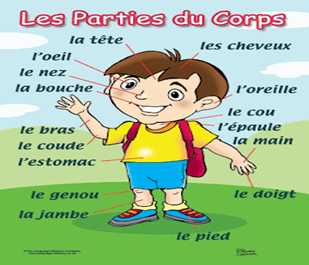
Note. Source: https://frances-silvia.blogspot.com/2011/03/les-parties-du-corps.html
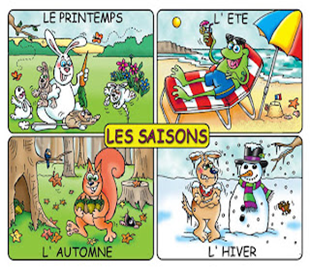
Source: https://frances-silvia.blogspot.com/2010/10/les-quatre-saisons.html
All these tools were utilized to enhance learners' engagement and motivation, creating a rich learning environment that favored the acquisition of the French language, as illustrated in Figure 1 and Figure 2. The effectiveness of these tools was evaluated through the analysis of data collected from children's questionnaires and interviews, providing a solid foundation for assessing the methods used. For instance, some animated videos displayed various images of body parts and weather conditions, such as “le bras” (arm), “les jambs” (legs), “le soleil” (sun), and “la pluie” (rain) etc. In these videos, each word was presented with a corresponding animation to help children associate the words with their respective concepts. For example, the word “le bras" (arm) was illustrated with an animation of a moving arm, while “le soleil” (sun) appeared with an animation of a shining sun.
In certain videos, body parts and weather-related words were accompanied by music and songs. For instance, one video featured a simple song about the weather, mentioning the words “le soleil” (sun) and “la pluie” (rain) while showing the respective images, making learning more engaging and memorable for the children.
Data collected from classroom observations led to several conclusions regarding the use of videos and animations in teaching. These tools offer several significant advantages:
- Animations help children form strong visual connections between words and concepts. For instance, when children see an animation of a moving arm while hearing the word “le bras” (arm), they are more likely to retain this association. This is because animations create a multisensory experience, linking visual and auditory stimuli in a cohesive manner that facilitates understanding and retention (Lampai & Sukying, 2023).
- Accompanying music and songs make learning more enjoyable and engaging (Toleuzhan, 2022). Music can create a positive and motivating atmosphere that encourages children to be more involved and interested in learning. For example, a song featuring new words can help children learn those words more easily and in a more enjoyable manner.
- While some children learn better through visual and auditory means, the use of videos and animations addresses these diverse learning styles effectively (Mo et al., 2022). This approach provides a comprehensive and varied learning experience, increasing the likelihood of effective knowledge acquisition. Additionally, this teaching method helps maintain children's focus and motivates them to actively participate in learning.
Interactive Applications
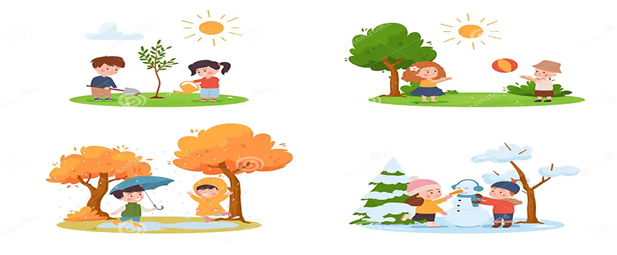
Utilizing photos and images in PowerPoint presentations in Figure 2 via a projector is an effective pedagogical strategy for enhancing learner engagement and improving the overall learning experience. The use of visual aids not only reinforces new concepts and vocabulary but also makes them more tangible and easier to comprehend and retain.
For example, a curated gallery of images can depict various body parts and activities in different weather conditions to strengthen children's understanding of relevant vocabulary:
- A photo of a child playing at the seaside and building a sandcastle can be used to introduce terms related to “la mer” (sea), “le sable” (sand), and “les activités d'été” (summer activities).
- A family skiing in the snow provides a visual aid for learning vocabulary associated with “l’hiver” (winter), “la neige” (snow), and “les sports d'hiver” (winter sports).
Incorporating such images into a PowerPoint presentation enables teachers to create a more dynamic and immersive learning environment. Visual stimuli facilitate the association between words and their real-world contexts, thereby enhancing both comprehension and long-term retention of new vocabulary (Thi Kim Chung, 2023). Furthermore, this approach encourages richer classroom discussions and interactions, making learning more engaging and inclusive. By visually anchoring abstract concepts, educators can cater to various learning styles and ensure a deeper, more effective acquisition of knowledge (Vishnupriya & Bharathi, 2022).
Interactive applications
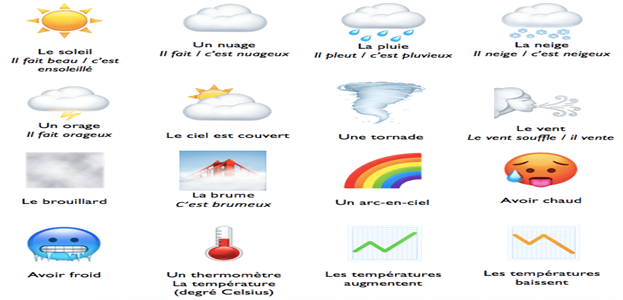
Note. Source: https://www.francepodcasts.com/2020/03/27/lameteo/#La_meteo_quel_temps_fait-il
Interactive applications, as we can see in Figure 3, offer a dynamic approach to education by enabling children to engage actively in the learning process. These tools leverage technology to provide interactive and immersive educational experiences.
For example, an interactive application might allow children to choose from a range of options to match images with corresponding words related to body parts and weather conditions. In one such activity, children may be tasked with placing an image of the sun in the correct location on a segmented map representing various weather scenarios.
Applications such as Duolingo, Clips, Scratch, Conjugo, and Quizizz serve as excellent platforms for these kinds of activities. They are designed to make learning both enjoyable and interactive, thereby enhancing children’s retention of information and their ability to apply knowledge in practical contexts.
By incorporating these interactive tools, as shown in Figures 4 and 5, teachers can address diverse learning styles and offer a more tailored educational experience (Adeshina, 2024). Additionally, these applications provide immediate feedback, which is essential for reinforcing correct responses and addressing errors in real-time. This method not only supports vocabulary acquisition but also fosters critical thinking and problem-solving skills in an engaging and stimulating manner (Moustaghfir & Hind Brigui, 2024).
Videos from Various Websites on Google about Facial Features
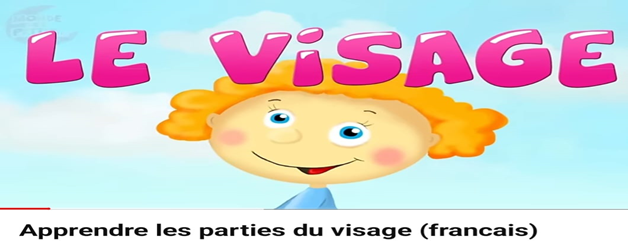
Note. Source: https://youtu.be/uVP5hqPHMNE?feature=shared
Figure 5
Videos on Body Parts from Various Websites on Google
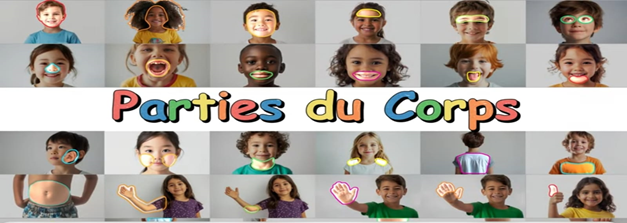
Note. Source: https://youtu.be/-UQAVzKrw7w?feature=shared
Downloaded videos from various platforms on Google can serve as valuable educational resources to engage children and enhance their comprehension of diverse concepts.
Example (1)
1. Video teaching body parts:
Title: “Apprendre les parties du visage (francais)”, “Apprendre les parties du corps pour les enfants” (Learning face and body parts for kids) on YouTube.
Content: This video features an instructor demonstrating and naming different body parts using puppets and images of children. The visual elements are supplemented with text and sounds to help children associate vocabulary with corresponding visuals and auditory cues.
Videos from Various Websites on Google about Weather Conditions
Source: https://youtu.be/eBvJVOuBPXI?feature=shared
Example (2)
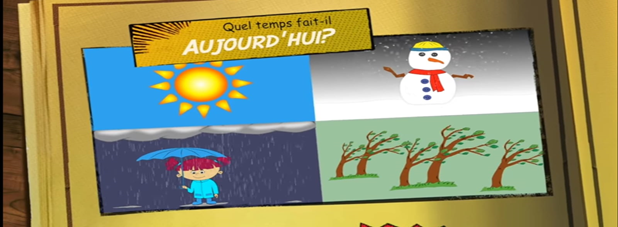
2. Video teaching weather conditions (Figure 6):
Title: “Conditions météorologiques pour les enfants” (Weather conditions for children) on YouTube
Content: This video explains weather phenomena such as sun, rain, snow, and wind through animations and nature scenes. Children can visually experience each weather condition and learn the associated vocabulary.
Videos of Activities in Different Weather Conditions
Source: https://www.youtube.com/watch?v=lRh796i8Ae0
Example (3)
3. Educational video on activities in various weather conditions (Figure 7):
Title: "Activités dans différentes conditions météorologiques" (Activities in different weather conditions) on Google
Content: This video depicts children participating in activities like building sandcastles at the beach during summer or skiing in the snow during winter. It provides detailed descriptions and visual demonstrations of each activity and weather condition.
These videos effectively illustrate and reinforce the vocabulary and concepts introduced in the classroom, making them more tangible and comprehensible for children. They highlight that technological and audiovisual tools offer an effective approach to teaching French vocabulary related to body parts and weather conditions. Interactive applications, photos, and illustrative videos demonstrate their potential to enhance children's understanding of linguistic and pragmatic skills in an engaging and effective manner (Booton et al., 2021; Crestiani et al., 2023; Wei & Lin Fan, 2022).
Results
Figure 8 illustrates the processed data from assessments on the instructional topics of body parts and weather among third-grade learners (aged 9-10 years). The data compare two methods: audiovisual and traditional. The results reveal a significant disparity in vocabulary acquisition between the two methods, with the audiovisual approach showing an 11% increase compared to 6% for the traditional method. This substantial difference underscores the effectiveness of technological tools in enhancing the retention of new French vocabulary. These tools contribute to the expansion and enrichment of children's active vocabulary by aiding them in using lexical items and their meanings in appropriate contexts rather than merely writing them correctly or translating them (Lampai & Sukying, 2023). Furthermore, the audiovisual method, which integrates sound, visuals, and sometimes movement, strengthens conceptual associations and supports the long-term retention of both word forms and meanings (Teng, 2022). In contrast, the traditional method primarily focuses on text, and translation has certain limitations. This approach often relies on rote memorization and direct translation of words without sufficiently engaging learners in a wide linguistic context. As a result, while the traditional method may assist in the initial understanding of language structure, it falls short of creating deep conceptual connections or stimulating students' interest and motivation. Therefore, the audiovisual method is more effective as it provides a more dynamic and engaging learning experience (Nwokedi, 2023). Figure 9 provides data on the acquisition rate over the three-month period based on the methods detailed in Figure 8.
Word Acquisition Rates – Reading-Translation vs. Audiovisual Methods
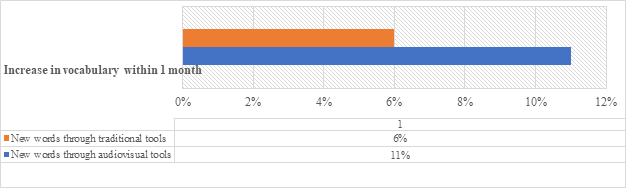
In Figure 8, we presented and analyzed the results for the first month, while Figure 9 provides an evaluation of the changes in these results, focusing on the comparative effectiveness of the two teaching methods employed. This comparison highlights the relative advantages and disadvantages of each approach.
The data presented in Figure 9 reveal a significant improvement in the acquisition of new French vocabulary and expressions through the use of audiovisual tools compared to traditional methods. Specifically, children learned 47% of the vocabulary through audiovisual means versus 34% through traditional methods. This indicates a clear advantage of integrating technology into the learning process. Audiovisual content effectively concretizes the referential connection and contextualizes the usage of words.
Percentage of Words Acquired by 20 Children Over 3 Months
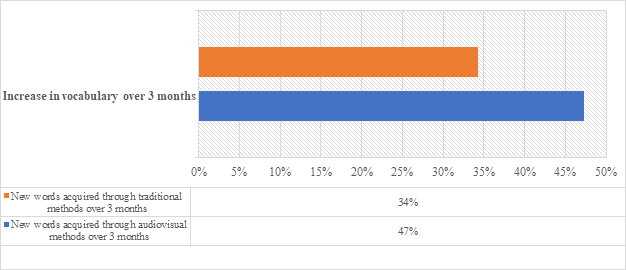
This improvement not only reflects a higher number of learned words and expressions but also indicates a more extensive and contextualized vocabulary acquisition. For instance, test results demonstrated in Figure 9, enhanced understanding of terms such as “la tête” (head) and the expression “J'ai mal à la tête” (I have a headache), as well as “le soleil” (sun) and related expressions like “Le soleil brille” (The sun is shining) and “Il fait chaud” (It's warm). Moreover, the expanded lexical field created through these terms, such as "la neige" (snow), introduced related concepts like “l’hiver” (winter), “les flocons de neige” (snowflakes), and various snow-related terms.The observed advantage of the audiovisual method can be attributed to its ability to engage and motivate children, thereby enhancing their perceptual abilities and interest in learning (Singh et al., 2021).
Consequently, the results suggest that incorporating audiovisual tools into French language instruction significantly enhances vocabulary acquisition compared to traditional methods. This supports the integration of technology as an effective strategy for improving learners' performance in language learning (Zhou & Wei, 2018).
In subsequent sections, we will further analyze the vocabulary's composition and its quantitative and qualitative development over three months, as detailed in Figure 10 and Figure 11, following the application of audiovisual tools.
Words Acquired through Audiovisual Tools for Body Parts by 20 Children Over 3 Months
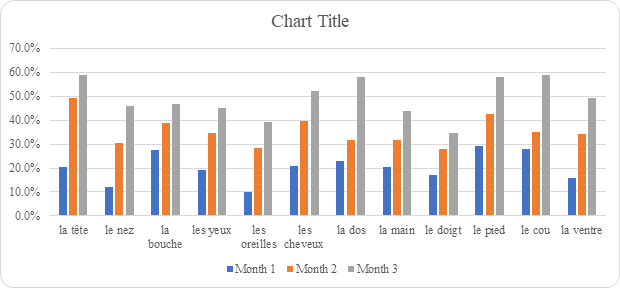
Throughout the study period, a clear upward trajectory is observed in the percentage of French vocabulary acquisition. Both audiovisual and traditional methods are effective in teaching vocabulary related to body parts; however, the audiovisual method demonstrates a more pronounced improvement over time.
For example, in Month 1, the acquisition rate for “la tête” (head) was 20.3%. By Month 3, this rate increased to 59%, indicating substantial growth facilitated by audiovisual tools. The use of videos, images, and interactive applications enhances children's ability to visualize and associate body parts with their French names, thereby improving retention and comprehension through visual and interactive engagement.
Similarly, the acquisition rate for “le nez” (nose) rose from 12% in Month 1 to 45.9% by Month 3 with the audiovisual method. Visual representations, such as animated videos or interactive quizzes, reinforce learning through multisensory experiences, making vocabulary easier for children to remember and apply in context.
The percentage increase for “les cheveux” (hair), from 21% in Month 1 to 52% in Month 3, further underscores the effectiveness of visual and auditory cues in enhancing comprehension and retention. Audiovisual tools offer contextualized learning experiences by presenting words in various scenarios, which enriches vocabulary acquisition beyond mere translation or grammatical knowledge.
In conclusion, data from Figure 8, 9, 10 indicate that the audiovisual method significantly improves the acquisition and contextual usage of French vocabulary related to body parts compared to traditional methods. This suggests that incorporating technology into language instruction can be an effective strategy for enhancing learners performance and engagement (Isakovna, 2024).
Words and Expressions Acquired through Audiovisual Media for Weather Conditions in Each Season by 20 Children Over 3 Months
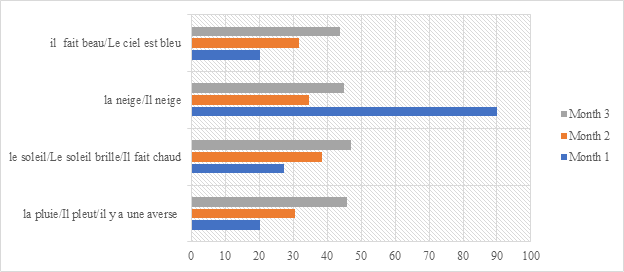
The data presented in Figure 11 reveal a relatively low rate of vocabulary acquisition for most weather-related terms in the first month. However, there is a progressive increase in vocabulary acquisition over time, indicating improved comprehension and retention of weather-related vocabulary with continued exposure. For example, during the initial month, the acquisition rate for “la neige/Il neige” (snow) and snow-related terms is notably high at 90%, compared to terms for “la pluie” (rain) at 20%, “le soleil” (sun) at 27.4%, and “il fait beau” (It's warm) at 20.4%. This contrast suggests that learners more easily understand and remember snow-related terms. This may be due to snow being a rare and captivating phenomenon, which enhances children's engagement and motivation (Yeh, 2022). Additionally, the visual appeal of snow-related terms may make them more accessible through audiovisual methods.
In the second month, there was a significant improvement in the acquisition of weather-related terms across all categories. The acquisition rates for terms related to the sun (38.6%) and rain (30.6%) notably increased from the first month. This improvement is likely due to the sustained use of audiovisual tools, which provided a consistent and repetitive learning experience. This suggests that children may perceive and experience different weather conditions differently, which could influence their acquisition rates. Moreover, children may connect these terms with their personal experiences, enhancing their retention and understanding.
By the third month, the acquisition rates for weather-related terms were uniformly high across all categories, with “la pluie” (rain) at 45.9%, “le soleil” (sun) at 46.9%, “la neige” (snow) at 45%, and “il fait beau” (It's warm) at 43.9%. This indicates that audiovisual methods are highly effective in facilitating learning a broad spectrum of weather-related vocabulary. The continuous increase in acquisition rates can be attributed to the ongoing use of audiovisual tools, which offer a rich and varied learning experience, integrating visual and auditory stimuli that reinforce conceptual understanding and long-term retention.
This analysis underscores the significant role of audiovisual tools in enhancing the acquisition of weather-related vocabulary and expressions among learners over the three months. The observed positive trend highlights the effectiveness of these tools in improving both linguistic and pragmatic skills in young learners.
Discussion and Implications
Technological audiovisual tools, such as videos and animations, create an engaging and clear environment for children (Ridha et al., 2022) to learn French vocabulary and expressions. These tools help in concretizing and contextualizing information, thereby enhancing comprehension and retention of words and expressions in learners' mental lexicons. In this context, the role of technological tools in the foreign language learning process, specifically French for young school-aged children, should be critically evaluated and re-evaluated.
This issue is primarily directed to teachers, who must possess digital competencies to ensure high-quality teaching that aligns with contemporary methodological approaches (Nwokedi, 2023; Rahayu et al., 2023). This underscores the need for more comprehensive training for teachers to update and enhance their skills in the use of technological and audiovisual tools (Astuti et al., 2023).
Moreover, adapting to a new learning context with innovative technological tools, influenced by advancements in the field and contemporary changes, necessitates the updating of methodological approaches in the teaching process (Șișianu & Pușcașu, 2024).
For the Albanian educational system and teachers across various subjects, the use of technological tools, including audiovisual ones, during the challenging circumstances created by COVID-19 represented a novel experience and one of the greatest challenges regarding their use in online teaching. Many teachers experimented, learned about, and utilized various applications to teach and assess learners' achievements based on projected learning outcomes for specific educational topics.
They recognized and emphasized the role of technology beyond the extremely difficult circumstances at that time. Therefore, it is crucial to examine how this technology and the tools that it provides can be effectively used in teaching foreign languages (French) to school-aged children (ages 9-10), compared to traditional methods and tools used in physical classroom settings.
Audiovisual tools aid in developing children's linguistic and pragmatic competence (Tschirner, 2001) by improving their ability to communicate in French across different situations. Utilizing real-world contexts and demonstrating specific situations through videos and animations facilitates the effective understanding and application of vocabulary and expressions. These findings highlight the significant role of audiovisual tools in acquiring French vocabulary. The research results have valuable implications for French language teachers, learners, curriculum developers, and educational material designers (Omariba, 2022), offering concrete suggestions for employing effective strategies and incorporating audiovisual tools and materials in the teaching and learning of foreign languages (French) for school-aged children.
Conclusion
The results indicate a significant increase in the percentage of word and expression acquisition over the course of three months through the use of audiovisual tools. This suggests that the experience of visualizing and hearing words and expressions in an audiovisual context positively impacts their acquisition by children (Gowenlock et al., 2024). Specifically, the visual and auditory representations associated with a particular linguistic word or expression in a foreign language, perceived through sight and hearing, facilitate the creation of a mental image (Melanie et al., 2017). Based on this image, the conceptualization of the real-world or imaginary referent is formed. The process is both psycholinguistic and cognitive (Guo, 2023), as well as cultural.
The more frequently a child is exposed to a word or expression accompanied by images, sound, and movement (scene/event), the clearer the concept becomes (Haleema et al., 2022). This facilitates easier memorization (Lampai & Sukying, 2023), longer retention, and more effective use in new communicative situations. The relevant concept is not only registered in the mental lexicon but also integrated into a cognitive and mental schema. For example, words like “la neige” (snow), “la pluie” (rain), “chaud” (warm), and “l’hiver” (winter) form a conceptual field, from which numerous other conceptual fields can derive.
As a result, the more cognitive schemas children encounter through visual and auditory stimuli, the more their vocabulary in the target language expands and enriches (Wei & Lin Fan, 2022). Moreover, linguistic and cognitive enrichment also equates to cultural enrichment, as words and expressions carry not only meanings but also socio-cultural values.
According to this analysis, the use of audiovisual tools and materials played a crucial role in the acquisition of weather-related vocabulary and expressions by children during the three-month study (Crestiani et al., 2023). This positive trend in acquisition highlights the potential of these tools to support the development of linguistic and pragmatic skills in children of this age group.
Limitations of the Study
The study's sample size of 20 learners may constrain the generalizability of the findings. The small sample may not capture the full range of student learning styles and interests, potentially affecting the perceived efficacy of audiovisual tools in education. These limitations underscore the need for further research with larger and more diverse samples.
Ethical Consideration
This study adhered to several key ethical considerations. Tests administered to children were part of the curriculum and conducted only with prior consent from the children, their parents, and the head of the educational institution. Anonymity and confidentiality were maintained through numerical coding of data test. Only the French language teacher had access to this information. Approval for classroom observations was granted by the school principal and institution coordinator, and these observations were conducted over three months in alignment with the curriculum and timetable. Results and interview data were reported with integrity and transparency, adhering to ethical standards.
References
Adeshina, A. E. (2024). The transformative role of digital resources in teaching and learning. Open Journal of Educational Development (OJED), 5(1), 01–09. https://doi.org/10.52417/ojed.v5i1.520
Alhazmi, K. (2024). The effect of multimedia on vocabulary learning and retention. World Journal of English Language, 14(6), 390–399. https://doi.org/10.5430/wjel.v14n6p390
Alonso-Pérez, R., & Sánchez-Requena, A. (2018). Teaching foreign languages through audiovisual translation resources: Teachers’ perspectives. Applied Language Learning, 28(2), 1–24. https://www.researchgate.net/publication/326440269
Astuti, A. M., Suarjana, M., & Trisna, S. P. A. G. (2023). Audio visual media on learning social diversity for class V elementary school students. Journal of Education Technology, 7(3), 450. https://ejournal.undiksha.ac.id/index.php/JET
Avello, R. & Fernández- Costales, A. (2020). Studying the didactic possibilities of audiovisual translation (subtitling and dubbing) in the teaching of Asturian in primary education. Letters Austrians, 123, 147–166. https://doi.org/10.17811/LLAA.123.2020.147-166
Bisson, M. J., Van Heuven, W. J. B., Conklin, K., & Tunney, R. J. (2014). Processing of native and foreign language subtitles in films: An eye tracking study. Applied psycholinguistics, 35(2), 399–418. https://doi.org/10.1017/S0142716412000434
Booton, A. S., Hodgkiss, A., & Murphy, A. V. (2021). The impact of mobile application features on children’s language and literacy learning: a systematic review. Computer Assisted Language Learning, 36(3), 1–30. https://doi.org/10.1080/09588221.2021.1930057
Crestiani, M. J., Indah, D. O., & Hermini, H. (2023). The impact of using audio visual as a vocabulary learning tool toward UNCP students’ proficiency. IDEAS Journal of Language Teaching and Learning, Linguistics and Literature, 11(1), 892. https://doi.org/10.24256/ideas.v11i1.3844
Fernández- Costales, A. (2021). Audiovisual translation in primary education. Students’ perceptions of the didactic possibilities of subtitling and dubbing in foreign language learning. Meta, 66(2). https://doi.org/107202/1083179
Ghia, E. (2012). Subtitling matters: New perspectives on subtitling and foreign language Learning. Oxford: Peter Lang, 35 – 39. ISBN: 9783034308434
Gowenlock, A. E., G, C., & Rodd, J. M. (2024). Exposure to language in video and its impact on linguistic development in children aged 3–11: A scoping review. Journal of Cognition, 7(1), 57: 1–36. https://doi. org/10.5334/joc.385
Guo, K. (2023) The effect of auditory on children's memory and cognitive development. Education Psychology and Public Media, 6(1), 478–482. https://doi.org/10.54254/2753-7048/6/20220441
Haleema, A., Javaida, M., Qadri, A. M., & Sumanc, R. (2022). Understanding the role of digital technologies in education: A review. Sustainable Operations and Computers, 3, 275–285. https://doi.org/10.1016/j.susoc
Isakovna, M. J. (2024). Integrating modern technology in English language teaching: innovations and outcomes in school education. Eurasian Science Review, 2(4), 138–142. https://doi.org/10.63034/esr-48
Johnson, A. M., Jacovina, M. E., Russell, D. E., & Soto, C. M. (2016). Challenges and solutions when using technologies in the classroom. In S. A. Crossley &D. S. McNamara (Eds.), Adaptive educational technologies for literacy instruction (pp. 13-29). New York: Taylor & Francis. https://doi.org/10.4324/9781315647500-2
Kurrikula E bazuaR Në kompetenca [Curriculum based on competencies] (2016). Tiranë, pp.2. https://ascap.edu.al/wp-content/uploads/2018/09/Gjuhe-e-Huaj-e-pare-Shkalla-2-.pdf
Kwegyiriba, A., Mensah, R. O., & Ewusi, E. (2022). The use of audio-visual materials in teaching and learning process in Effia Junior High Schools. Technium Social Sciences Journal, 106. https://doi.org/10.47577/tssj.v31i1.6399
Lampai, Ch., & Sukying, A. (2023). Vocabulary Learning Through Audio-Visual Input of Thai Primary School EFL Students. Journal of Education and Learning, 12(4), 26–41. https://doi.org/10.5539/jel.v12n4p26
Lertola, J. (2019). Audiovisual translation in the foreign language classroom: Applications in the teaching of English and other foreign languages. Voillans: Research-publishing. net. ISBN: 978-2-490057-24-5
Mcnaught, A. (2007). Moving images and sound: Inclusive and accessible. Moving Images Knowledge and Access. The BUFVC Handbook. British Universities Film and Video Council, London.
Melanie, H., Foroud, A., Laurel, F, & Werker, J. F. (2017). The role of auditory and visual speech in word learning at 18 months and in adulthood. Child Development. https://doi.org/10.1111/cdev.12715
Mo, C. Y., Wang, C., Dai, J., & Jin, P. (2022). Video playback speed influence on learning effect from the perspective of personalized adaptive learning: A study based on cognitive load theory. Frontiers in Psychology, 13, 839982. https://doi.org/10.3389/fpsyg.2022.839982
Moustaghfir, S., & Hind Brigui, H. (2024). Navigating critical thinking in the digital era: An informative exploration. International Journal of Linguistics, Literature and Translation,
Nwokedi, F.C. B. (2023). Efficacy of the use of audio-visual facilities in the teaching and learning of English phonology. International Journal of Advance Social Sciences and Education (IJASSE), 1(4), 183–190. https://doi.org/10.59890/ijasse.v1i4.733
Olagbaju, O. O., & Popoola, A. G. (2020). Effects of audio-visual social media resources supported instruction on learning outcomes in reading. International Journal of Technology in Education (IJTE), 3(2), 137–143. https://doi.org/10.32996/ijllt
Omariba, A. (2022). The role of integrating audio-visual media to teaching and learning in public primary teacher training colleges in Kenya. International Journal of Education and Research, 10(1). www.ijern.com
Pasquier, F. (2000). La vidéo à la demande pour l'apprentissage deslangues [Video-on-demand for language learning]. Publisher: L'harmattan. ISBN: 978-2-7384-9117-6
Pawlak, M. (2021). Teaching foreign language grammar: New solutions, old problems. Foreign Language Annals, 54, 881–896. https://doi. org/10.1111/flan.12563
Puimège, E., & Peters, E. (2019). Learning L2 vocabulary from audiovisual input: An exploratory study into incidental learning of single words and formulaic sequences. The Language Learning Journal, 47(4), 424–438. https://doi.org/10.1080/09571736.2019.1638630
Rahayu, A. P., Saepulloh, S., & Ginanjar, E. (2023). Analysis of the impact of using audio-visual media on student learning motivation. Jurnal Pena Edukasi, 10(2), 72–80. https://doi.org/10.54314/jpe.v10i2.1389
Ridha, S. K., Bostanci, H. B., & Kurt, M. (2022). Using Animated videos to enhance vocabulary learning at the Noble Private Technical Institute (NPTI) in Northern Iraq/Erbil. Sustainability, 14, 7002. https://doi.org/10.3390/su14127002
Sánchez-Requena, A. (2017). Audiovisual translation in teaching foreign languages: Contributions of dubbing to improve fluency and pronunciation in spontaneous conversations. Porta Linguarum, 26.
Singh, S. K. Ch., Singh, S. K. H., Singh, M. S. Ong. T. E., Yunus, M. M., Rahmayanti, H., & Ichsan, Z. I. (2021). Review of research on the use of audio-visual aids among learners’ English language. Turkish Journal of Computer and Mathematics Education (TURCOMAT), 12(3), 895–904. https://doi.org/10.17762/turcomat.v12i3.800
Șișianu, A. & Pușcașu, A. (2024). New technologies and foreign language learning: transforming language education. Journal of Social Sciences, 7(1), 91–99. https://doi.org/10.52326/jss.utm.2024.7(1).07
Teng, F. M. (2022). The effectiveness of multimedia input on vocabulary learning and retention. Innovation in Language Learning and Teaching, 1–16. https://doi.org/10.1080/17501229.2022.2131791
Thierry, L. (2004). De la vidéo à internet:80 activités thématiques [From video to internet: 80 thematic activities.]. Paris: Hachette. ISBN/ISSN/EAN: 978-2-91-144292-1
Toleuzhan, A. T. (2022). Review on the use of audio-visual aids as the open educational resources in EFL among secondary education students. Bulletin of the Karaganda University Pedagogy Series, 108(4), 207–213. https://doi.org/10.31489/2022ped4/207-213
Tsai, P. (2019). Beyond self-directed computer-assisted pronunciation learning: A qualitative investigation of a collaborative approach. Computer Assisted Language Learning, 32(7): 713–744. https://doi. org/10.1080/09588221.2019.1614069
Tschirner, E. (2001). Language acquisition in the classroom: The role of digital video. Computer Assisted Language Learning, 14 (3–4), 305–319. https://doi.org/10.1076/call.14.3.305.5796
Thi Kim Chung, D. M. A. (2023). The efficacy of visual aids in enhancing vocabulary acquisition in EFL classes. International Journal of Social Science and Human Research, 06, 6397–6403. https://doi.org/10.47191/ijsshr/v6-i10-80
Udhëzues Kurrikular Lëndor Për Gjuhën E Huaj. Material ndihmës për mësuesit e gjuhës së huaj në arsimin e mesëm të ulët [Subject curricular guide for foreign language: A support material for foreign language teachers in lower secondary education] (2018). Tiranë, pp.7-8. https://ascap.edu.al/wp-content/uploads/2019/01/Gjuh%C3%AB-e-huaj-2.pdf
Uvsløkk, C. J., & Brevik, M. L. (2024). Intercultural approaches to second and foreign language instruction: A longitudinal video study. Teaching and Teacher Education Journal, 1–14. https://doi.org/10.1016/j.tate.2023.104309
Vishnupriya, S., & Bharathi, R. (2022). The impact of audio visual aids in teaching. International Journal of Health Sciences, 6(S3), 7849–7859. https://doi.org/10.53730/ijhs.v6nS3.7877
Wei, R., & Lin Fan, L. (2022). On-screen texts in audiovisual input for L2 vocabulary learning: A Review. Frontiers in Psychology, 13, 904523. https://doi.org/10.3389/fpsyg.2022.904523
Winstead, L. (2016). Foreign language education in the digital age. In C. Wang, & L. Winstead (Eds.), Handbook of research on foreign language education in the digital age, First Edition (pp. xxvii-Ixxii). IGI. https://www.researchgate.net/publication/305961374
Yeh, Y-Ch. (2022). Student satisfaction with audio-visual flipped classroom learning: A Mixed-methods study. International Journal of Environmental Research and Public Health, 19(3), 1053. https://doi.org/10.3390/ijerph19031053
Zhou, Y., & Wei, M. (2018). Strategies in technology-enhanced language learning. SSLLT, 8(2), 471–495. https://doi.org/10.14746/ssllt.2018.8.2.13

Page 1 of
Download Count : 70
Visit Count : 661
Keywords
Albanian Primary Education; Audiovisual Tools; Teaching/Learning; French Language Vocabulary; Linguistic and Pragmatic Competencies

Author(s) Information



How to cite this article
Basha, A., & Hoxha, R. (2024). Audiovisual tools in teaching/learning French language lexicon in primary education Albanian: A case study. Studies in Educational Management, 16, 47-67. https://doi.org/10.32038/sem.2024.16.04
Acknowledgments
Not applicable.
Funding
Not applicable.
Conflict of Interests
No, there are no conflicting interests.
Open Access
This article is licensed under a Creative Commons Attribution 4.0 International License, which permits use, sharing, adaptation, distribution and reproduction in any medium or format, as long as you give appropriate credit to the original author(s) and the source, provide a link to the Creative Commons license, and indicate if changes were made. You may view a copy of Creative Commons Attribution 4.0 International License here: http://creativecommons.org/licenses/by/4.0/