







Original Research
Embedding Social-Emotional Learning into Pre-Service ESOL Teacher Education


- Abstract
- Full text
- Metrics
This paper outlines an exploratory study intended to document the contribution of a course unit on social-emotional learning (SEL) for English learners on English to Speakers of Other Languages (ESOL) teacher candidates’ beliefs concerning the approach. The paper begins with an overview of the concept of SEL and its importance in education. The paper then highlights several investigations that have examined the role of SEL in educator preparation from various perspectives. Next, the paper summarizes the logistics of a course unit on social-emotional learning for English learners embedded within a TESOL methodology course and outlines an exploratory study intended to determine the relevancy of the unit to participants’ convictions regarding the approach and its specific applicability to multilingual learners of English. Finally, the paper displays the preliminary results of the study and discusses the importance and relevancy of the findings for ESOL teacher education.
|
Embedding Social-Emotional Learning into Pre-Service ESOL Teacher Education |
|
Dalton State College, 650 College Drive, Dalton GA 30720, Georgia |
|
ABSTRACT This paper outlines an exploratory study intended to document the contribution of a course unit on social-emotional learning (SEL) for English learners on English to Speakers of Other Languages (ESOL) teacher candidates’ beliefs concerning the approach. The paper begins with an overview of the concept of SEL and its importance in education. The paper then highlights several investigations that have examined the role of SEL in educator preparation from various perspectives. Next, the paper summarizes the logistics of a course unit on social-emotional learning for English learners embedded within a TESOL methodology course and outlines an exploratory study intended to determine the relevancy of the unit to participants’ convictions regarding the approach and its specific applicability to multilingual learners of English. Finally, the paper displays the preliminary results of the study and discusses the importance and relevancy of the findings for ESOL teacher education. |
|
Keywords: Educator preparation, ESOL, Pre-service teachers, Social-emotional learning, Teacher Education |
Introduction
Beecher et al. (2022) define social-emotional learning (SEL) as the “knowledge, skills, and attitudes that assist in managing emotions, establishing and maintaining relationships, and making responsible decisions” (p. 155). Leonard and Woodland (2023) maintain that SEL consists of “the process through which people learn to understand and manage emotions, set goals, feel empathy for others, establish positive relationships, and make responsible decisions” (p. 270). More specifically, within the realm of education, Jones and Doolittle (2017) explain that SEL consists of “children’s ability to learn about and manage their own emotions and interactions in ways that benefit themselves and others, and that help children and youth succeed in schooling, the workplace, relationships, and citizenship" (p. 4). These definitions highlight the notion that social-emotional learning centers on developing intrapersonal and interpersonal skills in ways that not only advance students’ capacities to control and adjust their emotional states but also prepare them to effectively negotiate social interactions. Education should consequently not just further students’ academic skills but should also foster their aptitudes for social interaction (Schonert-Reichl et al., 2015).
Beecher et al. (2022) define social-emotional learning (SEL) as the “knowledge, skills, and attitudes that assist in managing emotions, establishing and maintaining relationships, and making responsible decisions” (p. 155). Leonard and Woodland (2023) maintain that SEL consists of “the process through which people learn to understand and manage emotions, set goals, feel empathy for others, establish positive relationships, and make responsible decisions” (p. 270). More specifically, within the realm of education, Jones and Doolittle (2017) explain that SEL consists of “children’s ability to learn about and manage their own emotions and interactions in ways that benefit themselves and others, and that help children and youth succeed in schooling, the workplace, relationships, and citizenship" (p. 4). These definitions highlight the notion that social-emotional learning centers on developing intrapersonal and interpersonal skills in ways that not only advance students’ capacities to control and adjust their emotional states but also prepare them to effectively negotiate social interactions. Education should consequently not just further students’ academic skills but should also foster their aptitudes for social interaction (Schonert-Reichl et al., 2015).
In a comprehensive fashion, the Collaborative for Academic, Social, and Emotional Learning (CASEL) concurs with the symbiotic nature of learners’ intellectual and sentimental aptitudes by describing social and emotional learning as the process through which all young people and adults acquire and apply the knowledge, skills, and attitudes to develop healthy identities, manage emotions and achieve personal and collective goals, feel and show empathy for others, establish and maintain supportive relationships, and make responsible and caring decisions (CASEL, 2020, para. 1).
This explanation emphasizes that educators should work to advance students’ awareness and understanding of self-care and its relevancy to the accomplishment of their personal and professional goals that are of mutual benefit both individually and collectively. Schonert-Reichl et al. (2015) contend that growing students’ social-emotional competencies are vital since “the very nature of school-based learning is relational” (p. 407), intimating that education is inherently communal and interpersonal in nature. Pentón Herrera (2020) observes that, in the case of English learners, the development of their social-emotional competencies is especially important since acquiring and learning English is only part of the process: “Our ELs also have to discover…how to navigate the unwritten rules of the social and emotional landscape of American society” (pp. 2-3). In essence, multilingual learners of English must also unpack the attitudes, beliefs, behaviors, values, etc., of American mainstream culture and be able to engage
successfully and effectively with others in cross-cultural and cross-linguistic encounters through English. Social-emotional learning is also critical for this student population, given that, in addition to adapting to a new language and culture, numerous learners are also dealing with a variety of psychological trauma due to economic, political, and social strife.
Research in this area has increasingly progressed from investigating the contributions of specific innovations on students’ SEL to examining the importance of equipping teachers with the skills and strategies necessary to successfully manage their own emotional states. Acton and Glasgow (2015) characterize teacher well-being as “an individual sense of personal professional fulfillment, satisfaction, purposefulness and happiness” (p. 102) and clarify that educators’ psychological welfare does not evolve in isolation but instead is dependent on a variety of contextual and situational factors that can either foster or inhibit such growth. Martínez-Alba et al. (2023) argue that, despite the fact that teacher well-being is essential for not only helping educators manage their own social-emotional states but also in sustaining their efforts to do likewise for their own students, “practitioners are rarely trained to consider their own well-being in their practice and beyond” (p. 32). The research study in this paper thus highlights one viable method to accomplish this lofty yet worthwhile goal by incorporating social-emotional learning within ESOL teacher preparation.
The social-emotional model that was adopted for this study was the framework established by CASEL (2020), which consists of five principal elements: self-awareness (one’s capacity to consciously observe their own psychological state and possible influences of this on social interactions), self-management (one’s aptitude in effectively governing and handling their emotional state), social awareness (one’s competence in understanding the sentiments and feelings of others), relationship skills (one’s capacity to successfully negotiate interpersonal relationships), and responsible decision-making (one’s expertise in intentionally and selectively choosing to exhibit comportments and demeanors that ultimately benefit both themselves and others). CASEL suggests that these five interrelated components of the model be implemented systematically at multiple levels that integrate different types of activities, such as providing instruction on social-emotional learning and establishing a caring and supportive environment (classrooms), implementing a comprehensive program to purposely embed SEL across programs and curricula (schools), working collaboratively with households to ensure the physical and psychological well-being of students, (families/caregivers), and creating networking opportunities for schools to partner with various local institutions (communities).
Literature review
Several studies have explored the role of social-emotional learning in teacher education from a variety of perspectives. For example, Donahue-Keegan et al. (2019) outline various strategies for embedding SEL into educator preparation programs in the state of Massachusetts. To guide and support this work, the Massachusetts Consortium for Social-Emotional Learning in Teacher Education (MA SEL-Ted) was established and founded on three key principles. First, since teachers are often not prepared to deal with the mental and psychological stressors of teaching on a daily basis, teacher education programs should thus equip them with the skills and techniques necessary to understand and manage their own emotional states. Second, advancing pre-service teachers’ social-emotional learning may potentially carry over into their instruction; in other words, once teacher candidates understand the importance of the approach for not only their own well-being but for their students as well, they will subsequently be more likely to familiarize their own students with the approach and work to develop these learners’ SEL. Third, since social-emotional learning is, from the authors’ perspective, intricately tied to culturally relevant and responsive instruction, pre-service teachers who are aware of and understand the theory and practice of the SEL approach will consequently be able to meet the unique challenges of culturally and linguistically diverse learners and perceive these students from an asset and strength-based perspective. The consortium has focused its efforts on several fronts, including advocating for the establishment and promulgation of professional standards regarding social-emotional learning with respect to teacher preparation and certification, conducting research on the level of familiarity with and implementation of SEL educator preparation programs in Massachusetts, and offering professional development opportunities to acquaint teacher education faculty across the state with the logistics of the approach and help them revise their programs and curricula.
Goegan et al. (2017) report on an investigation of both pre-service and in-service teachers in Canada. They completed a survey to collect information on their beliefs concerning social-emotional learning and their stances towards various facets of their instruction. The authors discovered, among other interesting findings, that a correlation existed between participants’ familiarity with the approach and their commitment to implementing the approach (both groups), between their awareness of the approach and their ability to both effectively manage their classrooms and engage productively with students (in-service teachers). However, one discrepancy that emerged from the data analysis was that while the pre-service teachers often indicated a stronger dedication to the approach, the in-service educators tended to report a higher level of social-emotional competence (SEC) and more ease with the approach compared with the pre-service teachers. The authors contend that “teacher education programs need to support pre-service teachers in their development of comfort with SEL and in developing their own SEC” (p. 280).
With respect to ESOL teacher preparation, Yazan and Peercy (2016) conducted a research study intended to better understand the role emotions play in the development of pre-service ESOL teachers’ professional identity. Participants in the study included three students enrolled in a graduate-level TESOL program offered at a postsecondary institution located in the mid-Atlantic region of the United States. As part of the study, the students were interviewed both at the beginning and the end of their studies concerning their experiences as teacher interns during the program. Analysis of the interview data revealed several important themes, namely, that participants believed in the importance of demonstrating empathy and understanding for English learners, that their emotional states (both positive and negative) during the practicum contributed in substantial ways to their conceptualizations of themselves as ESOL teachers, and that their emotions also affected the strategies and techniques they utilized when instructing these students. The study demonstrates the inextricable link between ESOL teacher candidates’ emotions and their professional identity development. The authors maintain that along with familiarizing these pre-service teachers with pedagogical expertise regarding the effective instruction of multilingual learners of English, “TCs’ [teacher candidates] initial preparation [also] critically entails becoming ‘literate’ about the handling of their emotions” (p. 64) and that TESOL educator preparation program should necessarily acquaint students with the abilities and skills necessary to understand and manage their emotions.
Moreover, Zeaiter’s (2023) study focuses on the relevancy of plurilingual activities with multilingual learners of English to their emotional well-being. The chapter describes the author’s implementation of various tasks intended to capitalize on students’ linguistic competencies to simultaneously promote their language acquisition and psychological health. Zeaiter (2023) explains the connection between emotion and language by asserting that “affective variables can enhance or diminish the extent to which students invest in learning a second language and ultimately their language proficiency (p. 282). Additionally, the tasks were designed to support their multilingual identities, which was an important pedagogical innovation since, according to the author, “Lebanon’s language policies are still biased towards a monolingual ideology that uses the target language as the language of instruction and disregard students’ linguistic repertoire” (p. 283); one could thus conceivably contend that striving to maintain students’ linguistic (and cultural) identities may ultimately lead to the development of both their linguistic and emotional competencies. Participants in the study including undergraduate learners enrolled in English-as-a-second-language courses offered at a university in Lebanon for which the author was the instructor. Zeaiter (2023) implemented a variety of strategies that utilized students’ previous language experiences as a framework for instruction such as translating unknown words from English to other language(s) they know, identifying similarities and differences among vocabulary words in different languages, comparing and contrasting behaviors and values existing between cultures, utilizing their linguistic expertise as they engaged in language tasks, and developing their literacy skills both via print and through other communication channels as well. Through the implementation of these projects, Zeaiter (2023) observed that the activities were successful in “…creat[ing] a welcoming and an accepting environment where students [could] claim their right to speak and express their emotions” (p. 285) and, in so doing, advanced their acquisition of English as well. Furthermore, such tasks are necessary to call into question “current teaching pedagogies [which] are anchored in a monolingual and monocultural ideology that often dismisses students’ linguistic and cultural repertoires” (p. 291). As a result, such projects facilitate the development of students’ linguistic abilities while also supporting their social-emotional growth.
Additionally, one interesting outgrowth of the social-emotional learning movement is the establishment of several frameworks undergirding the approach, including the broaden-and-build theory. Fredrickson (2004) contends that psychological research has traditionally focused on the investigation of people’s negative emotions and potential solutions for the consequences of these feelings, that scholars have tended to equate and thus confuse emotions with sensations and moods, and that academics have tended to focus on the possible relationship between positive emotions and engagement in a somewhat generic and superfluous fashion. In order to address these theoretical gaps, Fredrickson (2004) established the broaden-and-build theory, which states that “positive emotions…broaden people’s momentary thought-action repertoires and build their enduring personal resources” (p. 1369, italics in original). In other words, positive emotions can expand people’s rudimentary and primitive ways of thinking and behaving while also equipping them with a variety of intellectual, physical, psychological, and social sources/funds from which to draw when encountering negative emotions in one’s life. In essence, positive emotions not only “signal optimal functioning” (p. 1367; italics in original) but also “produce optimal functioning” (p. 1367; italics in original), suggesting that such feelings indicate that one is demonstrating a high level of psychological health and also create the ideal conditions for such well-being to occur. Ultimately, according to Fredrickson (2004), it behooves us all to nurture and develop positive emotions in our lives not only to feel temporary satisfaction in the present but also to prepare us to manage and work through negative emotional states that will likely come our way since “doing so transforms people for the better and sets them on paths toward flourishing and healthy longevity” (p. 1375).
The study
The study explored in this paper was conducted in the fall semester of 2023 and involved fifty-three elementary-education teacher candidates enrolled in one of two sections of a TESOL methodology course offered at a four-year postsecondary institution located in the southeastern United States for which the author was the instructor. The unit on social-emotional learning was embedded within this course and was comprised of the following three modules (see Table 1):
Social-emotional learning course unit modules
|
Module |
Description of the Module |
|
1 |
The SEL Approach (Introduction) |
|
2 |
The Social-Emotional Learning Approach (Theory) |
|
3 |
The Social-Emotional Learning Approach (Practice) |
Modules two and three utilized a multi-step jigsaw activity with respect to the readings that constituted these modules, respectively. Students were initially grouped into “vertical” (home) groups with other students who had completed the same reading and explored their understandings and interpretations of the blog/post article (i.e., S1, S5, S9, and S13 in Table 2 below). Students were then assembled into “horizontal” (expert) groups in which they got together with three other students who had each completed a different reading and discussed important details from their corresponding blog post/article with their group members (i.e., S1, S2, S3, and S4 in Table 2 below). Finally, students returned to their individual seats and, on a blank index card, identified several points of information they learned from the discussions that took place in the home and expert groups, which they subsequently shared with their classmates.
Jigsaw reading activity groupings
|
Group A |
Group B |
Group C |
Group D |
|
S1 |
S2 |
S3 |
S4 |
|
S5 |
S6 |
S7 |
S8 |
|
S9 |
S10 |
S11 |
S12 |
|
S13 |
S14 |
S15 |
S16 |
* “S” = “Student”
In the first module of the unit, students were introduced to the concept of social-emotional learning via an instructor-led presentation, which (1) asked teacher candidates to define SEL and consider its importance for students writ large and multilingual learners of English more particularly (2) familiarized them with the CASEL framework and its components, and (3) prompted them to discuss their initial thoughts and impressions of the framework. In the second module, teacher candidates read the corresponding blog post assigned to their respective group (see Table 3) and completed the jigsaw activity during the module. The purpose of these readings was to acquaint students with the fundamental tenets and underlying principles of social-emotional learning in a comprehensive yet succinct way while also supporting their understanding of the importance of the approach specifically for multilingual learners of English.
Jigsaw group blog posts (Module two)
|
Group |
Blog Post |
|
A |
Breiseth (2022) |
|
B |
Breiseth (2023) |
|
C |
Kinsella (2022) |
|
D |
Scott (2015) |
In the third and final module, teacher candidates read and completed the jigsaw activity for a variety of readings, which explored ways to concretely and strategically implement the social-emotional approach into their current/future instruction to support the development of their English learners’ linguistic and cultural competencies (see Table 4).
Jigsaw group articles (Module three)
|
Group |
Article |
|
A |
Dresser (2012) |
|
B |
Lucido (2022) |
|
C |
Nall (2020) |
|
D |
Nanquil (2021) |
Before participating in the course unit and also after completing the unit, participants completed a pre- and post-questionnaire consisting of statements taken from the Teacher SEL Beliefs Scale (Brackett et al., 2012). The scale consists of twelve Likert-scale statements and is intended to determine and establish educators’ views concerning multiple aspects of social-emotional learning along with their attitudes and perspectives regarding the integration of the approach into instruction. The scale was included as part of the current study to document teacher candidates’ impressions of and stances towards social-emotional learning both before and after participating in the course unit to better understand the potential contribution of the unit to their understanding and appreciation of the viability and importance of the approach for (English) learners (see Appendix 1).
Research questions
The research question that guided the current study was: How does a course unit on the social-emotional approach for English learners contribute to pre-service elementary education teachers’ beliefs about social-emotional learning?
Methodology
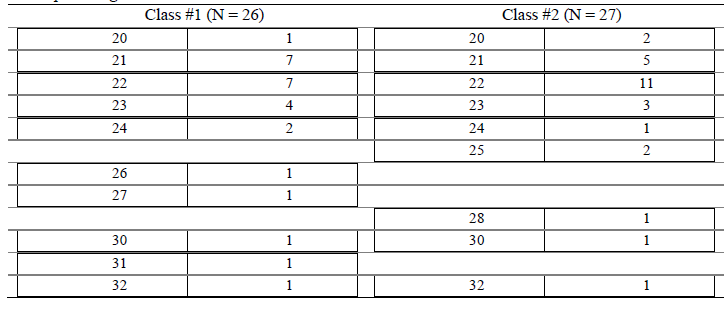
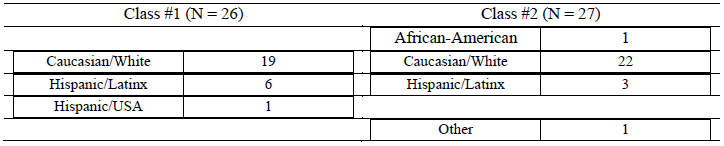
Participants in the study included fifty-three elementary-education teacher candidates enrolled in a TESOL methodology course; Tables 5-7 indicate the participants' demographic information.
Participants’ ages
Participants’ self-identified gender

Participants’ self-identified ethnicity
At the beginning and the conclusion of the course unit, participants completed a questionnaire that consisted of statements taken from the Teacher SEL Beliefs Scale (Brackett et al., 2012). The scale consists of twelve statements designed to measure educators’ attitudes and opinions concerning social-emotional learning and their views on the level of institutional support for social-emotional learning at their respective schools. The pre- and post-unit questionnaires included the same twelve statements for the purpose of attempting to measure the possible impact of the course unit on participants’ evolving views on social-emotional learning. Additionally, rather than utilizing a five-point scale for the Likert-scale statements, which are frequently found in many questionnaires, the statements on both questionnaires were instead adjusted around a six-point scale in order to motivate participants to take a particular stance regarding the statements while also allowing a more detailed and precise analysis of teacher candidates’ views on social-emotional learning. This practice aligns with the perspective adopted by Nemoto and Beglar (2013), who contend that “when possible…6-point scales should be used as they permit the possibility of increased measurement precision” (p. 5).
Quantitative data collected during the study were analyzed using descriptive statistics, while qualitative data were examined via thematic analysis. According to Borg and Gall (1989), descriptive statistics are used to “describe” data collected from a given sample of participants (p. 336). Fisher and Marshall (2009) explain that descriptive statistics are comprised of “numerical and graphical techniques used to organize, present and analyze data” (p. 95). Additionally, with respect to the field of applied linguistics, Dörnyei (2007) affirms that the aim of descriptive statistics is to summarize findings by indicating general tendencies occurring in the data to provide a global picture of the participants' behavior. Two types of descriptive statistical procedures were utilized in the study. First, the average mean score for each Likert-scale statement on both the pre- and post-unit questionnaires was computed by adding together the total number of participants’ responses to the statement and then dividing this total by the number of participants in the class; a percentage was then calculated for each mean average score by dividing the score by six, the maximum possible response for each statement.
Results/Discussion
This section reviews the findings surfacing from the analysis of participants’ responses on the pre- and post-course questionnaires. Readers are encouraged to consult Appendix 1 for a list of the statements included in both questionnaires and Appendix 2 for the descriptive statistics for each statement by class.
Several interesting patterns emerged from examining participants’ responses to both questionnaires. For example, participants in the first class exhibited a 19.2% larger growth in their beliefs about social-emotional learning in comparison with participants in the second class, although positive growth was indicated for eleven of the twelve statements by participants in the second class but only for the twelve statements by participants in the first class. The latter finding is likely due to the fact that, while participants in the second section perhaps demonstrated more growth by virtue of their positive responses to the statements, such growth overall is relatively minimal when compared with the responses from participants in the first section. Among other possibilities, it is conceivable that the teacher candidates in the first section believed that the course unit contributed more successfully to their developing stances toward social-emotional learning and its importance for English learners.
Participants in the first class showed the most change with respect to statement #12 (“The department does not encourage the teaching of social and emotional skills to students.”) with a 15.4% increase in their attitudes towards the statement, implying that students were in more substantial agreement with this statement after having engaged in the course unit, whereas participants in the second class indicated a 5.2% decrease in their response to the statement, suggesting less agreement with the statement at the conclusion of the course unit. This result on the part of participants in the first section may have emerged because they possibly felt that, despite the content of the course unit, the department as a whole was not very supportive of them and their social-emotional well-being. The statement that demonstrated the least growth by participants in the first class was statement #1 (“The department expects teacher candidates to address children’s social and emotional needs.”) which exhibited a 3.8% decrease, while participants in the second class tended to view this statement in slightly more positive terms with a 3.0% increase. This finding thus points to the need for the department to consider embedding social-emotional learning more intentionally and strategically across multiple facets of the program in order to equip teacher candidates with the strategies and techniques necessary to develop their students’ social-emotional competencies.
The statement which elicited the most change by participants in the second class was a tie between statement #6 (“The department creates an environment that promotes social and emotional learning for our students.”) and statement #10 (“I would like to attend a workshop to learn how to develop my students’ social and emotional skills”) with both statements equally receiving an 8.9% increase. Both of these statements were also rated positively by participants in the second class, although not quite to the same extent as those in the first class (+6.9% and +5.4%, respectively). This result suggests that, perhaps after being initially introduced to the social-emotional approach and its importance for all students generally and for multilingual learners of English more specifically, the course unit may have inspired teacher candidates to further their knowledge and understanding of the approach in the future. This finding additionally indicates the need for the department to not only consider integrating the approach throughout the program (as discussed previously) but also seek ways to expand teacher candidates’ social-emotional proficiencies beyond this initial learning. The statement that exhibited the largest negative change by participants in the second section was statement #12 (“The department does not encourage the teaching of social and emotional skills to students.”), which conversely received the highest positive rating from participants in the first section (see previous discussion).
In spite of the differences indicated by their responses to various statements as outlined above, participants in both classes demonstrated similar growth with respect to statement #4 (“I would like to attend a workshop to develop my own social and emotional skills.”), with a 7.7% increase manifested by participants in the first class and an 8.1% increase exhibited by participants in the second class. This finding indicates that, after engaging in the course unit, teacher candidates may have realized the importance of advancing their social-emotional competencies to promote their own individual well-being. This result also suggests the need for our department to examine our education program from multiple perspectives and purposefully consider ways to familiarize pre-service teachers with a variety of procedures to help them cope with the challenges and difficulties of being a teacher candidate.
Implications
The findings of this study point to the need for educator preparation programs to strategically embed social-emotional learning into teacher education programs to not only support the development of their current/future students (including multilingual learners of English) abut also their own. These results confirm outcomes identified by previous research in this area and align with other scholars’ views on the issue. Donahue-Keegan et al. (2019) contend that education preparation programs tend to focus predominantly on equipping pre-service teachers with the skills and strategies necessary to effectively instruct their students and successfully manage their classrooms without considering the importance of advancing learners’ social-emotional learning as well as their own, and because of this, “there is currently a dearth of attention [on] cultivating social-emotional competence in teacher preparation programs in the United States” (p. 153). Katz et al. (2020) maintain that “despite the demand for teachers to have SEL competencies, our colleges and universities are behind the curve in providing coursework [in teacher preparation] to develop these skills” (p. 3). Similarly, Schonert-Reichl et al. (2015) argue that “little attention is given currently to the cultivation and promotion of preservice teachers’ own social and emotional competence and well-being” (p. 416). As a call to action, Murano et al. (2019) argue that “the time has come for educational leaders at every level to work toward high-quality training opportunities [in SEL] for teachers, and to advocate for SEL pre-service and PD [professional development] efforts…” (p. 112). It is hoped that this research study may inspire teacher educators to consider intentionally and strategically integrating social-emotional learning into their respective programs in an effort to promote the advancement of pre-service teachers’ knowledge and expertise and support them in effectively negotiating the dilemmas and stressors of teaching.
Suggestions for Further Research
Goegan et al. (2017) contend that “there has been surprisingly little research that empirically examines teachers’ beliefs about their own SEC [social-emotional competence] and subsequent relationships with beliefs about SEL [social-emotional learning]” (p. 269). The study explored in this paper indicates an attempt to address this methodological gap in the current literature by examining the contribution of a course unit on social-emotional learning for English learners on pre-service elementary-education teachers’ beliefs concerning the approach and its relevancy for these students. Although this study contributes to the literature in substantial ways, it is nevertheless exploratory in nature. Consequently, future research should examine the role of social-emotional learning in educator preparation more generally and ESOL teacher education more specifically from a variety of theoretical and methodological perspectives in order to determine best practices for incorporating social-emotional learning into educational programs and curricula.
References
Acton, R., & Glasgow, P. (2015). Teacher wellbeing in neoliberal contexts: A review of the literature. Australian Journal of Teacher Education, 40(8), 99-114. http://dx.doi.org/10.14221/ajte.2015v40n8.6
Beecher, S., Peterson, K. A., Peterson-Ahmad, M. B., & Luther, V. L. (2022). Social-Emotional Learning, Awareness, and Strategies for Teachers: Collaborative Approaches. In Collaborative approaches to recruiting, preparing, and retaining teachers for the field (pp. 136-155). IGI Global. https://doi.org/10.4018/978-1-7998-9047-8.ch008
Borg, W., & Gall, M. (1989). Education research: An introduction (5th ed.). White Plains, NY: Longman.
Brackett, M. A., Reyes, M. R., Rivers, S. E., Elbertson, N. A., & Salovey, P. (2012). Assessing teachers’ beliefs about social and emotional learning. Journal of Psychoeducational Assessment, 30(3), 219-236. http://doi.org/10.1177/0734282911424879
Breiseth, L. (2022). 10 Strategies for supporting SEL for ELLs: "Grow as you go". Retrieved from https://www.colorincolorado.org/article/sel-ell-salina
Breiseth, L. (2023). SEL for English language learners: What educators need to know. https://www.colorincolorado.org/article/sel-english-language-learners-what-educators-need-know
Collaborative for Academic, Social, and Emotional Learning (CASEL). (2020, October 1). CASEL’s SEL framework: What are the core competence areas and where are they promoted? Retrieved from https://casel.org/casel-sel-framework-11-2020
Donahue-Keegan, D., Villegas-Reimers, E., & Cressey, J. M. (2019). Integrating social-emotional learning and culturally responsive teaching in teacher education programs: The Massachusetts experience so far. Teacher Education Quarterly, 46(4), 150-168.
Dörnyei, Z. (2007). Research methods in applied linguistics: Quantitative, qualitative, and mixed methodologies. Oxford University Press.
Dresser, R. (2012). Reviving oral reading practices with English learners by integrating social-emotional learning. Multicultural Education, 20(1), 45-50.
Fisher, M. J., & Marshall, A. P. (2009). Understanding descriptive statistics. Australian Critical Care, 22(2), 93-97. https://doi.org/10.1016/j.aucc.2008.11.003
Fredrickson, B. L. (2004). The broaden-and-build theory of positive emotions. Philosophical Transactions of the Royal Society of London. Series B, Biological Sciences, 359, 1367-1377. http://dx.doi.org/10.1098/rstb.2004.1512
Goegan, L. D., Wagner, A. K., & Daniels, L. M. (2017). Pre-service and practicing teachers’ commitment to and comfort with social emotional learning. Alberta Journal of Educational Research, 63(3), 267-285. http://dx.doi.org/10.55016/ojs/ajer.v63i3.56284
Jones, S. M., & Doolittle, E. J. (2017). Social and Emotional Learning: Introducing the Issue. The Future of Children, 27(1), 3-11. https://doi.org/10.1353/foc.2017.0000
Katz, D., Mahfouz, J., & Romas, S. (2020). Creating a foundation of well-being for teachers and students starts with SEL curriculum in teacher education programs. Northwest Journal of Teacher Education, 15(2), Article 5. https://doi.org/10.15760/nwjte.2020.15.2.5
Kinsella, K. (2022, March 29). Creating a supportive SEL forum for English learner lesson contributions. https://www.languagemagazine.com/2022/03/29/creating-a-supportive-sel-forum-for-english-learner-lesson-contributions
Leonard, A. M., & Woodland, R. H. (2023). Teacher PLCs and the advancement of SEL. In D. Liston (Ed.), Exploring social emotional learning in diverse academic settings (pp. 251-270). IGI Global. https://doi.org/10.4018/978-1-6684-7227-9.ch013
Lucido, F. (2022). Mindfulness and growth mindset in the bilingual/ESL classroom. Journal of Education and Social Development, 6(1), 1-6. https://doi.org/10.5281/zenodo.656986
Martínez-Alba, G., Pentón Herrera, L. J., & Trinh. E. (2023). Situating teacher well-being in English language teaching. In L J. Pentón Herrera, G. Martínez-Alba, & E. Trinh. (Eds.), Teacher well-being in English language teaching: An ecological pathway (pp. 29-42). Routledge. http://dx.doi.org/10.4324/9781003314936-4
Murano, D., Way, J. D., Martin, J. E., Walton, K. E., Anguiano-Carrasco, C., & Burrus, J. (2019). The need for high-quality pre-service and inservice teacher training in social and emotional learning. Journal of Research in Innovative Teaching & Learning, 12(2), 111-113. https://doi.org/10.1108/JRIT-02-2019-0028
Nall, M. (2020). Supporting social and emotional learning in the EFL/ESL classroom: How the new science of child development can inform second language acquisition theory and practice. Journal of English Learner Education, 10(1), 1-11. https://stars.library.ucf.edu/jele/vol10/iss1/5
Nanquil, L. M. (2021). Promoting social and emotional well-being of ESL students through engaging and inclusive environment. Linguistic Forum-A Journal of Linguistics, 3(2), 15-19. http://doi.org/10.53057/linfo/2021.3.2.2
Nemoto, T., & Beglar, D. (2014). Developing Likert-scale questionnaires. In N. Sonda & A. Krause (Eds.), JALT 2013 Conference Proceedings (pp. 1-8). Japan Association for Language Teaching (JALT).
Pentón Herrera, L. J. (2020). Social-emotional learning in TESOL: What, why, and how. Journal of English Learner Education, 10(1), 1-16. Retrieved from https://stars.library.ucf.edu/jele/vol10/iss1/1
Schonert-Reichl, K. A., Hanson-Peterson, J. L., & Hymel, S. (2015). SEL and pre-service teacher education. In J. A. Durlak, R. P. Weissberg, C. E. Domitrovich, & T. P. Gullotta (Eds.), Handbook of social and emotional learning: Research and practice (pp. 406-421). The Guilford Press..
Scott, R. (2015, May 26). Practices to welcome and support ELLs. https://www.edutopia.org/blog/practices-to-welcome-and-support-ells-robyn-scott.
Yazan, B., & Peercy, M. M. (2016). ESOL teacher candidates’ emotions and identity development. In J. Crandall & M. Christison (Eds.), Teacher education and professional development in TESOL: Global perspectives (pp. 53-67). Routledge. http://dx.doi.org/10.4324/9781315641263-3
Zeaiter, L. F. (2023). Pluralingual tasks in TESOL: Improving learners’ emotionality. In K. Raza, D. Reynolds, & C. Coombe (Eds.), Handbook of multilingual TESOL in practice (pp. 281-294). Springer. http://dx.doi.org/10.1007/978-981-19-9350-3_19
Appendix 1: Teacher SEL beliefs scale statements
Please indicate the level of your agreement with each statement below by writing the number of your rating to the left of the statement.
|
“1” = “Strongly Disagree” “2” = “Somewhat Disagree” “3” = “Neutral” “4” = “Somewhat Agree” “5” = “Strongly Agree” |
|
|
|
Rating |
Statement |
|
|
|
01.The department expects teacher candidates to address children’s social and emotional needs. |
|
|
|
02. The culture in the department supports the development of children’s social and emotional skills. |
|
|
|
03. All teachers should receive training on how to teach social and emotional skills to students. |
|
|
|
04. I would like to attend a workshop to develop my own social and emotional skills. |
|
|
|
05. Taking care of my students’ social and emotional needs comes naturally to me. |
|
|
|
06. The department creates an environment that promotes social and emotional learning for our students. |
|
|
|
07. I am comfortable providing instruction on social and emotional skills to my students. |
|
|
|
08. Informal lessons in social and emotional learning are part of my regular teaching practice. |
|
|
|
09. I feel confident in my ability to provide instruction on social and emotional learning. |
|
|
|
10. I would like to attend a workshop to learn how to develop my students’ social and emotional skills. |
|
|
|
11. I want to improve my ability to teach social and emotional skills to students. |
|
|
|
12. The department does not encourage the teaching of social and emotional skills to students. |
|
Appendix 2: Descriptive Statistics of Participants’ Responses on the Teacher SEL Beliefs Scale
|
Statement |
Pre-Q (Sec 01) |
Post-Q (Sec (01) |
Diff (Sec 01) |
Pre-Q (Sec 02) |
Post-Q (Sec (02) |
Diff (Sec 02) |
|
1 |
4.46 (89.2%) |
4.27 (85.4%) |
-0.19 (-3.8%) |
4.26 (85.2%) |
4.41 (88.2%) |
+0.15 (+3.0%) |
|
2 |
4.31 (86.2%) |
4.19 (83.9%) |
-0.12 (-2.3%) |
4.26 (85.2%) |
4.44 (88.9%) |
+0.18 (+3.7%) |
|
3 |
4.54 (90.8%) |
4.58 (91.5%) |
+0.04 (+0.7%) |
4.48 (89.6%) |
4.63 (92.6%) |
+0.15 (+3.0%) |
|
4 |
3.77 (75.4%) |
4.15 (83.1%) |
+0.38 (+7.7%) |
3.33 (66.7%) |
3.74 (74.8%) |
+0.41 (+8.1%) |
|
5 |
3.81 (76.2%) |
4.08 (81.5%) |
+0.27 (+5.3%) |
4.11 (82.2%) |
4.15 (83.0%) |
+0.04 (+0.8%) |
|
6 |
3.65 (73.1%) |
4.00 (80.0%) |
+0.35 (+6.9%) |
3.96 (79.3%) |
4.41 (88.2%) |
+0.45 (+8.9%) |
|
7 |
3.42 (68.5%) |
3.96 (79.2%) |
+0.54 (+10.7%) |
3.81 (76.3%) |
4.07 (81.5%) |
+0.26 (+5.2%) |
|
8 |
3.08 (61.5%) |
3.56 (71.2%) |
+0.48 (+9.7%) |
3.41 (68.2%) |
3.56 (71.1%) |
+0.15 (+2.9%) |
|
9 |
3.15 (63.1%) |
3.73 (74.6%) |
+0.58 (+11.5%) |
3.56 (71.1%) |
3.89 (77.8%) |
+0.33 (+6.7%) |
|
10 |
3.96 (79.2%) |
4.23 (84.6%) |
+0.27 (+5.4%) |
3.44 (68.9%) |
3.89 (77.8%) |
+0.45 (+8.9%) |
|
11 |
4.35 (86.9%) |
4.54 (90.8%) |
+0.19 (+3.9%) |
4.10 (81.5%) |
4.37 (87.4%) |
+0.27 (+5.9%) |
|
12 |
1.73 (34.6%) |
2.50 (50.0%) |
+0.77 (+15.4%) |
2.00 (40.0%) |
1.74 (34.8%) |
-0.26 (-5.2%) |
|
Total Change Overall |
|
|
+3.56 (+71.1%) |
|
|
+2.58 (+51.9%) |
|
Average Change Overall |
|
|
+0.30 (+5.9%) |
|
|
+0.22 (+4.3%) |
N = 26 (Section 01); N = 27 (Section 02)

Page 1 of
Download Count : 97
Visit Count : 497
Keywords
Educator preparation; ESOL; Pre-service teachers; Social-emotional learning; Teacher Education


Author(s) Information

How to cite this article:
Hibbs, B. (2024). Embedding social-emotional learning into pre-service ESOL teacher education. Studies in Educational Management, 16, 1-15. https://doi.org/10.32038/sem.2024.16.01
Acknowledgments
Not applicable.
Funding
Not applicable.
Conflict of Interests
No, there are no conflicting interests.
Open Access
This article is licensed under a Creative Commons Attribution 4.0 International License, which permits use, sharing, adaptation, distribution and reproduction in any medium or format, as long as you give appropriate credit to the original author(s) and the source, provide a link to the Creative Commons license, and indicate if changes were made. You may view a copy of Creative Commons Attribution 4.0 International License here: http://creativecommons.org/licenses/by/4.0/