







Original Research
Gamification and Multimodality: A New Path for Education


- Abstract
- Full text
- Metrics
This study explores the concept of gamification as a multimodal educational strategy, acknowledging its relatively recent emergence and the need for broader academic discussion. While it proposes an innovative approach to learning and various other domains of contemporary knowledge, its adoption in higher education remains incipient, largely due to ongoing academic controversy. However, gamification aligns with other progressive proposals by effectively addressing common learning deficiencies, primarily by fostering student engagement and motivation in the educational environment. Fundamentally, this approach is not presented as a revolutionary replacement for established concepts and procedures, but rather as a complementary tool. It seeks to leverage technological advances to make the learning process more intuitive and natural for individuals. The successful integration of gamification requires overcoming significant obstacles, including technological, financial, procedural, educational, and structural ones. More research, rigorous evaluations, and consistent results are essential to determine the long-term viability and consistency of this initiative.
Gamification and Multimodality: A New Path for Education
Tomás Roberto Cotta Orlandi 1,*, Maria Tereza de Andrade Lima Orlandi2 , Claudio Gottschalg-Duque1
1 University of Brasília, Brasil
2 University Catholic of Brasília, Brasil
ABSTRACT
This study explores the concept of gamification as a multimodal educational strategy, acknowledging its relatively recent emergence and the need for broader academic discussion. While it proposes an innovative approach to learning and various other domains of contemporary knowledge, its adoption in higher education remains incipient, largely due to ongoing academic controversy. However, gamification aligns with other progressive proposals by effectively addressing common learning deficiencies, primarily by fostering student engagement and motivation in the educational environment. Fundamentally, this approach is not presented as a revolutionary replacement for established concepts and procedures, but rather as a complementary tool. It seeks to leverage technological advances to make the learning process more intuitive and natural for individuals. The successful integration of gamification requires overcoming significant obstacles, including technological, financial, procedural, educational, and structural ones. More research, rigorous evaluations, and consistent results are essential to determine the long-term viability and consistency of this initiative.
Keywords: Scientific Production Crowdfunding, Financing, Access to Capital, Innovation
In contemporary reality, technology, knowledge, the speed of information, the need for knowledge, its forms and interactions, the aspirations of individuals, and the organization of society shape the establishment of a new global context for education and learning. Education today presents old approaches and outdated understandings that bear little resemblance to the evolution seen so far in other segments of human knowledge, such as communications and entertainment. The education sector must keep pace with the evolution of contemporary society, establish new values, seek discoveries, and absorb new ideas, understandings, and routines that create an environment conducive to learning, outlining meaningful experiences and awakening individuals to knowledge.
Despite the numerous challenges that education faces today, of a structural, economic, and social nature, the central mission remains the same: to ignite the flame of curiosity in students. We need to motivate them to want to know, to understand the “why” of knowledge. Only then will they be able to comprehend the context in which they live, make conscious choices, develop the skills necessary to overcome obstacles, and, finally, recognize their own value and capacity as part of society.
Other approaches arise, presented in various alternative modes to the traditional ones, such as images, videos, and audios (multimodal modes), which can assist in the transmission, absorption, retention, and transformation of knowledge, as agents of improvement against the stagnation of the sector.
In this context, gamification presents itself as a possible solution. Using multimodality—the combination of diverse modes and languages—as a strategy to capture students’ attention. By uniting elements that spark curiosity and promote engagement, gamification has the potential to reinvent the learning experience.
Multimodality uses several communicative modes during an interaction between subjects or between subjects and documents. A mode is a way of establishing communication, and multimodality refers to the use of more than one mode of representation during communication (Halliday, 2013).
Stimulating interaction between students and teachers, students and content, and students with their peers is desirable in a dynamic, multimodal educational environment, where knowledge flows quickly and efficiently within the four walls of the classroom. Kapp (2012) defines gamification as the use of game mechanisms, aesthetics, and thinking to engage people, motivate actions, promote knowledge, and solve problems. Deterding et al. (2011) and Cunha (2014) state that gamification can be summarized as the use of game elements in contexts not related to games.
With the use of multimodal elements such as challenges, specific rules, stimulus to interactivity, provision of instant, direct, and clear feedback, and quantification of results, the concept of gamification adopted in partnership with other classroom strategies proposes to lead individuals to a favorable learning situation, since the concept is based on engagement, learning, and collaborative education techniques (Klock et al., 2014).
It further proposes a new technique in which the student is placed in an active role in their own learning, which may elevate them to a prominent position throughout the process. The teachers must participate, direct the learning process, monitor, and also interact with the group to ensure the transfer and absorption of knowledge, benefiting from the process as well, since different interpretations and analyses of the context they themselves presented are expected to arise.
Theoretical Framework
The adoption of the gamification concept is still a relatively recent proposal in education, part of a range of new approaches aimed at enhancing strategies in the field. This work aims to show gamification as an option in a multimodal approach to education, evaluate its applicability and elements in the higher education learning environment, whether face-to-face or virtual.
Gamification: Individuals of different ages use games in their daily lives, initially for entertainment, revealing their impact on today’s world. In Brazil, the country of this research, about 23% of Brazilians are regular or casual players, which corresponds to 45 million players (Orrico, 2012, as cited in Fardo, 2013). The interest does not fall solely on new generations; adults also play, and the audience that uses games is considerable. According to Nanci (2015), about 48% of adults aged 50+ play games, with 80% playing weekly and 45% playing daily.
Alves (2016) cites the work of Dutch historian Huizinga (2000), who extrapolates the relationships between play, history, and culture: “For him, human cultural life emerges from play and not the other way around, with a kind of ‘play instinct.’ Play is prior to culture but is undoubtedly recreated and re-signified by it” (p. 2).
According to Huizinga (2000), play is an inherent activity of the natural instinct of living beings to relate, have fun, and prepare for future complex activities, and is prior to culture, which evolved from play. Play is present in the lives of individuals of all ages and, through its elements and strategies, leads players to a unique goal: the feeling of pleasure resulting from achieving it, combined with the enjoyment the process brings (Huizinga, 2000).
The importance of games had already been perceived more than three decades ago by Papert (1994), who became an advocate for the use of computers in education as an aid in the knowledge construction process. In gamification, the game is shifted from the role of distraction; its concept is re-signified, and it assumes a new role and importance in society, since it influences the sensory, psychomotor, and cognitive development of the individual and needs, in this context, to have its exclusive role of distraction rethought (Navarro, 2013).
Also, according to Kapp (2012, as cited in Fardo, 2013), the concept of gamification is new, consisting of the use of game elements (mechanics, strategies, and thinking) outside their context, with the purpose of motivating individuals to action, assisting in problem-solving, and promoting learning.
According to Liu and Nakajima (2011), the ultimate goal of gamification is to encourage users of non-game systems to exhibit the so-called “player behavior”: focus on the task at hand, perform multiple tasks simultaneously under pressure, work longer without becoming discontented, and always try again when failing.
According to Navarro (2013), the first concrete manifestations of gamification occurred in 2010, but the concept is already considered a strategy for engagement and motivation to aid the learning process in various sectors of human knowledge, characteristics found in players when interacting with games.
Like any novelty, gamification still requires further studies to clearly delimit its scope, understand its effects, contextualize its purposes, and its particularities. The literature includes concepts such as games, gameful design, serious games, virtual simulators, and gamification (Deterding et al., 2011).
For better understanding and more accurate differentiation, the following definitions are combined: games are entertainment products used for leisure and recreation; game full design is when images, sounds, and interaction reminiscent of games are used for communication purposes, such as Game Over and Power Up; serious games are evolved games used directly for learning; virtual simulators are 3D software combined with immersive equipment of high realism level, demonstrating the impact of individual decisions on the dynamics of a particular activity, such as vehicle driving simulators (Deterding et al., 2011).
There are various practical applications of the new concept of gamification, which can be exemplified in the areas of marketing and sales (consumer engagement), education, medicine, and the corporate work environment, considering areas such as training (training concepts and competencies), customer service (help desk), productivity incentive programs, and others. The business world is also present in the world of gamification, applying its concepts to the development of platforms for clients across various fields, such as training and capacity building, marketing, sales, intelligence, and others (Clementi, 2014).
The concept of multimodality, derived from social semiotic theory, refers to how we use multiple modes of communication to express ourselves. As defined by Kress and Van Leeuwen (2001), it is the practice of combining various semiotic languages (such as writing, images, sounds, and gestures) in the design of a product or the execution of an event to convey a complete message. Semiotics focuses on the study of texts, specifically aiming to explain what they say and how they manage to say it (Barros, 2005). In other words, semiotics is concerned not only with the study of what is said by the text but also with the textual-discursive strategies devised by the author of the text to externalize their message. Considering this, this field of study examines the most diverse linguistic constructions of the text to materialize its message.
Dionisio (2011) highlights that discussions concerning multimodality have spread considerably. Various researchers from different fields of study—discourse analysis, critical discourse analysis, French line discourse analysis, applied linguistics, text linguistics, pedagogy, psychology, semiotics, social semiotics, sociology—have studied this theme, addressing the different ways this concept materializes in the multiple forms of language, whether written, oral, or visual.
Xavier (2006) writes that the text, as a communicative practice, is materialized through the multiple modalities of language, such as verbal (written and oral) and non-verbal (visual). For Luna (2002), the text is conceived as resulting from the operation of multiple forms of language; it is not constructed linguistically solely through writing. It can materialize through written, oral, and imagetic language, as well as through the articulation and integration of these modalities.
Technologies are not limited to machines alone. They have gained a new, humanized role, with concerns about human-machine interaction and the socialization of knowledge (Pinheiro, 2013). According to Capurro (2007), information science was born within a physical paradigm, later questioned by an idealistic, individualistic cognitive approach, which in turn was replaced by a pragmatic, social paradigm.
The sociocognitive perspective, as described by Hjorland (2002), seeks to understand the nature of individual knowledge. To this end, it examines the psychological aspects of learning and knowing through the lens of history, culture, and society, arguing that knowledge is profoundly influenced by these external factors.
From the educational perspective, despite all the technological resources available today, the motivational aspect of students must be considered, as it determines their involvement in the learning process. With all the attractions the contemporary world offers, it is necessary to use strategies that capture students’ interest, while also considering their particularities and the motivational profile that could be applied. In this context, multimodality can make significant contributions by using contemporary technologies such as videos, podcasts, and images, among others, to motivate students on their learning journey.
The Construction of Knowledge in Education
The notion of knowledge construction has multiple meanings and can be understood in various ways; it must be clarified to be better utilized. It can be understood as the construction of universally accepted knowledge at a given historical time or as the subject’s learning process (Werneck, 2006).
The construction of knowledge is a personal process, shaped by everyone’s personality and abilities. Essentially, there is no other way to learn. The postulate that the student, in traditional pedagogy, would passively receive the contents transmitted by the teacher is at least highly debatable, based on Piaget’s (2002) genetic epistemology. Initially, the learning process occurs through action, regardless of the teaching method used; this learning depends on the disposition of the subject being educated, and if they are a passive subject, there would be no effective learning.
According to Bzuneck et al. (2010), student motivation for learning is a complex, multidetermined phenomenon that can only be inferred from behavioral observation, whether in performance situations or through self-report. It is necessary to verify the cultural aspects of individuals and the environment in which the gamification process will be inserted. Another important aspect is to consider error and frustration as driving forces to face challenges, which, unlike in real life, in games minimize their effects, becoming a motivating element for the next steps (Fardo, 2013).
Motivation is a key factor in achieving good results in both personal and professional life. Gamification stands out for its focus on intrinsic motivation, which emphasizes the personal meaning of a task and the individual’s perception of its intrinsic value. This approach is based on three pillars: autonomy, which is control over one’s own actions; mastery, the desire to improve in something relevant; and purpose, clarity about the objective to be achieved. According to Deci and Ryan (2000, as cited in Klock et al., 2014), based on the self-determination theory, there are three basic needs of intrinsic motivation: competence, autonomy, and a sense of belonging to a community.
According to game developer Jane McGonigal (2012): “Today, computer games and video games are satisfying genuine human needs that the real world has failed to meet. They offer rewards that reality cannot provide. They teach us, inspire us, and engage us in ways that society cannot. They are uniting us in ways that society is not” (p. 3).
Furthermore, according to McGonigal (2012), in the virtual world individuals more easily attain the satisfaction and success they seek, underscoring the virtual world's importance in people’s lives and, by extension, in contemporary society. Thus, she proposes the use of all this potential and effort to solve real problems.
As demonstrated by McGonigal (2012), in school, at university, in their learning environment, the student no longer finds interest and motivation in traditional learning, with a new reality drawing closer.
In their analysis of the application of game mechanics, Vianna et al. (2013) identify essential and supporting characteristics of gamification.
The four inherent characteristics are: Game Objective: The reason why the activity is performed. Game Rules: Determine the conduct of the activity and the player’s behavior. Feedback System: Guides the player and informs their position in relation to the objective. Voluntary Participation: Implies the conscious acceptance of the rules and the objective.
Additionally, the authors mention supporting characteristics for the process, such as narrative, graphic support, interactivity, competitiveness, rewards, and virtual environments.
The gamified system dynamics present tools that promise returns to users (Zichermann & Cunningham, 2011), which are: points (according to performance), levels (indicate the user’s progress and qualification), rankings (comparison among users and help visualize individual and group progress), challenges and missions (guide users on the activities to be performed), badges/achievements (visual representation of some accomplishment/achievement), integration (checks the user’s development and engagement), engagement loops (related to the creation and maintenance of motivating emotions for the user), personalization (possibility of transforming system items according to the user’s preference — increases the feeling of engagement, ownership, and control), reinforcement and feedback (provide information about the user’s location and the results of actions performed by them), rules (define how the game will be, how the user should behave, what is allowed), narrative (transmits information and guides users).
Gamification in Learning
Regarding learning environments, we have both face-to-face and virtual settings, and according to Kapp (2012), the concept of gamification is the application of game elements in the learning environment, not necessarily requiring technology to achieve its objectives. Overcoming challenges, socializing, and earning points are elements that can be applied through initiatives that use few resources, such as recreating existing routines, like assignments and activities aimed at learning with engagement. Additionally, the application of the multimodality concept allows the environment (virtual or face-to-face) to favor the individual’s immersion.
On the other hand, there are more robust initiatives that require the development of virtual platforms, hiring specialized professionals to assist in the process design, where students and teachers have the possibility to carry out the learning process more meaningfully. Klock et al. (2014) exemplify some initiatives used in virtual learning environments: Khan Academy is a free educational environment that offers content in mathematics, physics, chemistry, biology, economics, arts, and computing, as well as preparatory materials for specific exams (Khan Academy, 2025); Through videos and interactive exercises, the online platform Codeschool teaches various programming languages and web design skills (Codeschool, 2024).
Multimodality is an inherent concept in virtual environments, since the more modes of communication there are, the greater the chances of content absorption by the student.
A initiative by the Brazilian government was the creation of the Enem platform, called Geekie Games, which allows users, upon prior registration, to exercise their knowledge on Enem content, track their performance through scoring and ranking, and receive tips on what needs reinforcement (Geekie Games, 2024). Another segment of education that has explored gamification concepts is the preparation of individuals for competitive exams, such as the website: http://www.play2pass.com.br/.
In the field of higher education, initiatives are still timid but consistent. The initiative's controversial nature underscores the instability of the topic, raising uncertainties about its full application. It is necessary to consider technological and procedural challenges that are often deeply rooted in cultural changes, requiring the revision of behaviors and attitudes of all actors in the process. However, it is possible to foresee the potential recovery of a fruitful relationship between student and teacher (Martins & Munhoz, 2014).
The possibilities for interaction (multimodal or not) can be numerous. Students can be encouraged to create games or gamified activities that allow them to learn the content on their own and through those who play. Students can be invited to contribute to a repository of data and information related to the subjects they must take. Another initiative is to call on students to prepare articles and dissertations on a given topic, and the result of their work will be effectively published in a book bearing their names as co-authors. The stimulus to learning must be constant; “good teaching” should anticipate development, thereby interfering with an individual's potential development level (Inhelora, 2002, p. 11).
Other rewards can include, according to Martins and Munhoz (2014), discounts on tuition fees, tickets for shows and cinema, and materials or printed items for simplified activities. In the case of activities on proprietary platforms, bonuses and rewards directly linked to the activities developed may be granted. In these cases, learning occurs naturally as a consequence of their intentional actions and commitment.
Gamification, in any field of application, also has its critics. Brigham Young University concluded after studies that gamification and its concepts brought initial increases in levels of motivation; however, they did not represent significant advances in real capacity and engagement levels of individuals over time, according to BYU News (Brigham Young University, 2014).
The researcher from the University of Hamburg, Sebastian Deterding, warned that gamification can create an artificial feeling of success and may even encourage undesirable behaviors (Deterding, 2011). According to him, given the competition and encouragement for leadership, problems such as unethical behavior and a lack of collaboration may arise. The initial understanding that games are used for entertainment also generates resistance among education professionals who believe it distorts the focus of engagement and learning, lacking the necessary seriousness, and does not result in the success promised by proponents of the new concept.
Gamification emerges as an educational proposal with a multimodal approach aimed at strengthening the learning process, intending to awaken interest, curiosity, and participation in individuals, as well as to use modern and enjoyable elements for carrying out tasks and achieving objectives. It should be preceded by planning, training, research, and monitoring to ensure it is a consistent, integrative initiative that enriches various segments of contemporary education.
According to Freire (2017): “(…) the game does not let one forget what was learned… it maintains what was learned… it makes the player prepare for new challenges” (pp. 82–83). Gamification, understood as a multimodal approach, emerges in this scenario as a potential means to bridge the gap between the educational system and the dynamics of the modern world.
Recent Research on Gamification in High-Level Education
Over the past three years (2023-2025), gamification, the use of game elements in non-game contexts, has established itself as an important field of research in Higher Education. Recent investigations have focused on key areas, such as the impact on academic performance, the development of soft skills, and student engagement, with predominantly positive results that highlight the need for more refined, context-specific design approaches.
The Impact on Academic Performance and Engagement is one of the main focuses in the literature on the relation between learning performance and gamification. Recent studies, Ortiz-Rojas et al. (2025), analyzed the application of leaderboard-based gamification in university-level calculus courses and suggest that this approach can significantly improve student performance in STEM (Science, Technology, Engineering, and Mathematics) disciplines (Ortiz-Rojas et al., 2025). The authors emphasize, however, that success depends on a careful design of the game elements, which must align with students' motivational characteristics and learning objectives.
Castro et al. (2025) have explored gamification as an innovative approach to increase engagement and knowledge retention, especially in fields such as medicine, where the traditional approach has shown resistance to change. The use of educational games and gamification elements proves an effective strategy, promoting a positive impact on students and surpassing the traditional teaching model, though group dynamics require a balance between competitiveness and collaboration.
Development of Soft Skills
A significant advance in recent literature is the focus on gamification for the development of non-cognitive competencies, or soft skills. A systematic literature review (Ducatti et al., 2025) concluded that gamification has a positive impact on the development of essential job-market skills, such as communication, collaboration, critical thinking, problem-solving, and adaptability. Despite the positive results, the review highlights the urgent need for more rigorous and standardized research to strengthen the conclusions and guide the practical application of these methodologies: “It was concluded that gamification has a positive impact on the development of soft skills, but more robust studies are needed to consolidate the evidence” (Ducatti et al., 2025, p. e19429).
In summary, the author’s research of the last three years indicates gamification as a valid and effective pedagogical strategy in higher education, capable of boosting both academic performance and the development of interpersonal skills. The emerging consensus is that effectiveness does not reside merely in the application of game elements, but rather in their strategic integration and in a design that promotes autonomous motivation and alignment with desired learning outcomes.
Method
This work is classified as exploratory research from the perspective of its objectives (Gil, 2022, p. 41), as it aims to provide greater familiarity with the problem to make it more explicit. It uses a bibliographic survey and interviews with professionals who have practical experience. According to Gil (2022), exploratory research involves bibliographic research and interviews with people who have had or have practical experience with the researched problem. Also, according to Gil (2022), exploratory research is conducted on a problem or question that has little or no prior research.
The objective of this type of study is to seek patterns, ideas, or hypotheses. The idea of exploratory research is not to test or confirm a specific hypothesis but to evaluate which existing theories or concepts can be applied to a particular problem. For the composition of the work, exploratory research was adopted, supported by questionnaires directed to academics studying gamification in education.
Due to the wide range of applications to which the concept of gamification and its elements can be subjected, participation was obtained from various specialties in response to the questionnaires sent, among them: a doctor conducting postdoctoral work in education and technology, whose scope is the instructional design of gamified activities for distance courses; a master’s degree holder in education, developing academic work in the digital technologies design course, with a scope in photography, creation and editing of digital images, 3D modeling and animation, and digital game production; and a specialist in computer engineering developing a master’s thesis.
An interview was also conducted with an entrepreneur and founder of the site play2pass, who answered questions about how the site was conceived and modeled, the audience it aims to attract to the program, and the initial results found. The study was deepened through existing literature and included the analysis of conclusions drawn by those with experience in gamification within the educational segment, also considering the abundance of material in studies outside this segment.
The research began with texts from researchers and teaching professionals at Brazilian universities and international educational institutions who published research on topics related to gamification, making relevant contributions to the research. In this research, authors who addressed gamification as a possible multimodal alternative for strengthening the learning process, focusing on students’ interest and participation, were considered, as well as the manifestations of critics of the subject, given that it is a new and little-explored concept in the format presented in academic circles to date.
The research points to the positive aspects of gamification in educational environments; however, with due caution, as evidenced by the consulted researchers below. From the wide range of applications to which the concept of gamification and its elements can be subjected, we obtained the participation of the researchers (see Table 1).
Researchers’ Profile
|
Researcher |
Profile |
|
1 |
PhD holder conducting postdoctoral research in education and technology, whose work scope is the instructional design of gamified activities for distance learning courses. |
|
2 |
Master’s in education, conducting academic work in the digital technologies design course, with scope in photography, digital image creation and editing, 3D modeling and animation, and digital game production. |
|
3 |
Specialist in computer engineering conducting master’s research, who works with integration of gamification model inside a virtual learning environment. |
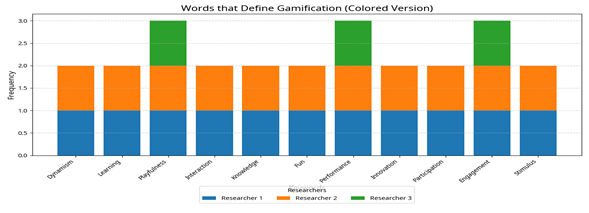
All interviewees would apply the concept of gamification only in undergraduate classrooms; all interviewees propose a gamification activity that covers the entire semester; all interviewees marked the elements challenges and feedback as the most attractive; all interviewees pointed out that verifying the level of student engagement and participation, assessing students’ sociability and group spirit are the best ways to evaluate results; all interviewees concluded that the following keywords define gamification: playfulness, performance, and engagement; two-thirds of the interviewees also included dynamism, learning, interaction, knowledge, fun, innovation, participation, stimulus, and practice in the group of keywords that define the initiative, as shown in Figure 1.
Definition of Gamification
It is observed that, when asked: “In your perception, is the application of gamification in the education segment well accepted?”66% of the interviewees answered “not always,” and 33% answered “yes,” a result that may indicate that, nowadays, there is still resistance to the use of gamification in education. When asked if they would recommend gamification: 33% answered “Strongly Recommend,” 33% answered “Recommend,” and 33% answered “Partially Recommend.” These positions indicate the need for caution in adopting the initiative, due to existing doubts about the initiative and its effects, as well as the diversity of its application.
The limitations of the research are highlighted, considering that, of the total requests to researchers for information on the topic, through responses to the questionnaire prepared for this purpose, only half of those requested responded. In this context, the initiative presents potential for the educational environment, since in the questionnaires answered by the researchers, it was found that 100% approved the following initiatives: use of gamification only for undergraduate; extension of the activity for the semester of the course; selected the elements of gamification—challenges and feedback — as the most attractive; chose to verify the student’s engagement level and the evaluation of students’ sociability and group spirit as the best ways to evaluate results. However, caution is noted regarding the application of gamification in the educational field, given existing resistance and the recommendation in the question: Would you recommend gamification?
Results
The study of gamification as a multimodal teaching alternative is still relatively new. It became evident that its practical use remains limited, given the possible developments of the topic. Another factor to consider is that the subject presents a considerable diversity of applications, inside and outside education, and, considering educational environments, it is feasible to apply it in different teaching spheres (basic, secondary, higher education, stricto and lato sensu postgraduate courses), in both face-to-face and virtual environments.
The elements of gamification do not follow a rule or a pattern, and they can be applied in their entirety or partially; they may require financial resources or just the remodeling of already existing procedures, without implying additional costs; they may cover an entire semester period, or just a short predetermined period; they may represent an activity or just a project; they may result in theoretical tasks or practical procedures to be achieved; they can be applied in virtual or face-to-face learning environments; everything will depend on the purpose, the available resources, both human and financial, as pedagogical aspects, the support of the educational institution, and other variables to be considered, since the concept tends to redefine the learning process, recovering interest and participation with a view to intellectual growth.
Individually, constant interaction with the multimodal elements of a game can involve the individual to such an extent that they must pay attention to a significant number of variables within the same context, a situation that can provoke transformations in their cognitive system. It is observed that games and their elements carry intrinsic and extrinsic, multimodal, and rapid stimuli, characteristic of the digital culture to which we are subjected. The psychology involved in gamification must be observed, since it deals with individuals and a very particular profile to be considered.
Multimodal game elements in the classroom, whether virtual or face-to-face, also require that teachers be prepared for the initiative, since the teacher’s didactic capacity tends to develop to keep pace with the rhythm of new activities. Teachers should be trained with the capabilities to deal with this new cultural context, as they will have to handle technologies and digital resources that are constantly renewed.
They must even be prepared to understand the new language used by digital resources and students, so they can better manage the learning environment under their control. In other words, they need to immerse themselves in the semiotic environments that intertwine the presence of technologies in contemporary society (Fardo, 2013).
Discussion
This research presents the multimodal concept of gamification in education and its developments, considering the need for the sector to modernize and offer individuals a modern, high-quality, interesting, and engaging education that attracts interest and effort towards the success of the process. Teachers should be properly trained for this, be enlightened about the various methods, and be trained in the correct use and evaluation of results. This should reduce resistance and prejudices regarding the adoption of the topic in educational institutions. However, the concept still requires further study based on practical applications, as it directly addresses individuals with varied profiles, capacities, and objectives. It is not a linear process, but one permeated with problems and alternatives; thus, it presents itself as a proposal that must be carefully planned and prepared.
Considering these precautions, Fardo (2013) warned that gamification needs to be more studied and understood, not only because it is a very recent topic but also because it is under discussion in various sectors of society, including among researchers not only in the field of education but in all areas of knowledge, for which the initiative appears applicable. Professor Clark (2013), a specialist in instructional design and technology training and a doctor in educational psychology and instructional technology from the University of Southern California, stated that games do not teach. The professor argued that games need to align with instructional objectives and strike the right balance between challenge and guidance to ultimately meet the learning goal.
This position was rebutted by (Kapp, 2013), who stated that games do teach and positively impact individuals’ motivation, and that in the end, it would not be the vehicle delivering knowledge that makes the difference, but the design—the motivational design. Well-defined instructions and well-designed games cause a powerful impact on individuals. According to the researchers, the debate should focus on the best game elements to be used to create the best games for students (Kapp, 2013). The subject remains controversial even among renowned researchers, given its wide applicability in contemporary knowledge and the still-unknown effects of its availability.
Gamification, therefore, aims to benefit the entire educational ecosystem: it improves the teaching experience for teachers while addressing engagement and motivation issues for students, thereby enhancing learning. It is considered that human beings have, by nature, the instinct for play (Huizinga, 2000, p. 9), which over the years has been re-signified and assumed a new role in society, as it exerts great influence on the cognitive, sensory, and psychomotor development of the individual (Navarro, 2013). Education perpetuates and disseminates knowledge while promoting its development, thereby ensuring the continuity of human society.
Observing individuals in their virtual worlds, or the world of games, one can perceive how interested, engaged, and enthusiastic they are in achieving objectives and goals, and how they do so of their own free will. The question is: what is the best way to bring this situation into real life, taking advantage of these efforts for individuals' real-life situations (McGonigal, 2012)? However, the variables related to the initiative must be considered, especially the profiles of students and teachers, as well as structural and financial aspects, for example, external to the context but indispensable for its continuity.
Conclusion
The article’s objective was decisive in planning and formulating research guidelines for its structure. The questionnaires were directed to researchers in contact with the new concept within their spheres of activity, seeking objective data and impressions from actors in the new process: researchers, teachers, and students. Within the context of higher education, as a suggestion for use in future academic work, it became clear that there will be a need for further studies in the area, which will motivate the expansion of research with the possibility of developing questionnaires specifically directed at teachers and students who are actors in a gamification process.
Playing and having fun are part of human culture, being natural to entertain. To reframe the game, shifting it from the function of distraction and entertainment to more complex tasks. It is an immersive, engaging, and multimodal activity that constantly connects with the individual. Gamification offers a new perspective on individuals’ motivation, encouraging greater engagement and interest in the learning process. As mentioned earlier, over the years, education has been a segment of human knowledge that has yet to fully leverage the good initiatives of its social and technological development.
It is not about a rupture but a proposal for assistance, a combination of efforts, and work directed toward the development of individuals. They are the goal of learning; their success is the success of the educational system. Therefore, any initiative to gamify means researching, paying attention to the outlined objectives, listening to the agents of the process, teachers, and students, directing efforts toward problem-solving, and the constant exercise of creativity, thus overcoming problems and resistance to the new idea. The different facets of gamification demonstrate the plurality of possible applications, in environments with or without resources, whether financial, structural, educational, or many others.
Gamification can make use of new platforms and expensive resources; however, it can also mean the simple application of just a few multimodal game elements in students’ daily activities, urging them toward knowledge, new discoveries, participation, engagement, and the pleasure of learning. In higher education institutions, the initiative is still timid, more commonly found in private-sector companies, also directed toward learning, but with a business focus.
To achieve the expected objectives, the agents of the new concept, for its effectiveness, will have to observe the proposed goal, its characteristics, the scope to be reached, the target audience, and a considerable range of intrinsic and extrinsic variables, not forgetting that this is about enhancing learning, motivating individuals, dealing with individual psychological aspects, and differentiated profiles. In summary, its application must be preceded by surveys, studies, detailed planning, conscious application, monitoring, and evaluation.
As a new concept, gamification as a multimodal approach to education still carries an aura of distrust and insecurity in some sectors, being still a truly controversial subject, given the existing discussions among various researchers on the topic.
Research and studies are still needed to advance the topic, disseminate its elements and effects across all segments of education, and generate discussion and deeper understanding. Questions need to be answered. Only then can a real evaluation of this new strategy be conducted, one that aligns with the positive purposes of the digital culture of the 21st century. Within the context of higher education, as a suggestion for use in future academic work, it became clear that there will be a need for further studies in the area, which will motivate the expansion of research with the possibility of developing questionnaires specifically directed at teachers and students who are actors in a gamification process.
References
Alves, A. M. P. (2016). Cultura lúdica sempre acompanhou a humanidade [Playful culture has always accompanied humanity]. Revista Pré-Univesp, (59). Universidade de Maringá. https://pre.univesp.br/cultura%20l%C3%BAdica#v9qsowvbnos
Barros, D. L. P. (2005 ). Teoria semiótica do texto [Semiotic theory of text]. Ática.
Brigham Young University. (2014). Playing Hunger games: Are gamified health apps putting odds in your favor? https://news.byu.edu/news/playing-hunger-games-are-gamified-health-apps-putting-odds-your-favor
Bzuneck, J. A., Guimarães, S. É. R., & Rufini, S. É. R. (2010 ). A promoção da autonomia como estratégia motivacional [Promoting autonomy as a motivational strategy]. Estudos Interdisciplinares em Pscologia. https://pepsic.bvsalud.org/scielo.php?script=sci_arttext&pid=S2236-64072010000100010
Capurro, R. (2007 ). Epistemología y Ciencia de la Información [Epistemology and Information Science]. Enl@ce: Revista Venezolana de Información, Tecnología y Conocimiento, 4(1), 11–29.
Castro, D. A. G. de, Takada, H. P., Abreu, T. F., Júnior, A. P. da M., & Castro, H. C. E. B. de. (2025). O uso da gamificação como metodologia inovadora no ensino superior brasileiro em medicina [The use of gamification as an innovative methodology in Brazilian higher education in medicine]. Cuadernos de Educación y Desarrollo, 17(2), 01–19.
Clark, R. (2013). Why games don’t teach. Learning Solutions Magazine. https://learningsolutionsmag.com/articles/1106/why-games-dont-teach
Clementi, J. A. (2014 ). Diretrizes motivacionais para comunidades de prática baseadas na gamificação [Motivational guidelines for gamification-based communities of practice] [Dissertação de Mestrado, Universidade Federal de Santa Catarina]. Repositório Institucional da UFSC. https://repositorio.ufsc.br/xmlui/bitstream/handle/123456789/128683/328203.pdf?sequence=1&isAllowed=y
Codeschool. (2024 ). Official site. Codeschool. https://codeschool.com
Cunha, L. F. da. (2014 ). Modelo conceitual para a gamificação em ambientes e-learning e sua utilização no AdaptWeb [Conceptual model for gamification in e-learning environments and its use in AdaptWeb] [Trabalho de Conclusão de Curso, Universidade do Estado de Santa Catarina].
Deterding, S., Khaled, R., Nacke, L., & Dixon, D. (2011). Gamification: Toward a definition. In CHI 2011 Gamification Workshop Proceedings. Vancouver, BC, Canada.
Dionisio, A. P. (2011). Gêneros textuais e multimodalidade [Textual genres and multimodality]. In A. M. Karwoski, B. Gaydeczka, & K. S. Brito (Eds.), Gêneros textuais: reflexões e ensino. Parábola Editorial.
Ducatti, A. P. S., Cazane, A. L., Doneda, L. R. Z. D. C., Pardo, P., & Jorge, C. F. B. (2025). Gamificação no Ensino Superior para o desenvolvimento de Soft Skills: uma Revisão Sistemática da Literatura [Gamification in Higher Education for the Development of Soft Skills: A Systematic Literature Review]. Revista Ibero-Americana de Estudos em Educação, 20(00), e19429. https://doi.org/10.21723/riaee.v20i00.1942901
Fardo, M. L. (2013 ). A gamificação como método: Estudo de elementos dos games aplicados em processos de ensino e aprendizagem [Gamification as a method: Study of game elements applied in teaching and learning processes] [Dissertação de Mestrado, Universidade de Caxias do Sul].
Freire, J. B. (2017). O jogo: Entre o riso e o choro [The game: Between laughter and tears]. Autores Associados.
Geekie Games. (2024). Official website. Geekie Games. https://geekiegames.com.br
Gil, A. C. (2022 ). Como elaborar projetos de pesquisa [How to develop research projects] (7a ed.). Atlas.
Halliday, M. A. K. (2013). An introduction to functional grammar (4a ed.). Routledge.
Hjorland, B. (2002). Epistemology and the socio-cognitive perspective in information science. Journal of the American Society for Information Science and Technology, 53(4), 257–270.
Huizinga, J. (2000). Homo ludens: The play element in culture. Perspectiva.
Inhelora, K. J. (2002). An introduction to Vygotsky’s thought. Revista Linhas, 3(1), 11.
Kapp, K. (2013). Once again games can and do teach. Learning Solutions Magazine. http://www.learningsolutionsmag.com/articles/1113/once-again-games-can-and-do-teach
Kapp, K. M. (2012 ). The gamification of learning and instruction: Game-based methods and strategies for training and education. Pfeiffer.
Khan Academy. (2025). Official website. Khan Academy. http://www.khanacademy.org
Klock, A. C. T., Carvalho, B. E. R., & Gasparini, I. (2014 ). Analysis of gamification techniques in virtual learning environments. RENOTE: Novas Tecnologias na Educação, 12(2). http://seer.ufrgs.br/index.php/renote/article/view/53496
Kress, G., & Van Leeuwen, T. (2001 ). Multimodal discourse: The modes and media of contemporary communication. Hodder Arnold.
Liu, Y. A. T., & Nakajima, T. (2011). Gamifying intelligent environments. In Ubi-MUI ’11 Proceedings of the 2011 International ACM Workshop on Ubiquitous Meta User Interfaces. Scottsdale, Arizona, USA.
Luna, T. S. (2002). The plurality of voices in classes and scientific articles. Journal 'Ao Pé da Letra' (UFPE), 4.
Martins, D. R., & Munhoz, A. S. (2014). Gamification: Perspectives of use in higher education. UNINTER. http://www.abed.org.br/hotsite/20-ciaed/pt/anais/pdf/91.pdf
McGonigal, J. (2012 ). Reality is broken: Why games make us better and how they can change the world. Best Seller.
Nanci, C. (2015). Gamification: Truths, myths, and open questions. Agora Entert. https://agoraentert.com.br/insights/gamificacao-verdades-mitos-e-questoes-em-aberto/
Navarro, G. (2013 ). Gamification: The transformation of the concept of the term game in the context of postmodernity [Trabalho de Conclusão de Curso, Universidade de São Paulo].
Ortiz-Rojas, M., Chiluiza, K., Valcke, M., & Bolanos-Mendoza, C. (2025 ). How gamification boosts learning in STEM higher education: a mixed methods study. International Journal of STEM Education, 12(1), 1. https://doi.org/10.1186/s40594-024-00521-3
Papert, S. (1994 ). The children’s machine: Rethinking school in the age of the computer. Artmed. (S. Costa, Trad.).
Piaget, J. (2002). Genetic epistemology (2nd ed.). Martins Fontes.
Pinheiro, L. V. (2013). Frontiers and horizons of research in information science in Brazil. IBICT.
Vianna, Y., Vianna, M., Medina, B., & Tanaka, S. (2013). Gamification, Inc.: How to reinvent companies through games. MJV Press.
Werneck, V. R. (2006). On the process of knowledge construction: The role of teaching and research. Ensaio: Avaliação Políticas Públicas em Educação, 14(51), 173–196.
Xavier, A. C. (2006). How to write a text: The construction of the argumentative dissertation. Rêspel.
Zichermann, G., & Cunningham, C. (2011). Gamification by design: Implementing game mechanics in web and mobile apps. O’Reilly Media.

Page 1 of
Download Count : 5
Visit Count : 78
Keywords
Scientific Production Crowdfunding; Financing; Access to Capital; Innovation

Author(s) Information




How to cite this article
Orlandi, T. R. C., Orlandi, M. T. D. A. L., & Gottschalg-Duque, C. (2026). Gamification and multimodality: A new path for education. Studies in Educational Management, 19, 1-16. https://doi.org/10.32038/sem.2026.19.01
Funding
Not applicable.
Author Contributions
Tomás Roberto Cotta Orlandi: Supervision (Lead), Conceptualization (Lead), Writing – Original Draft (Lead), Methodology (Lead), Writing – Review & Editing (Lead).
Maria Tereza de Andrade Lima Orlandi: Writing – Original Draft (support), Conceptualization (support), Validation (support), Writing – Review & Editing (support).
Claudio Gottschalg-Duque: Conceptualization (support), Methodology (support), Writing – Review & Editing (support).
All authors: Reviewed and approved the final manuscript.
Conflict of Interest
The authors declare that they have no known competing financial interests or personal relationships that could have appeared to influence the work reported in this paper.
Generative AI Use Disclosure Statement
No generative AI tools were used in the writing or analysis of this manuscript.
Data Availability Statement
Data will be available on request from the authors.
Acknowledgments
Not applicable.
Open Access
This article is licensed under a Creative Commons Attribution 4.0 International License, which permits use, sharing, adaptation, distribution and reproduction in any medium or format, as long as you give appropriate credit to the original author(s) and the source, provide a link to the Creative Commons license, and indicate if changes were made. You may view a copy of Creative Commons Attribution 4.0 International License here: http://creativecommons.org/licenses/by/4.0/