






Review Article
Thinking Strategic, Acting Myopic: A Systematic Review of the Organizational Myopia Antecedents


- Abstract
- Full text
- Metrics
The study aims to identify and integrate the antecedents of organizational myopia by a systematic review, providing a coherent conceptual framework to explain why organizations prioritize short-term results over long-term value creation. A systematic review was conducted following PRISMA guidelines. Of the 2,020 records identified in Scopus and Web of Science, 133 empirical articles were selected for qualitative thematic synthesis to extract and classify myopia drivers. The results categorize antecedents into two broad contexts: Social and Technological. Social factors include cultural patterns, individual cognitive biases (e.g., narcissism, loss aversion), and stakeholder pressures. Technological factors involve systemic and financial procedures, such as financial reporting frequency and capital market pressures. This research fills a critical theoretical gap by synthesizing fragmented literature into an integrated "Hard and Soft" framework. It offers a novel "outside-in" perspective—moving from macro-culture to systemic procedures—to comprehensively understand the systemic nature of short-termism. The findings suggest that overcoming myopia requires addressing both measurable structural elements and complex behavioral/cultural dimensions. Managers can use the framework to design multi-faceted strategies, including reforming reward structures, fostering green cognition, and balancing innovation with shareholder demands.
Thinking Strategic, Acting Myopic: A Systematic Review of the Organizational Myopia Antecedents
Esmaeil Aghatraki*, Ali Mansoori, Seyed Hosein Kazemi
Department of Public Administration, Faculty of Management and Economics, Tarbiat Modares University, Tehran, Iran
ABSTRACT:
The study aims to identify and integrate the antecedents of organizational myopia by a systematic review, providing a coherent conceptual framework to explain why organizations prioritize short-term results over long-term value creation. A systematic review was conducted following PRISMA guidelines. Of the 2,020 records identified in Scopus and Web of Science, 133 empirical articles were selected for qualitative thematic synthesis to extract and classify myopia drivers. The results categorize antecedents into two broad contexts: Social and Technological. Social factors include cultural patterns, individual cognitive biases (e.g., narcissism, loss aversion), and stakeholder pressures. Technological factors involve systemic and financial procedures, such as financial reporting frequency and capital market pressures. This research fills a critical theoretical gap by synthesizing fragmented literature into an integrated "Hard and Soft" framework. It offers a novel "outside-in" perspective—moving from macro-culture to systemic procedures—to comprehensively understand the systemic nature of short-termism. The findings suggest that overcoming myopia requires addressing both measurable structural elements and complex behavioral/cultural dimensions. Managers can use the framework to design multi-faceted strategies, including reforming reward structures, fostering green cognition, and balancing innovation with shareholder demands.
KEYWORDS: Organizational Myopia, Short-termism, Systematic Review, Managerial Decision-making, Strategic Foresight
In today's competitive and challenging environments, achieving sustainable success for organizations more than ever requires adopting sustainable and long-term strategic approaches (Brochet et al., 2015). Studies by the McKinsey Global Institute McKinsey Global Institute (2017) show that organizations with a long-term approach to management, over a ten-year period, had an average of 47% more revenue growth and 36% higher profitability than organizations that focused solely on short-term financial results. Such approaches encourage organizations to invest in creating sustainable competitive advantage and gaining social legitimacy with a broad, forward-looking perspective, rather than focusing on short-term and quarterly results.
Despite this, the reality of the organizational world reminds us that many organizations and their managers adopt short-sighted, myopic behaviors that may undermine long-term value creation (Edmans, 2023). The well-known failures of companies like Kodak and Nokia, and the sudden collapse of Enron, once the seventh largest company in the US, are often cited as examples of neglecting foresight which can challenge even established positions (Chabrak & Daidj, 2007; Vinokurova & Kapoor, 2023). Simply defined as preferring short-term results over long-term benefits “organizational myopia” represents a mirage that seduces every organizational decision-maker (Laverty, 2004).
The significant impacts of organizational myopia have increasingly attracted the attention of researchers in various fields over recent decades, who have analyzed its causes and consequences from cultural, individual, and financial perspectives. At the individual level, some researchers find that the temporal focus of senior managers and their cognitive biases play an important role in short-term decision-making (Bechtel Jayanti, 2011; Markus & Swift, 2020; Xu & Xu, 2024). Moreover, studies have shown that the design of CEO contracts and reward mechanisms that ignore long-term innovations have been introduced as one of the most important drivers of myopia (Cheng et al., 2019; Schäfer & Pelger, 2025). At the institutional level, continuous pressure from active investors for immediate returns has led to reactive and short-term behaviors in organizations (Helmuth et al., 2023; Markus & Swift, 2020). From a financial perspective, empirical evidence continues to confirm that capital market pressureand an excessive focus on short-term performance indicators lead managers to make decisions that prioritize immediate gains over long-term investments (Graham et al., 2005). From the perspective of strategic innovation, recent studies have focused on how established companies respond to innovation and have shown that an excessive focus on existing capabilities and current customer bases makes organizations vulnerable to fundamental technological change and leads to a kind of strategic myopia (Raisch & Krakowski, 2021).
The consequences of this organizational myopia are also significant and range from reduced investment in intangible assets and weakening of strategic renewal capability to creating an imbalance between exploratory and exploitative activities (Levinthal & March, 1993), which ultimately jeopardizes the organization's social legitimacy and competitive position in the long term and makes it vulnerable to fundamental changes (O’Reilly & Tushman, 2013). These various antecedents and consequences demonstrate the multifaceted and persistent nature of this phenomenon across different organizational contexts.
Despite the significant volume of research, the literature on organizational myopia still suffers from a fundamental theoretical gap. Existing studies have largly been conducted in a fragmented and separated manner, and as Marginson and McAulay (2008) point out, they lack a comprehensive and integrated conceptual framework for classifying and explaining the relationships among the diverse antecedents of this phenomenon (Slawinski & Bansal, 2015). This theoretical fragmentation has limited managers' ability to address this challenge systematically. This fragmentation further reveals the need for a systematic review, which (Czakon et al., 2023) also emphasized, to comprehensively summarize existing knowledge and provide the theoretical foundation for a deeper understanding of the causes of organizational myopia. Accordingly, this research addresses this gap by conducting a systematic review to identify, classify, and integrate antecedents of organizational myopia, provide a theoretical basis for a deeper understanding of this phenomenon, and outline a roadmap for creating sustainable value.
Background
Myopia in management literature refers to a short-sighted focus on short-term goals and neglecting long-term perspectives (Mizik, 2010). The roots of this topic in management literature can be traced back to the 1950s and 1960s in the field of marketing, where companies focused excessively on their current products or services instead of focusing on changing customer needs and wants (Levitt, 1984). Analyses conducted at that time clearly showed how a product-centric view, in contrast to a customer-centric approach, could lead to business failures in the face of environmental and competitive changes (Christensen & Bower, 1996). This concept quickly expanded beyond marketing to other critical management dimensions such as managerial myopia, short-termism, and strategic myopia; all these concepts emphasize the tendency of organizations and managers to prioritize immediate benefits at the expense of weakening future advantages (Marginson & Mcaulay, 2008).
As a complex and interdisciplinary concept that refers to the tendency of decision-makers to focus excessively on short-term goals and disregard long-term perspectives, organizational myopia lies at the intersection of behavioral, economic, and management theories. The roots of this interdisciplinary concept can be traced to increasing pressures for immediate financial results (Farrell, 1973), short-term performance-based reward systems, and managerial cognitive biases (Han et al., 2024), including tunnel vision that prevents a comprehensive and strategic understanding of the competitive environment (Ali & Tauni, 2021). In pioneering work, researchers such as Levinthal and March (1993) described this phenomenon as a structural and cognitive limitation that disrupts the delicate balance between exploiting current opportunities and exploring future innovative paths. Therefore, overcoming myopia and replacing it with a holistic and future-oriented perspective is one of the fundamental challenges of modern management and strategic planning in today's complex and rapidly changing era.
Following this agenda, in contemporary times, new and important themes such as digital transformation, environmental, social, and governance ESG (Environment, Social Responsibility, and Corporate Governance) factors, and the impacts of short-term decision-making in the post-pandemic era on long-term sustainability have become central. Recent research has explored the impact of ESG factors, digital transformation, and global crises on strategic foresight and emphasizes that strategic myopia, as a critical challenge, jeopardizes organizational sustainability, resilience, and sustainable competitive advantage. Myopia not only leads to incomplete decision-making and missed innovative opportunities but also results in inefficient resource allocation in key areas such as research and development, training, and sustainability, ultimately weakening the organization's long-term resilience and competitive advantage (Haq & Shin, 2024).
These developments indicate the evolution of our understanding of organizational myopia and its multifaceted dimensions within today's complex business environment, such that the consequences of this phenomenon are now evident in various aspects of organizational performance. Accordingly, organizational myopia is increasingly recognized as a serious barrier to the adaptation and integration of ESG components and sustainability thinking. This limited and short-term perspective delays necessary investments in environmental areas such as reducing greenhouse gas emissions, developing clean technologies, and improving resource efficiency (Liu & Chen, 2024). In the social responsibility domain, it leads to neglect of ethical obligations and employee welfare. In the governance domain, this approach can also lead to reduced transparency, weak oversight, and increased ethical risks, ultimately weakening the trust of investors, stakeholders, and the wider community. From this perspective, the inability to adopt a comprehensive, long-term approach within the ESG framework not only increases the organization's operational and financial risks but also undermine its credibility and resilience in today's competitive markets (Wu et al., 2024). Conversely, adopting and deepening ESG principles in organizational strategies is considered a fundamental solution to overcome the limitations of myopia and sets the stage for creating sustainable value, promoting ethical performance, and gaining long-term competitive advantage in dynamic and challenging environments.
The negative effects of organizational myopia can be manifested in different domains. In the technology domain, this phenomenon can hinder the exploitation of emerging technologies for long-term goals (Tunca & Balcioglu, 2025). From a financial perspective, focusing on short-term gains can lead to incorrect investment decisions and overlook future growth opportunities (Wang, 2024). By weakening the ability to identify opportunities and allocate resources optimally, organizational myopia can reduce organizational performance and leado slowness or deviation in the transformation process (Simon, 1987). From an organizational learning lens, myopia prevents the development of dynamic environmental insight, and in product innovation management, it leads to neglect of sustainability considerations. At the strategic level, this phenomenon hinders the strengthening of adaptive capabilities and innovation (van Werven et al., 2023). From a cultural perspective, short-term approaches can foster an opportunistic, reactive culture that weakens innovation and commitment to long-term perspectives (Lorsch, 1986). Finally, in the governance dimension, organizational structures and positions, especially in the context of corporate media, as well as control mechanisms and management layers, can all become involved in this phenomenon and disrupt the organization's ability to adopt sustainable strategies (Ji, 2019). These multiple consequences indicate that handling organizational myopia requires adopting a comprehensive and integrated explanatory approach across all organizational levels.
At a broad explanatory level, organizational myopia stems from factors at three intertwined and complementary levels, each shaping this tendency. At the macro level, the pressures of the capitalist system and the requirements of financial markets force organizations to demonstrate performance through short-term financial indicators, leading them to sacrificeong-term and innovative investments (Porter & Kramer, 2011; Wang et al., 2020). At the institutional level, frameworks such as agency theory show that misalignment of interests between managers and shareholders, along with poorly designedeward and evaluation systems, leads managers to make decisions that serve their personal and short-term interests rather than the organization's strategic and sustainable goals (Chigudu, 2021). At the individual level, cognitive biases such as tunnel vision, present bias, and loss aversion limit decision-makers' horizons and cause long-term strategic opportunities to be overlooked. Together, these three levels prevent organizations from understanding environmental complexities, identifying long-term trends, and investing in key areas such as research and development. Thus, organizational myopia is not merely a decision-making weakness but a systemic and multi-layered challenge that requires an integrated approach to identification, prevention, and correction at various organizational levels.
Looking across these different explanations also reveals that the characteristics of the modern world can have profound effects on the formation of organizational myopia, while the new world demands a long-term approach; this is this is the paradox of strategic thinking versus shortsighted action . Pressures from shareholder expectations drive managers to make short-term decisions, while concepts of sustainability and social responsibility (ESG) emphasize the necessity of paying attention to all stakeholders and adopting long-term strategies. This conflict between the pressure for short-term gains and the requirements for long-term goals has created a fundamental challenge in the current era, especially in digital transformation processes. In such circumstances, the need to adapt to social, economic, and environmental requirements, as well as to strengthen long-term strategies, is felt more than ever before. These conflicts remain central to maintaining the balance between profitability and organizational sustainability (Eccles et al., 2014).
Despite the evolution of the concept of myopia, comprehensive, integrated studies that systematically examine all underlying factors and antecedents of this phenomenon remain limited. The existing dispersion in research literature indicates an inability to provide a coherent model of the antecedents of myopia. This research gap emphasizes the importance of conducting more comprehensive studies to identify the roots and factors influencing this phenomenon and to provide effective solutions to overcome it. In the current era, the need for long-term, sustainable thinking to strengthen organizational sustainability and competitive advantage is greater than ever.
Method
Given the aim of this research, which is to investigate the antecedents of organizational myopia, combine these antecedents, and provide a coherent conceptual framework, the systematic review is chosen as the best method. This method, due to its broad coverage of all relevant studies, can consider all aspects of this phenomenon and clearly explain the complex relationships among its antecedents. A prominent feature of systematic review is that it conducts the search and selection of studies transparently and systematically (Tranfield et al., 2003). Furthermore, this method can produce comprehensive, valid results that help managers make evidence-based strategic decisions. In this regard, this review follows recommendations from reliable sources and serves as a step-by-step guide for conducting systematic reviews.
According to the guidelines provided by (Muka et al., 2020) the first step involved defining research questions, which addressed two main questions: "What are the antecedents of organizational myopia?" and "How can these antecedents be combined into a coherent conceptual framework?". After determining these questions, a review team consisting of three members was formed. In this process, two team members first conducted the search and review of scientific background. In case of ambiguity or disagreement, the third member served as the final arbiter, resolving disputes through collective discussion and review. In the next step, the search strategy for identifying relevant articles was designed. Online searches were conducted in two reputable databases, Scopus and Web of Science. This search included the use of Boolean operators and the following precise search query:
(TITLE-ABS-KEY (myopi* OR "short termism" OR "short-sightedness") AND TITLE-ABS-KEY (leader* OR executive OR business OR organiz* OR manage* OR corporate OR workplace OR employee OR staff )) AND (LIMIT-TO (DOCTYPE , "ar")) AND (LIMIT-TO (SUBJAREA , "BUSI") OR LIMIT-TO (SUBJAREA , "SOCI") OR LIMIT-TO (SUBJAREA , "DECI")) AND (LIMIT-TO (LANGUAGE , "English"))
In the fourth step, inclusion and exclusion criteria for selecting studies were developed. Only articles that directly investigated the antecedents of organizational myopia and had a direct impact on the internal organizational environment were accepted. Also, only empirical studies that used empirical data were included in the process. The fifth step focused on designing the data extraction form in Excel. This form included columns for collecting information such as the type of antecedent, how it affects, and strategies to counter organizational myopia. In the sixth step, detailed guidelines and review protocols were designed and formulated. These protocols were used to reduce biases and ensure the quality and accuracy in selection of articles.
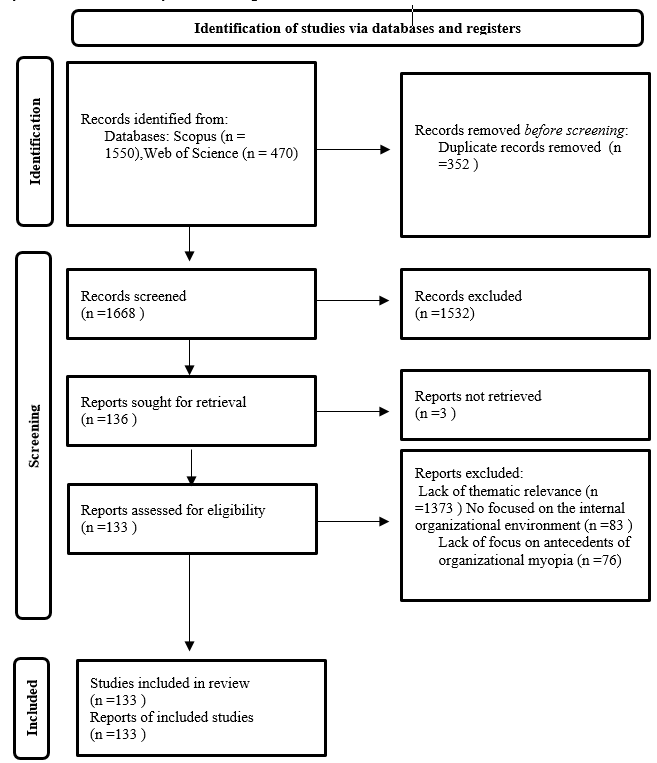
In the seventh step, searches in the Scopus and Web of Science databases were conducted without time limitations on May 6 which totally lead to identification of 2020 articles. In the eighth step, bibliographic information of the articles was saved in Citavi software for further processing and review. The ninth step involved identifying and removing duplicate articles, which resulted in the removal of 352 duplicate articles. In the tenth step, the titles and abstracts of the remaining articles were reviewed, and only articles relevant to the research questions were selected. In the eleventh step, full texts of selected articles were accessed for more detailed review and information extraction, with 3 articles being inaccessible. Steps 12 to 15 involved the strict application of inclusion and exclusion criteria to the full-text articles. Only studies directly related to the antecedents of organizational myopia remained. Relevant data were also extracted from the articles and recorded in Excel. This data included information about analysis methods, antecedents of myopia, justifying consequences, and factors affecting management development effectiveness. In steps 16 to 19, because of heterogeneity in data and methods, findings were qualitatively analyzed and synthesized (See Figure 1). Finally, 133 articles were selected for final analysis. In step twenty, the collected data were qualitatively synthesized, and the final results were extracted. Steps 21 to 23 were not performed because the present research did not focus on quantitative synthesis and meta-analysis. The final step (step 24) involved preparing and finalizing the comprehensive report, which, after final review and analysis, was prepared for publication in a reputable scientific journal. Finally, the diagram below clearly and precisely summarizes our research steps in the form of a PRISMA diagram (Page et al., 2021).
Systematic Review Study Phases Diagram
Results
General Characteristics of Reviewed Articles
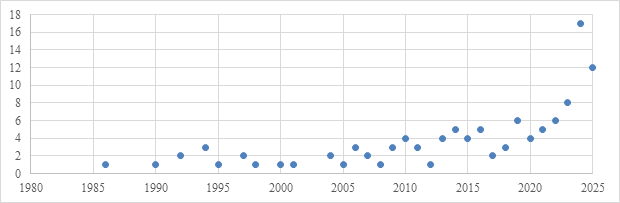
Based on Figure 2, the trend of publishing articles related to organizational myopia shows significant changes over time. According to Figure 2, which shows the distribution of reviewed articles from 1985 to 2025, the number of studies remained relatively stable with limited fluctuations until about 2005. However, from that year onward, especially in the 2010s, an increasing trend is observed, reaching its peak in the final years, particularly between 2020 and 2025. This growth may indicate increased sensitivity and attention of researchers to new challenges in managerial decision-making in the digital age, the spread of artificial intelligence, increasing time pressures, and accelerating social developments. In particular, the sharp increase from 2023 to 2025 indicates that this topic has gradually become one of the central concerns in management, organizational behavior, and technology studies.
Trend of Reviewed Articles Over Time
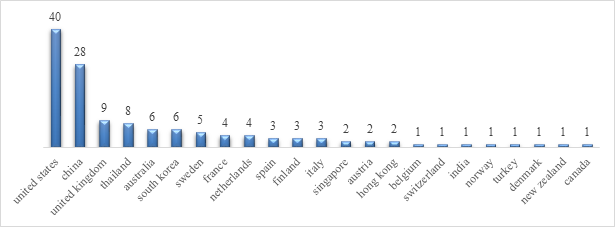
Based on Figure 3, the geographical distribution of reviewed articles shows that the highest research concentration on the topic under consideration has been in the United States, China, and the United Kingdom, which rank first with 40, 28, and 9 articles, respectively. This concentration may be due to the leadership of these countries in management and technological fields or greater access to scientific resources. In contrast, many countries have only one article in this field, indicating an uneven geographical distribution and highlighting the need to expand research in less-covered areas.
Geographical Distribution of Reviewed Articles
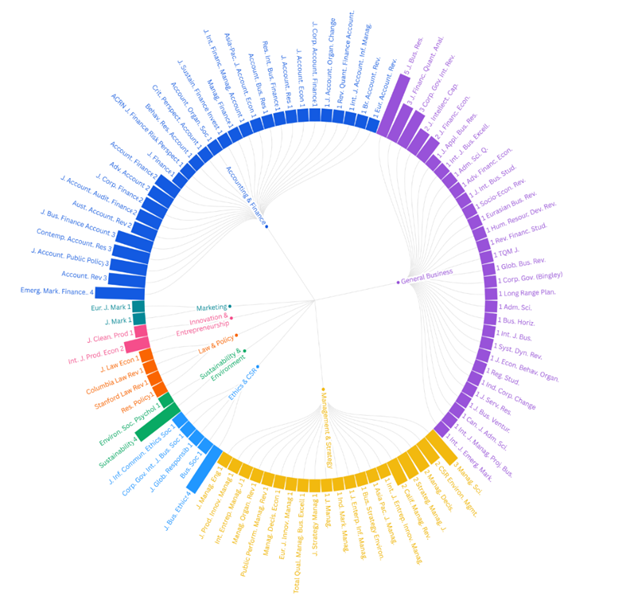
According to Figure 4, the reviewed articles have been published in a diverse range of scientific journals, but the main focus has been on journals in the "Accounting & Finance" field, indicating the literature's attention to financial and reporting aspects in the context of antecedents of organizational myopic decision-making. Journals such as Journal of Accounting Research and Journal of Finance play a prominent role in this field. Also, the fields of "General Business" and "Management & Strategy" have made significant contributions, indicating that this topic has also been considered from macro-organizational, ethical, and strategic perspectives. This concentration and relative diversity in journals indicate the interdisciplinary approach of the research and the importance of a multi-faceted analysis of decision-making antecedents in organizations.
Journal Participation in Reviewed Articles
Specific Findings Related to the Research Question
What are the antecedents of organizational myopia?
How can these antecedents be combined into a coherent conceptual framework?
To answer the two main research questions, thematic analysis was used. Thematic analysis is a common qualitative method for extracting hidden patterns and concepts in data, especially in review and exploratory studies. This method aims to identify and organize meaningful themes in textual data, providing a deeper understanding of the studied phenomenon (Braun & Clarke, 2006). In this regard, the selected articles were qualitatively reviewed and coded, and the main and sub-categories related to the phenomenon of myopia were extracted. The results of this analysis are presented in Table 1, which displays an integrated conceptual structure of the identified antecedents.
Antecedents of Organizational Myopia
|
Code |
Sub-Category |
Main Category |
Main Theme |
|
Psychological pressures from user expectations on social networks can influence managers' short-sighted decision-making. Cultural values, institutional factors and individual tendencies can increase managers' propensity for short-term decision-making (Sternad & Kennelly, 2017). In contrast to these cultural values, Confucian culture, using deeply rooted cultural beliefs, especially emphasizing ethics, trust and stability, weakens short-term behaviors (Lorsch, 1986; Min Du et al., 2025). Cultural structures include values and beliefs that direct managers toward short-term investments (Laverty, 2004). CSR rating systems, backed by cultural norms and social pressure, monitor an organization's adherence to ethical values and lead to a reduction in short-sighted behaviors (Gong & Ho, 2021). |
Social Culture Patterns |
Cultural |
Social |
|
Established mental frameworks and repetitive decision-making structures restrict innovation to familiar paths and reduce organizational learning, leading the organization towards short-sightedness (Ocasio et al., 2020; Thrane et al., 2010). Excessive fit between employees and the organization reduces diversity of perspectives and weakens the ability to identify environmental opportunities and threats (Uysal & Aydemir, 2022). Fear of internal and external pressures makes decision-making conservative and reduces foresight (Vuori & Huy, 2016). |
Organizational Culture Patterns |
||
|
Cognitive temporal preferences lead the CEO to focus on short-term benefits (Schotter & Weigelt, 1992). Optimism, narcissism, and greed of managers can also reduce realistic assessment of conditions (Agnihotri & Bhattacharya, 2021; Sajko et al., 2021). Risk aversion, stemming from managers' personal dependence on their job position, leads them to adopt conservative and short-term decisions (Smulowitz et al., 2023). Negative personality traits such as dark leadership, focus on personal interests and disregard for ethics, strengthen myopic decision-making (Marshall et al., 2013; Orlitzky et al., 2006). Role ambiguity and social influence drive managers towards adaptive and short-sighted behaviors in response to the environment (Marginson & McAulay, 2008). Career incentives and competitive positions, such as the breadth of management scope, increase the tendency for immediate benefits and short-term policies (Marginson & McAulay, 2008). |
CEO Psychological Characteristics |
Individual |
|
|
Managers' green cognition and environmental human capital increase their perception and ability to analyze environmental issues and make innovative decisions in the field of sustainability, preventing short-sighted decisions (Liu & Chen, 2024; Shi et al., 2025). Limited cognitive abilities and a diminished capacity for information processing lead to a greater tendency toward short-term outcomes and conservative decision-making (Han et al., 2024). Linear mental frameworks, such as Newtonian epistemology, have a reductionist and mechanical view of reality that limits the ability to pay attention to long-term complexities (Bechtel Jayanti, 2011). Structural problems such as short CEO time horizon, pressure to cover performance, and threat of hostile takeover also, in the form of cognitive biases, limit strategic vision (John et al., 2014). |
Managers' Cognitive Preferences |
||
|
High work experience (Gu, 2023; Saito, 2019), Previous collaborative experience with the board of directors (Pérez-Calero et al., 2019) and work history in financial institutions (Lai et al., 2024), increase the tendency for short-term decision-making. Older age or, conversely, youthful spirit, nearing retirement or end of tenure, strengthen short-term career incentives (Foreman-Peck et al., 2006; Shi et al., 2025). International experience or studying abroad, by broadening horizons, reduces the likelihood of myopia (Sun et al., 2022; Ge et al., 2024). Rural background and limitations due to poor economic conditions reinforce a conservative attitude and a tendency for immediate returns (Sun et al., 2024). Local identity and a manager’s geographical attachment to the company’s location can also contribute to the development of conservative attitudes, risk aversion, and a tendency toward short-term decision-making (Tong et al., 2024). Men show a greater tendency for short-term decisions than women (Gala et al., 2024). |
Manager's Experience, Background, and Personal Context |
||
|
Motivation to maintain the status quo (Parise, 2024), with the aim of preventing share dilution and maintaining control, can increase the tendency for short-term decisions. In entrepreneurial companies, ownership concentration, by increasing owner oversight (Mavruk & Carlsson, 2015) and entrepreneurs' financial freedom allow for long-term decision-making without stakeholder pressure (Neves, 2005). |
Ownership Challenges |
Stakeholder |
|
|
Agency problems arise when the interests of managers and shareholders conflict (Jian et al., 2024; Smulowitz et al., 2023), in this situation, managers may prioritize personal interests such as job security, short-term bonuses, or professional reputation over the organization's long-term and sustainable goals (Li & Li, 2023). Differences in the time horizons of managers and investors (Chakrabarty et al., 2016), and weak communication with foreign investors (Chakrabarty et al., 2016), lead to a focus on immediate results (Chakrabarty et al., 2016). Also, reduced job security and management entrenchment incentives exacerbate short-term behaviors (Nagarajan et al., 1995). |
Agency Issues |
||
|
The company's vulnerability to hostile takeover, pressure from competitors and activist investors for acquisition, weakens organizational culture and influences conservative managerial behavior, also increasing managers' job insecurity and strengthening short-term decision-making (Chatjuthamard et al., 2024; Denlertchaikul et al., 2022). In environments with no or weak anti-takeover laws, threats are intensified, and external monitoring is strengthened. Conversely, the existence of anti-takeover laws can reduce external pressures and provide greater freedom for long-term decision-making (Cannon et al., 2020; Catan & Kahan, 2016). |
Threat of Competitor Takeover |
||
|
Investors with a short time horizon (Liljeblom & Vaihekoski, 2009; Luo & Ye, 2024; Markus & Swift, 2020; Cremers et al., 2020; Strine Jr., 2014), especially transient institutional investors (Helmuth et al., 2023; Bushee, 2001; Koh, 2007; Bushee, 1998; Kim et al., 2019a), pressure managers to achieve short-term goals. These pressures are often applied through quarterly profitability expectations (Drew, 2009), accounting performance-based evaluations, and rapid reactions to financial news. In contrast, some institutional investors reduce myopic investments (Kim et al., 2019b). Conversely, dispersion of institutional ownership and weak oversight provide more opportunities for myopic behaviors (Burns et al., 2010). Investors' lack of access to information held by managers leads to misalignment of goals and short-term decisions (Ho et al., 2022). In some cases, long-term investors can prevent purely short-sighted decisions by establishing managerial discipline (Brunzell et al., 2015). |
Investor Pressure |
||
|
Pressure from market analysts (Fiorillo et al., 2023), especially through sequential analyses and interest in short-term profits, drives managers to make immediate and reportable decisions (Sun et al., 2022). Companies covered by more analysts are more exposed to short-term evaluations (He & Tian, 2013). Also, convergence in speculative analyses creates a self-reinforcing effect that intensifies the tendency for quick results in the market (Aspara et al., 2014). |
Analyst Pressure |
||
|
Increased frequency of financial reports (Fu et al., 2020; Gigler et al., 2014; Kraft et al., 2018; Call et al., 2024; García Osma et al., 2023; Houston et al., 2010) and the issuance of short-term earnings forecasts strengthen investors' and managers' focus on immediate profits. Managers' discretion in preparing reports creates opportunities for information distortion (Jiang & Xin, 2022). Also, increased transparency in reports traps managers in institutional investors' objectives (Nicholson & Cook, 2009). Over-reliance on financial information leads to ignoring fundamental business realities (Chabrak & Daidj, 2007). |
Financial Reporting |
Financial |
Technological |
|
Capital market pressure stems from short-term expectations of investors (Tong & Zhang, 2024; Esbjörn, 1999), financial analysts, and the frequency of financial report disclosures, which force managers to achieve quarterly profits and respond to forecasts (Bai et al., 2024; Martin et al., 2016). Compensation policies based on stock prices and profits create incentives for managers to increase reported profits (Chung et al., 2023). These pressures cause managers to neglect long-term investments (Kurt, 2018; Ding et al., 2024). |
Capital Market Pressure |
||
|
Some internal organizational mechanisms act as antecedents; including pressure for cost reduction, which leads to the elimination of discretionary expenses such as R&D, thereby weakening innovation capacity (Bivona & Montemaggiore, 2010; Bhojraj et al., 2009). Project-centricity and dependence on short-term budgets also force focus from strategic goals (Löfström, 2025). Adherence to the status quo in budgeting and traditional financing methods (Lyu et al., 2025), conversion of assets into financial assets (Lyu et al., 2025), and exclusive focus on supply chain efficiency (Hong et al., 2024), limit the organization's horizon. Instantaneous information (Tournois, 2004) drives immediate reactions and inaccurate risk forecasting (Pommet & Sattin, 2019). |
Internal and Operational Processes |
Systemic |
|
|
Excessive focus of control and performance evaluation systems on short-term indicators (Kogut & Kulatilaka, 1994; Karlsson, 1997; Merchant, 1990; Faleye et al., 2011; Coviello et al., 2000). Evaluation is often limited to metrics such as daily productivity (Kim et al., 2015). This type of financial governance devalues future-oriented capabilities (Maneenop et al., 2024). Lack of a comprehensive perspective (Barrutia & Gilsanz, 2013; Day & Nedungadi, 1994), adherence to the status quo (Massaro et al., 2015) and over-reliance on internal info cause factors like customer satisfaction to be overlooked. Improvements in control systems (Ji, 2019) and mandatory ESG disclosure guide managers towards long-term projects (Smulowitz et al., 2023; Slawinski & Bansal, 2015). |
Emphasis of Control and Evaluation Systems |
||
|
Risk management under the influence of immediate risks such as climate change (Sun et al., 2024; Ongsakul et al., 2025), uncertainty (Thrane et al., 2010), fluctuations (Liu & Liu, 1994), and legal disputes (Hassan et al., 2021) tend towards short-term decision-making. |
Risk Management Pattern |
||
|
Within the corporate governance framework, tools such as threat of dismissal and executive rotation policies are used (Varas, 2018; Palley, 1997). Headquarters with strict management styles limit autonomy (Barton et al., 1992). Strengthening board independence leads to myopia (Padungsaksawasdi et al., 2022) while loyal board relationships reduce it (Harris & Hampton, 2022). |
Corporate Governance Pattern |
||
|
Inappropriate compensation structures (Thanassoulis, 2013), variable pay based on performance, and lack of long-term compensation increase myopic behaviors (Schotter & Weigelt, 1992; Schäfer & Pelger, 2025). Tying systems solely to financial metrics can limit long-term commitment (Cheng et al., 2019). Disparities in compensation between the CEO and senior team (Kwon et al., 2023) undermine managerial cohesion. |
Managerial Compensation Pattern |
The research findings indicate that organizational myopia, like a long shadow over decisions, is rooted in two deep contexts: technological and social. Within the realm of social factors, three main pillars can be identified: cultural, individual, and stakeholder-related. Among these, the phenomenon of shared fear conspicuously manifests, especially as revealed in the Nokia case. This fear had two distinct yet intertwined faces: Nokia's senior managers were afraid of the shadow of competitors and the relentless pressure from shareholders; an external fear that drove them towards short-term achievements. Simultaneously, in the middle layers of the organization, another type of fear prevailed: fear of superiors and internal colleagues. These dual fears, both external and internal, form a complex mechanism that steers the organization toward immediate, not necessarily future-oriented,ecisions (Vuori & Huy, 2016).
Individual factors of managers also, like an internal compass, play a pivotal role in directing organizational myopia. Among these, CEO narcissism can deceptively lead managers toward quick, flashy results because the need for immediate validation distracts them from long-term,trategic paths (Agnihotri & Bhattacharya, 2021). Interestingly, gender also plays a role in this equation; studies show that male managers, as if by an unconscious attraction, are more drawn to short-term decisions (Gala et al., 2024). From a cognitive perspective, linear epistemology, meaning the conceptual framework rooted in Newtonian and positivist views that reduce reality to small and measurable components, can be a major obstacle to strategic thinking. This perspective prevents managers from understanding long-term complexities and uncertainties and limits them only to controllable variables in the short term. Alongside these, stakeholder pressure, especially from transient institutional investors who have no vision beyond quarterly profits, acts like rapid pulses on the organization's body, forcing managers to cater to immediate market demands instead of building sustainable value (Koh, 2007).
However, organizational myopia has another side: technological antecedents. In this area financial and systemic antecedents play a decisive role. In the financial dimension, managers' discretion in financial reporting acts like a double-edged sword; while providing flexibility, this discretion can also createhe temptation to manipulate reports to present a favorable short-term image (Jiang & Xin, 2022). Also, the more financial analysts scrutinize a company, the greater the pressure for impressive performance in short financial periods, as if the organization is caught in a relentless speed race (He & Tian, 2013). In the systemic section, "the emergence of live information," which provides instantaneous data, can lead managers to react immediately and make hasty decisions instead of thinking deeply and planning strategically (Tournois, 2004). Finally, transparency, which is inherently valuable, can lead managers into the trap of being held captive by the objectives of institutional investors, where the company's main mission is sacrificed for the immediate satisfaction of short-term stakeholders (Nicholson & Cook, 2009). Thus, a combination of these technological and social factors provides fertile ground for the growth and deepening of organizational myopia in contemporary environments.
Discussion and Conclusion
Focusing on long-term thinking is a fundamental requirement for achieving sustainable success in organizations, as short-sighted approaches can have destructive consequences for long-term growth and survival. In this regard, the present research conducted a systematic review of existing literature to identify and integrate the antecedents that drive organizations toward short-term decision-making. The results introduce a set of main themes as antecedents of organizational myopia that can be analyzed in two broad contexts: social and technological. In the following, these themes are examined in detail, and each is explained.
Social and organizational culture is raised as one of the key antecedents of organizational myopia. This category refers to a set of established values, beliefs, and norms that influence decision-making in society and within organizations. Cultures that emphasize immediate success, competitiveness, or short-term rewards implicitly limit managers' strategic horizons. As Laverty (2004) emphasizes, cultural structures can lead managers towards investments with immediate returns by reinforcing opportunistic mindsets. Moreover, Sternad and Kennelly (2017) also emphasized the impact of social values on decision-making patterns. At the organizational level, (Ocasio, 1997) show that established mental frameworks limit innovation and set the stage for repetitive short-term decisions. These findings are completely consistent with previous literature and show that organizational myopia has a cultural root; a culture that replaces commitment to the future with immediate rewards (Lorsch, 1986). Therefore, the present analysis emphasizes that reforming cultural attitudes, both at the macro-social level and at the organizational level, is a fundamental step in combating managerial myopia.
Corporate governance and organizational structures are also raised as institutional antecedents of organizational myopia. This category refers to the systems of power distribution, oversight, and accountability within the organization that shape managerial behavior. In structures where managers' job security is low, factors such as the threat of dismissal or successive managerial rotations shorten the decision-making time horizon (Varas, 2018). As Padungsaksawasdi et al. (2022) argue, greater board independence, without control and incentive mechanisms aligned with the organization's long-term goals, can reinforce managers’ short-term individual motivations. Also, (Jian et al., 2024). based on agency theory, show that conflicts of interest between managers and shareholders set the stage for decisions that serve individual and short-term interests. This analysis is consistent with previous research, as it emphasizes that poorly designed governance and control mechanisms are a fundamental factor exacerbating organizational myopia (Chigudu, 2021). Therefore, reviewing governance relationships and creating a balance between managerial independence and accountability is a strategic necessity for strengthening a long-term horizon in decision-making.
Managers' cognitive preferences, another individual antecedent of organizational myopia, refer to the mental characteristics, information-processing patterns, and time horizons of managers that shape how issues are perceived and interpreted. Managers with green cognition and environmental human capital usually have a more analytical approach to the future (Liu & Chen, 2024), developing these capabilities can act as a protective factor against quick-return and superficial decisions. In contrast, factors such as a short time horizon, performance pressures, and the need to quickly prove success drive managers to make immediate decisions. The findings of this research align with previous studies that emphasize the role of cognitive biases, excessive optimism, and a focus on short-term rewards as major drivers of myopia (Agnihotri & Bhattacharya, 2021). This consistency suggests that combating myopia requires restructuring managers' cognitive preferences and strengthening their long-term analytical abilities.
As observed in the examination of the antecedents of organizational myopia, this phenomenon has multiple and intertwined dimensions that require a comprehensive approach to understanding and managing it. Our analyses have categorized the antecedents of myopia into two general types: hard and soft. Hard antecedents include structural, financial, and systemic aspects of the organization that are often measurable and changeable through formal interventions. In contrast, soft antecedents refer to individual and cultural dimensions rooted in the values, beliefs, cognitive preferences, and behavioral patterns of individuals and groups within the organization, and changing them is more complex (Laverty, 2004). This categorization shows that organizational myopia is not a one-dimensional phenomenon, and neglecting any of these dimensions can undermine efforts to overcome it.
To effectively address organizational myopia, it is important to understand the intertwined relationships among these hard and soft antecedents and to provide an integrated conceptual framework showing how they interact (See Figure 5). Presenting such a model not only fills the existing research gap in classifying and comprehensively explaining the antecedents of myopia but also helps managers design and implement more comprehensive and effective strategies for fostering long-term thinking and achieving organizational sustainability by identifying all influencing dimensions. This integrated approach allows identification of hidden weaknesses and the exploitation of mutual strengths across organizational dimensions.
A Model of Antecedents of Organizational Myopia
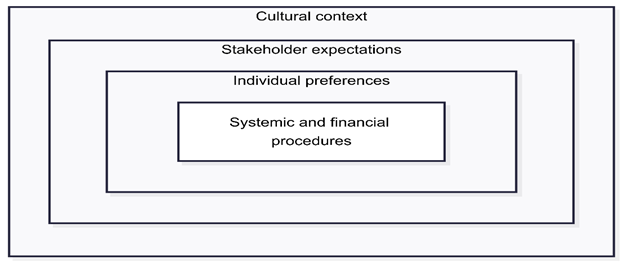
To have a comprehensive view and solve issues fundamentally, it is necessary to examine myopia comprehensively. This means adopting an outside-in approach: starting with a broad understanding of culture, then moving to stakeholder expectations and individual preferences, and finally focusing on systemic and financial aspects. Ignoring any of these dimensions will lead to an incomplete view and ineffective solutions.
To effectively combat organizational myopia and move toward a more comprehensive perspective, adopting multi-faceted strategies is essential. First and foremost, the role of senior managers in cultural transformation is crucial; they must challenge traditional beliefs and promote intellectual flexibility through training and job rotation by issuing cultural statements, regular evaluations for exchange of ideas, and encouraging new perspectives (Lorsch, 1986) . In addition, reforming reward and oversight structures is of great importance; reviewing performance evaluation criteria, reducing short-term budgetary pressures, and strengthening oversight and auditing mechanisms can prevent the intensification of myopia (Palley, 1997). Special attention should also be paid to compensation and creating a balance between managers' and employees' salaries, as significant disparities can weaken internal trust and cooperation and exacerbate myopia (Orlitzky et al., 2006). Finally, companies are obliged to create a sustainable balance between shareholder interests and their innovation. These strategies are just examples of proposed approaches to combat managerial myopia and by no means provide a comprehensive summary. Therefore, the necessity of conducting a systematic and methodical review of all existing strategies to combat myopia is strongly felt. Such research will be able to achieve a deeper and more comprehensive understanding by collecting, analyzing, and evaluating fragmented evidence, and ultimately, like an effective medicine for the disease of myopia that afflicts many organizations, provide practical and effective solutions.
Funding
Not applicable.
Author Contributions
All authors contributed to the conception, development, and writing of the paper and approved the final version of the manuscript.
Conflict of Interest
The authors declare that they have no known competing financial interests or personal relationships that could have appeared to influence the work reported in this paper.
Generative AI Use Disclosure Statement
No generative AI tools were used in the writing or analysis of this manuscript.
Data Availability Statement
Data will be available on request from the authors.
Acknowledgments
Not applicable.
References
Agnihotri, A., & Bhattacharya, S. (2021). CEO narcissism and myopic management. Industrial Marketing Management, 97, 145–158. https://doi.org/10.1016/j.indmarman.2021.07.006
Ali, Z., & Tauni, M. Z. (2021). CEO overconfidence and future firm risk in China: The moderating role of institutional investors. Chinese Management Studies, 15(5), 1057–1084. https://doi.org/10.1108/cms-04-2019-0147
Aspara, J., Pajunen, K., Tikkanen, H., & Tainio, R. (2014). Explaining corporate short-termism: Self-reinforcing processes and biases among investors, the media and corporate managers. Socio-Economic Review, 12(4), 667–693. https://doi.org/10.2139/ssrn.2016179
Bai, X., Ma, X., & Yue, D. (2024). Can the relative ESG gap reduce managerial myopia? A study based on the “tunnel effect”. Sustainability, 16(8), 3170. https://doi.org/10.3390/su16083170
Barrutia, J. M., & Gilsanz, A. (2013). Electronic service quality and value. Journal of Service Research, 16(2), 231–246. https://doi.org/10.1177/1094670512468294
Barton, H., Brown, D., Cound, J., Marsh, P., & Willey, K. (1992). Does top management add value to investment decisions? Long Range Planning, 25(5), 43–58. https://doi.org/10.1016/0024-6301(92)90274-6
Bechtel Jayanti, E. (2011). Through a different lens: A survey of linear epistemological assumptions underlying HRD models. Human Resource Development Review, 10(1), 101–114. https://doi.org/10.1177/1534484310386753
Bhojraj, S., Hribar, P., Picconi, M., & McInnis, J. (2009). Making sense of cents: An examination of firms that marginally miss or beat analyst forecasts. The Journal of Finance, 64(5), 2361–2388. https://doi.org/10.2139/ssrn.418100
Bivona, E., & Montemaggiore, G. B. (2010). Understanding short- and long-term implications of “myopic” fleet maintenance policies: A system dynamics application to a city bus company. System Dynamics Review, 26(3), 195–215. https://doi.org/10.1002/sdr.450
Braun, V., & Clarke, V. (2006). Using thematic analysis in psychology. Qualitative Research in Psychology, 3(2), 77–101. https://doi.org/10.1191/1478088706qp063oa
Brochet, F., Loumioti, M., & Serafeim, G. (2015). Speaking of the short-term: Disclosure horizon and managerial myopia. Review of Accounting Studies, 20(3), 1122–1163. https://doi.org/10.2139/ssrn.1999484
Brunzell, T., Liljeblom, E., & Vaihekoski, M. (2015). Short-term expectations in listed firms: The effects of different owner types. Journal of International Financial Management & Accounting, 26(3), 223–256. https://doi.org/10.1111/jifm.12028
Burns, N., Kedia, S., & Lipson, M. (2010). Institutional ownership and monitoring: Evidence from financial misreporting. Journal of Corporate Finance, 16(4), 443–455. https://doi.org/10.1016/j.jcorpfin.2010.06.001
Bushee, B. J. (1998). The influence of institutional investors on myopic R&D investment behavior. The Accounting Review, 73(3), 305–333. https://doi.org/10.2308/tar-902584
Bushee, B. J. (2001). Do institutional investors prefer near-term earnings over long-run value? Contemporary Accounting Research, 18(2), 207–246. https://doi.org/10.1092/j4gu-bhwh-8hme-le0x
Call, A. C., Hribar, P., Skinner, D. J., & Volant, D. (2024). Corporate managers’ perspectives on forward-looking guidance: Survey evidence. Journal of Accounting and Economics, 78(2–3). https://doi.org/10.1016/j.jacceco.2024.101731
Cannon, J. N., Hu, B., Lee, J. J., & Yang, D. (2020). The effect of international takeover laws on corporate resource adjustments: Market discipline and/or managerial myopia? Journal of International Business Studies, 51(9), 1443–1477. https://doi.org/10.1057/s41267-020-00370-6
Catan, E. M., & Kahan, M. (2016). The law and finance of antitakeover statutes. Stanford Law Review, 68(3), 629–680. https://doi.org/10.2139/ssrn.2517594
Chakrabarty, A., De, A., & Bandyopadhyay, G. (2016). Horizon heterogeneity, institutional constraint and managerial myopia: A multi-frequency perspective on ELSS. International Journal of Business Excellence, 9(1), 18. https://doi.org/10.1504/ijbex.2016.073374
Chabrak, N., & Daidj, N. (2007). Enron: Widespread myopia. Critical Perspectives on Accounting, 18(5), 539–557. https://doi.org/10.1016/j.cpa.2005.10.004
Chatjuthamard, P., Chintrakarn, P., Papangkorn, S., & Jiraporn, P. (2024). Corporate culture and takeover vulnerability: Evidence from machine learning and earnings conference calls. International Journal of Accounting & Information Management, 32(1), 74–99. https://doi.org/10.1108/ijaim-02-2023-0052
Cheng, M. M., Dinh, T., Schultze, W., & Assel, M. (2019). The effect of bonus deferral on managers’ investment decisions. Behavioral Research in Accounting, 31(2), 31–49. https://doi.org/10.2308/bria-52463
Chigudu, D. (2021), “Street Entrepreneurship in the Wake of Covid-19: The Dilemma of Street Vending and Strategies for Endurance”, International Journal of Economics and Business Administration, IX No. Issue 1, pp. 257–273. https://doi.org/10.35808/ijeba/671
Christensen, C. M., & Bower, J. L. (1996). Customer power, strategic investment, and the failure of leading firms. Strategic Management Journal, 17(3), 197–218. https://doi.org/10.1002/(sici)1097-0266(199603)17:3<197::aid-smj804>3.0.co;2-u
Chung, B. H., Collins, D. W., & Song, J. Z. (2023). Managerial myopia and the unintended real consequences of conditional conservatism. Journal of Business Finance & Accounting, 50(5–6), 1060–1097. https://doi.org/10.1111/jbfa.12675
Coviello, N. E., Brodie, R. J., & Munro, H. J. (2000). An investigation of marketing practice by firm size. Journal of Business Venturing, 15(5–6), 523–545. https://doi.org/10.1016/s0883-9026(98)00035-4
Cremers, M., Pareek, A., & Sautner, Z. (2020). Short-term investors, long-term investments, and firm value: Evidence from Russell 2000 index inclusions. Management Science, 66(10), 4535–4551. https://doi.org/10.1287/mnsc.2019.3361
Czakon, W., Klimas, P., Kawa, A., & Kraus, S. (2023). How myopic are managers? Development and validation of a multidimensional strategic myopia scale. Journal of Business Research, 157, 113573. https://doi.org/10.1016/j.jbusres.2022.113573
Day, G. S., & Nedungadi, P. (1994). Managerial representations of competitive advantage. Journal of marketing, 58(2), 31-44. https://doi.org/10.1177/002224299405800203
Denlertchaikul, N., Chatjuthamard, P., Jiraporn, P., & Phiromswad, P. (2022). Do takeover threats stifle or promote managerial efforts to innovate? Evidence from takeover vulnerability, and text-based measure of innovation. Administrative Sciences, 12(3), 110. https://doi.org/10.3390/admsci12030110
Ding, D. K., Ferreira, C., Ngo, V. M., Nguyen, P. V., & Wongchoti, U. (2024). Corporate social responsibility and myopic management practice: Is there a link? Review of Quantitative Finance and Accounting, 62(1), 271–308. https://doi.org/10.1007/s11156-023-01212-w
Drew, M. E. (2009). The puzzle of financial reporting and corporate short-termism: A universal ownership perspective. Australian Accounting Review, 19(4), 295–302. https://doi.org/10.1111/j.1835-2561.2009.00065.x
Eccles, R. G., Ioannou, I., & Serafeim, G. (2014). The impact of corporate sustainability on organizational processes and performance. Management Science, 60(11), 2835–2857. https://doi.org/10.1287/mnsc.2014.1984
Edmans, A. (2023). How great companies deliver both purpose and profit. Journal of Chinese Economic and Business Studies, 21(3), 465–469. https://doi.org/10.1080/14765284.2023.2219439
Esbjörn, S. (1999). A comparison of managers’ perceptions of short-termism in Sweden and the U.S. https://doi.org/10.1016/s0925-5273(99)00018-3
Faleye, O., Hoitash, R., & Hoitash, U. (2011). The costs of intense board monitoring. Journal of Financial Economics, 101(1), 160–181. https://doi.org/10.1016/j.jfineco.2011.02.010
Farrell, M. J. (Ed.). (1973). Readings in welfare economics. Macmillan Education UK. https://doi.org/10.1017/s0770451800031481
Fiorillo, P., Gangi, F., Meles, A., Mustilli, M., & Salerno, D. (2023). The impact of equity analysts on ESG performance: Evidence from an exogenous shock. Global Business Review. https://doi.org/10.1177/09721509231168252
Foreman-Peck, J., Makepeace, G., & Morgan, B. (2006). Growth and profitability of small and medium-sized enterprises: Some Welsh evidence. Regional Studies, 40(4), 307–319. https://doi.org/10.1080/00343400600725160
Fu, R., Kraft, A., Tian, X., Zhang, H., & Zuo, L. (2020). Financial reporting frequency and corporate innovation. The Journal of Law and Economics, 63(3), 501–530. https://doi.org/10.2139/ssrn.3429228
Gala, P., Kashmiri, S., & Nicol, C. D. (2024). Female CEOs and corporate social responsibility: Effect of CEO gender on relational and rational CSR. European Journal of Marketing, 58(10), 2129–2168. https://doi.org/10.1108/ejm-06-2023-0448
García Osma, B., Guillamón Saorín, E., & Mercado, F. (2023). Quarterly earnings guidance and real earnings management. Journal of Business Finance & Accounting, 50(5–6), 1029–1059. https://doi.org/10.1111/jbfa.12683
Ge, L. G., Muller, A., Gong, T., & Qian, C. (2024). CEO international experience in advanced market economies and firm investment horizon in a transitioning economy. Management and Organization Review, 20(1), 111–138. https://doi.org/10.1017/mor.2023.41
Gigler, F., Kanodia, C., Sapra, H., & Venugopalan, R. (2014). How frequent financial reporting can cause managerial short-termism: An analysis of the costs and benefits of increasing reporting frequency. Journal of Accounting Research, 52(2), 357–387. https://doi.org/10.2139/ssrn.2196152
Gong, Y., & Ho, K.-C. (2021). Corporate social responsibility and managerial short-termism. Asia-Pacific Journal of Accounting & Economics, 28(5), 604–630. https://doi.org/10.1080/16081625.2018.1540941
Graham, J. R., Harvey, C. R., & Rajgopal, S. (2005). The economic implications of corporate financial reporting. Journal of Accounting and Economics, 40(1–3), 3–73. https://doi.org/10.3386/w10550
Gu, L. (2023). Executives’ financial experience and myopic marketing management: A myopic loss-aversion perspective. Journal of Business Research, 157, 113587. https://doi.org/10.1016/j.jbusres.2022.113587
Han, X., Qiao, J., Meng, L., & Hsu, S. (2024). Central bank communication and leverage differentiation of non-financial enterprises. Emerging Markets Finance and Trade, 60(8), 1623–1642. https://doi.org/10.1080/1540496x.2023.2291153
Haq, H. U., & Shin, J. (2024). Owning the issue pays off: Investor reaction to intensity of corporate socio-political activism. Applied Economics Letters, 31(20), 2134–2137. https://doi.org/10.1080/13504851.2023.2211327
Harris, O., & Hampton, J. (2022). Director co-option and the cash conversion cycle. Journal of Corporate Accounting & Finance, 33(2), 129–141. https://doi.org/10.1002/jcaf.22540
Hassan, M. K., Houston, R., & Karim, M. S. (2021). Courting innovation: The effects of litigation risk on corporate innovation. Journal of Corporate Finance, 71, 102098. https://doi.org/10.1016/j.jcorpfin.2021.102098
He, J., & Tian, X. (2013). The dark side of analyst coverage: The case of innovation. Journal of Financial Economics, 109(3), 856–878. https://doi.org/10.1016/j.jfineco.2013.04.001
Helmuth, C. A., Ketchen, D. J., Craighead, C. W., Lee, K. B., & Connelly, B. L. (2023). Quality shareholders versus transient investors: The alarming case of product recalls. Business Horizons, 66(6), 721–727. https://doi.org/10.1016/j.bushor.2023.02.005
Ho, K.-C., Huang, H.-Y., & Liu, S. (2022). Information disclosure ratings and managerial short-termism: An empirical investigation of the Chinese stock market. International Entrepreneurship and Management Journal, 18(1), 349–381. https://doi.org/10.1007/s11365-021-00778-y
Hong, J., Xiong, H., & Zhou, Z. (2024). Does supply chain network centrality enhance or impede firm innovation: Evidence from China. Emerging Markets Finance and Trade, 60(9), 2068–2080. https://doi.org/10.1080/1540496x.2023.2298269
Houston, J. F., Lev, B., & Tucker, J. W. (2010). To guide or not to guide? Causes and consequences of stopping quarterly earnings guidance. Contemporary Accounting Research, 27(1), 143–185. https://doi.org/10.1111/j.1911-3846.2010.01005.x
Jian, J., Tian, H., Hu, D., & Tang, Z. (2024). Manager myopia and green technology innovation. Management Decision, 62(5), 1618–1644. https://doi.org/10.1108/md-06-2023-0891
Ji, A. E. (2019). Internal control weakness and managerial myopia: Evidence from SOX Section 404 disclosures. ACRN Journal of Finance and Risk Perspectives, 8(1), 71–83. https://doi.org/10.35944/jofrp.2019.8.1.004
Jiang, X., & Xin, B. (2022). Financial reporting discretion, managerial myopia, and investment efficiency. The Accounting Review, 97(1), 291–316. https://doi.org/10.2308/tar-2017-0342
John, K., Makhija, A. K., & Ferris, S. P. (Eds.). (2014). Corporate governance in the US and global settings, advances in financial economics. Emerald Group Publishing Limited. https://doi.org/10.1108/s1569-373220140000017010
Karlsson, C. (1997). Perspective: Changing product development strategy? A managerial challenge. Journal of Product Innovation Management, 14(6), 473–484. https://doi.org/10.1111/1540-5885.1460473
Kim, H.-D., Kim, Y., Mantecon, T., & Song, K. R. (2019a). Short-term institutional investors and agency costs of debt. Journal of Business Research, 95, 195–210. https://doi.org/10.1016/j.jbusres.2018.10.019
Kim, H.-D., Park, K., & Roy Song, K. (2019b). Do long-term institutional investors foster corporate innovation? Accounting & Finance, 59(2), 1163–1195. https://doi.org/10.1111/acfi.12284
Kim, S.-C., Kim, Y.-W., Park, K. S., & Yoo, C.-Y. (2015). Impact of measuring operational-level planning reliability on management-level project performance. Journal of Management in Engineering, 31(5). https://doi.org/10.1061/(asce)me.1943-5479.0000326
Kogut, B., & Kulatilaka, N. (1994). Options thinking and platform investments: Investing in opportunity. California Management Review, 36(2), 52–71. https://doi.org/10.2307/41165744
Koh, P.-S. (2007). Institutional investor type, earnings management and benchmark beaters. Journal of Accounting and Public Policy, 26(3), 267–299. https://doi.org/10.1016/j.jaccpubpol.2006.10.001
Kraft, A. G., Vashishtha, R., & Venkatachalam, M. (2018). Frequent financial reporting and managerial myopia. The Accounting Review, 93(2), 249–275. https://doi.org/10.2308/accr-51838
Kurt, A. C. (2018). How do financial constraints relate to financial reporting quality? Evidence from seasoned equity offerings. European Accounting Review, 27(3), 527–557. https://doi.org/10.1080/09638180.2017.1279556
Kwon, S. H., Kim, J., & Yim, H. (2023). Looking far or close: The explanatory role of myopic management in the relationship between CEO-TMT power disparity and corporate social responsibility. Journal of Business Research, 167, 114090. https://doi.org/10.2139/ssrn.4603418
Lai, L., Lan, C., & Wu, S. (2024). Are managers with investment bank experience myopic? Journal of Business Research, 183, 114857. https://doi.org/10.1016/j.jbusres.2024.114857
Laverty, K. J. (2004). Managerial myopia or systemic short-termism? Management Decision, 42(8), 949–962. https://doi.org/10.1108/00251740410555443
Levinthal, D. A., & March, J. G. (1993). The myopia of learning. Strategic Management Journal, 14(S2), 95–112.
Levitt, T. (1984). Marketing myopia. Journal of Library Administration, 4(4), 59–80. https://doi.org/10.1300/j111v04n04_07
Li, W., & Li, B. (2023). Intellectual property pledge financing and enterprise innovation: Based on the perspective of signal incentive. Sustainability, 15(13). https://doi.org/10.3390/su151310448
Liljeblom, E., & Vaihekoski, M. (2009). Corporate ownership and managerial short-termism: Results from a Finnish study of management perceptions. International Journal of Production Economics, 117(2), 427–438. https://doi.org/10.1016/j.ijpe.2008.12.008
Liu, K. C., & Liu, X. (1994). Management myopia: A by-product of the business contract system in China? Asia Pacific Journal of Management, 11(1), 125–131. https://doi.org/10.1007/bf01731877
Liu, Y., & Chen, Y. (2024). Executives’ green cognition and corporate green innovation: Evidence from China. Total Quality Management & Business Excellence, 35(9–10), 1054–1075. https://doi.org/10.1080/14783363.2024.2352577
Lorsch, J. W. (1986). Managing culture: The invisible barrier to strategic change. California Management Review, 28(2), 95–109. https://doi.org/10.2307/41165187
Löfström, M. (2025). Projectified collaboration between nonprofit organizations and public organizations. International Journal of Managing Projects in Business, 18(8), 1–21. https://doi.org/10.1108/ijmpb-09-2024-0233
Luo, R., & Ye, Y. (2024). Pressure from words: The tone of investors in Chinese earnings communication conferences and managerial myopia. Accounting & Finance, 64(1), 833–868. https://doi.org/10.1111/acfi.13167
Lyu, X., Shan, C., & Tang, D. Y. (2025). Does traditional debt financing hurt the environment? Evidence from toxic releases. Journal of Business Ethics. https://doi.org/10.1007/s10551-024-05907-5
Maneenop, S., Padungsaksawasdi, C., & Treepongkaruna, S. (2024). Co-opted board, environment, social and governance. Business Strategy and the Environment, 33(2), 1161–1172. https://doi.org/10.1002/bse.3540
Marginson, D., & McAulay, L. (2008). Exploring the debate on short-termism: A theoretical and empirical analysis. Strategic Management Journal, 29(3), 273–292. https://doi.org/10.1002/smj.657
Markus, A., & Swift, T. (2020). Corporate governance and the impact to the R&D lab. Journal of Strategy and Management, 13(1), 91–110. https://doi.org/10.1108/jsma-06-2019-0100
Marshall, A., Baden, D. and Guidi, M. (2013), “Can an Ethical Revival of Prudence Within Prudential Regulation Tackle Corporate Psychopathy?”, Journal of Business Ethics, Vol. 117 No. 3, pp. 559–568. https://doi.org/10.1007/s10551-012-1547-4
Martin, G. P., Wiseman, R. M., & Gomez-Mejia, L. R. (2016). Going short-term or long-term? CEO stock options and temporal orientation in the presence of slack. Strategic Management Journal, 37(12), 2463–2480. https://doi.org/10.1002/smj.2445
Massaro, M., Dumay, J., & Bagnoli, C. (2015). Where there is a will there is a way. Journal of Intellectual Capital, 16(3), 490–517. https://doi.org/10.1108/jic-07-2014-0091
Mavruk, T., & Carlsson, E. (2015). How long is a long-term-firm investment in the presence of governance mechanisms? Eurasian Business Review, 5(1), 117–149. https://doi.org/10.1007/s40821-015-0018-0
Merchant, K. A. (1990). The effects of financial controls on data manipulation and management myopia. Accounting, organizations and society, 15(4), 297-313. https://doi.org/10.1016/0361-3682(90)90021-l
Min Du, A., Lu, M., Zhang, Y., & Li, Z. (2025). Confucian culture and corporate environmental management: The role of innovation, financing constraints and managerial myopia. Research in International Business and Finance, 73, 102585. https://doi.org/10.1016/j.ribaf.2024.102585
Mizik, N. (2010). The theory and practice of myopic management. Journal of Marketing Research, 47(4), 594–611. https://doi.org/10.1509/jmkr.47.4.594
Muka, T., Glisic, M., Milic, J., Verhoog, S., Bohlius, J., Bramer, W., Chowdhury, R., & Franco, O. H. (2020). A 24-step guide on how to design, conduct, and successfully publish a systematic review and meta-analysis in medical research. European Journal of Epidemiology, 35(1), 49–60. https://doi.org/10.1007/s10654-019-00576-5
Nagarajan, N. J., Sivaramakrishnan, K., & Sridhar, S. S. (1995). Managerial entrenchment, reputation and corporate investment myopia. Journal of Accounting, Auditing & Finance, 10(3), 565–585. https://doi.org/10.1177/0148558x9501000309
Neves, J. C. (2005). The value of financial freedom and ownership in opportunities of entrepreneurial harvest. International Journal of Entrepreneurship and Innovation Management, 5(5/6), 469. https://doi.org/10.1504/ijeim.2005.007000
Nicholson, G., & Cook, Z. (2009). The paradox of transparency, short-termism and the institutionalisation of Australian capital markets. Australian Accounting Review, 19(4), 303–313. https://doi.org/10.1111/j.1835-2561.2009.00066.x
Ocasio, W. (1997). Towards an attention-based view of the firm. Strategic Management Journal, 18(S1), 187–206. https://doi.org/10.1002/(sici)1097-0266(199707)18:1+<187::aid-smj936>3.0.co;2-k
Ocasio, W., Rhee, L., & Boynton, D. (2020). March and the pursuit of organizational intelligence: The interplay between procedural rationality and sensible foolishness. Industrial and Corporate Change, 29(1), 225–239. https://doi.org/10.1093/icc/dtz068
O’Reilly, C. A., & Tushman, M. L. (2013). Organizational ambidexterity: Past, present, and future. Academy of Management Perspectives, 27(4), 324–338. https://doi.org/10.5465/amp.2013.0025
Ongsakul, V., Chintrakarn, P., & Jiraporn, P. (2025). Climate change, asset redeployability, and sustainability: Evidence from earnings conference calls. Journal of Sustainable Finance & Investment, 15(2), 365–387. https://doi.org/10.1080/20430795.2024.2326817
Orlitzky, M., Swanson, D. L., & Quartermaine, L. K. (2006). Normative myopia, executives’ personality, and preference for pay dispersion. Business & Society, 45(2), 149–177. https://doi.org/10.1177/0007650306286739
Page, M. J., McKenzie, J. E., Bossuyt, P. M., et al. (2021). The PRISMA 2020 statement: An updated guideline for reporting systematic reviews. BMJ, 372, n71. https://doi.org/10.1016/j.jval.2020.04.1154
Palley, T. I. (1997). Managerial turnover and the theory of short-termism. Journal of Economic Behavior & Organization, 32(4), 547–557. https://doi.org/10.1016/s0167-2681(97)00012-7
Padungsaksawasdi, C., Treepongkaruna, S., Jiraporn, P., & Uyar, A. (2022). Does board independence influence asset redeployability? Evidence from a quasi-natural experiment. Corporate Governance: The International Journal of Business in Society, 22(2), 302–316. https://doi.org/10.1108/cg-06-2021-0218
Parise, G. (2024). Revisiting family firms. Journal of Financial and Quantitative Analysis, 59(8), 3900–3920. https://doi.org/10.1017/s0022109023000996
Pérez-Calero, L., Larrañeta, B., & Wright, M. (2019). Initial public offering valuation and prior shared experience in the boardroom of threshold ventures: A study of industry effects. Corporate Governance: An International Review, 27(5), 322–340. https://doi.org/10.1111/corg.12281
Pommet, S. and Sattin, J.‐F. (2019), “How Well Do Owner–Managers Forecast Potential Future Bankruptcy? Assessing Fear of Failure Using Employment Insurance for SMEs”, Canadian Journal of Administrative Sciences, Vol. 36 No. 1, pp. 20–34. https://doi.org/10.1002/cjas.1480
Porter, M. E., & Kramer, M. R. (2011). The big idea: Creating shared value. Harvard Business Review, 89(1–2), 62–77. https://doi.org/10.2469/dig.v41.n1.28
Raisch, S., & Krakowski, S. (2021). Artificial intelligence and management: The automation–augmentation paradox. Academy of Management Review, 46(1), 192–210. https://doi.org/10.5465/2018.0072
Saito, Y. (2019). Are long-tenured CEOs rent seekers? Analysis of cash compensation and post disposal performance. Advances in Accounting, 44, 95–107. https://doi.org/10.1016/j.adiac.2018.12.006
Sajko, M., Boone, C., & Buyl, T. (2021). CEO greed, corporate social responsibility, and organizational resilience to systemic shocks. Journal of Management, 47(4), 957–992. https://doi.org/10.1177/0149206320902528
Schäfer, U., & Pelger, C. (2025). Deferred compensation, managerial retirement, and the stewardship perspective of financial accounting. Contemporary Accounting Research, 42(1), 70–93. https://doi.org/10.2139/ssrn.2482310
Schotter, A., & Weigelt, K. (1992). Behavioral consequences of corporate incentives and long-term bonuses: An experimental study. Management Science, 38(9), 1280–1298. https://doi.org/10.1287/mnsc.38.9.1280
Shi, D., Xu, J., & Ding, Y. (2025). The effect of executive green human capital on green mergers and acquisitions. Journal of Intellectual Capital. https://doi.org/10.1108/jic-10-2024-0340
Simon, H. A. (1987). Making management decisions: The role of intuition and emotion. Academy of Management Perspectives, 1(1), 57–64. https://doi.org/10.5465/ame.1987.4275905
Slawinski, N., & Bansal, P. (2015). Short on time: Intertemporal tensions in business sustainability. Organization Science, 26(2), 531–549. https://doi.org/10.1287/orsc.2014.0960
Smulowitz, S. J., Cossin, D., & Lu, H. (2023). Managerial short-termism and corporate social performance: The moderating role of external monitoring. Journal of Business Ethics, 188(4), 759–778. https://doi.org/10.1007/s10551-023-05498-7
Sternad, D., & Kennelly, J. J. (2017). The sustainable executive: Antecedents of managerial long-term orientation. Journal of Global Responsibility, 8(2), 179–195. https://doi.org/10.1108/jgr-04-2017-0026
Strine Jr., L. E. (2014). Can we do better by ordinary investors? A pragmatic reaction to the dueling ideological mythologists of corporate law. Columbia Law Review, 114(3), 449–502. https://doi.org/10.2307/1109546
Sun, R., Ho, K.-C., Chang, C.-L., & Luo, S. (2022). How does analyst coverage influence corporate leverage adjustment: Evidence from China. Emerging Markets Finance and Trade, 58(13), 3881–3897. https://doi.org/10.1080/1540496x.2022.2073815
Sun, X., Ci, F., Cifuentes-Faura, J., & Liu, X. (2024). Firm-level climate risk and corporate violations: Perspective of corporate managers’ pressure perception. Managerial and Decision Economics, 45(8), 5430–5448. https://doi.org/10.1002/mde.4323
Thanassoulis, J. (2013). Industry structure, executive pay, and short-termism. Management Science, 59(2), 402–419. https://doi.org/10.1287/mnsc.1120.1601
Thrane, S., Blaabjerg, S., & Møller, R. H. (2010). Innovative path dependence: Making sense of product and service innovation in path dependent innovation processes. Research Policy, 39(7), 932–944. https://doi.org/10.1016/j.respol.2010.04.003
Tong, J. Y., & Zhang, F. (2024). Do capital markets punish managerial myopia? Evidence from myopic research and development cuts. Journal of Financial and Quantitative Analysis, 59(2), 596–625. https://doi.org/10.1017/s0022109023001205
Tong, Y., Tian, Y., & Cao, Z. (2024). No place like home: Do local CEOs invest in labor more efficiently? Corporate Governance: An International Review, 32(3), 522–548. https://doi.org/10.1111/corg.12553
Tournois, G. (2004). Short-term banking management in France: A portfolio perspective. Managerial Finance, 30(5), 59–75. https://doi.org/10.1108/03074350410769074
Tranfield, D., Denyer, D., & Smart, P. (2003). Towards a methodology for developing evidence-informed management knowledge by means of systematic review. British Journal of Management, 14(3), 207–222. https://doi.org/10.1111/1467-8551.00375
Tunca, S., & Balcioglu, Y. S. (2025). The multidimensional nature of organizational myopia: Co-word analysis and topic modeling of managerial and strategic short-termism. Current Psychology, 44(12), 11786–11798. https://doi.org/10.1007/s12144-025-07995-6
Uysal, H. T., & Aydemir, S. (2022). The effect of employees’ perceived organizational fit on organizational myopia. International Journal of Business, 27(1). https://doi.org/10.55802/ijb.027(1).003
van Werven, R., Cornelissen, J., & Bouwmeester, O. (2023). The relational dimension of feedback interactions: A study of early feedback meetings between entrepreneurs and potential mentors. British Journal of Management, 34(2), 873–897. https://doi.org/10.1111/1467-8551.12615
Varas, F. (2018). Managerial short-termism, turnover policy, and the dynamics of incentives. The Review of Financial Studies, 31(9), 3409–3451. https://doi.org/10.1093/rfs/hhx088
Vinokurova, N., & Kapoor, R. (2023). Kodak’s surprisingly long journey towards strategic renewal: A half century of exploring digital transformation that culminated in failure. SSRN Electronic Journal. https://doi.org/10.2139/ssrn.4373683
Vuori, T. O., & Huy, Q. N. (2016). Distributed attention and shared emotions in the innovation process. Administrative Science Quarterly, 61(1), 9–51. https://doi.org/10.1177/0001839215606951
Wang, H., Luo, T., Tian, G. G., & Yan, H. (2020). How does bank ownership affect firm investment? Evidence from China. Journal of Banking & Finance, 113, 105741. https://doi.org/10.1016/j.jbankfin.2020.105741
Wang, X. (2024). Does CEO temporal myopia always lead to firm short-termism? The critical role of CEO optimism and perceived opportunity costs. Journal of Business Research, 180, 114739. https://doi.org/10.1016/j.jbusres.2024.114739
Wu, W., Tian, Z., & Wang, G. (2024). Does CEO social capital affect corporate ESG performance? PLOS ONE, 19(11), e0300211. https://doi.org/10.1371/journal.pone.0300211
Xu, C., & Xu, Y. (2024). Exploring the effects of director network on open innovation: The moderating role of CEO short-sightedness. European Journal of Innovation Management, 27(8), 2545–2574. https://doi.org/10.1108/ejim-09-2022-0463

Page 1 of
Download Count : 11
Visit Count : 130
Keywords
Organizational Myopia; Short-termism; Systematic Review; Managerial Decision-making; Strategic Foresight

Author(s) Information


How to cite this article
Aghatraki, E., Mansoori, A., & Kazemi, S. H. (2026). Thinking strategic, acting myopic: A systematic review of the organizational myopia antecedents. European Journal of Studies in Management and Business, 38, 1-25. https://doi.org/10.32038/mbrq.2026.38.01
Funding
Not applicable.
Author Contributions
All authors contributed to the conception, development, and writing of the paper and approved the final version of the manuscript.
Conflict of Interest
The authors declare that they have no known competing financial interests or personal relationships that could have appeared to influence the work reported in this paper.
Generative AI Use Disclosure Statement
No generative AI tools were used in the writing or analysis of this manuscript.
Data Availability Statement
Data will be available on request from the authors.
Acknowledgments
Not applicable.
Open Access
This article is licensed under a Creative Commons Attribution 4.0 International License, which permits use, sharing, adaptation, distribution and reproduction in any medium or format, as long as you give appropriate credit to the original author(s) and the source, provide a link to the Creative Commons license, and indicate if changes were made. You may view a copy of Creative Commons Attribution 4.0 International License here: http://creativecommons.org/licenses/by/4.0/