






Original Research
Exploring the Relationship between Dispute Resolution and Organizational Performance: An Empirical Study on the Impact of Communication Climate


- Abstract
- Full text
- Metrics
Ineffective communication is a dominant source of instability and significant worker dissatisfaction in the manufacturing industry, including the readymade clothing sector. Workers’ dissatisfaction at the workplace creates labor unrest. Consequently, productivity may be significantly affected by labor unrest, which is an inevitable component of any industrial operation. A harmonious work environment, free from conflicts among employees, should be a focus for every successful organization. This research suggests that the communication climate be implemented as a resolution technique for workplace disputes. Data was collected through structured questionnaire surveys and random sampling in this quantitative research. Data was obtained from the readymade garment factories in Bangladesh. One hundred twenty employees participated in the survey. Statistical Package for the Social Sciences (SPSS) was used to analyze the data. According to the research, the primary cause of poor business performance at the workplace in the sector is due to inadequate communication. Additionally, the investigation assessed the industry's employees' perspectives regarding the advantages of communication climate in dispute resolution. This study finds a positive correlation between dispute resolution techniques and the communication climate. Pluralist theory served as the theoretical foundation for the investigation in order to substantiate the notion that it provides resources such as knowledge, constructive criticism, and opportunities for growth of the sector.
Exploring the Relationship between Dispute Resolution and Organizational Performance: An Empirical Study on the Impact of Communication Climate
Mohammad Masudur Rahman1* , H. T. M. Quader Newaz2 , Mokbul Ahmed Khan3 , Mohammad Abdul Jalil4 , Rabeya Khatun Tanya5
1Department of Business Administration, European University of Bangladesh & Graduate School of Management, Putra Business School, University Putra Malaysia, Selangor, Malaysia
2International Standard University
3Industrial Production Engineering, European University of Bangladesh, Dhaka, Bangladesh
4Khulna University of Engineering and Technology
5Jahangirnagar University
|
Abstract Ineffective communication is a dominant source of instability and significant worker dissatisfaction in the manufacturing industry, including the readymade clothing sector. Workers’ dissatisfaction at the workplace creates labor unrest. Consequently, productivity may be significantly affected by labor unrest, which is an inevitable component of any industrial operation. A harmonious work environment, free from conflicts among employees, should be a focus for every successful organization. This research suggests that the communication climate be implemented as a resolution technique for workplace disputes. Data was collected through structured questionnaire surveys and random sampling in this quantitative research. Data was obtained from the readymade garment factories in Bangladesh. One hundred twenty employees participated in the survey. Statistical Package for the Social Sciences (SPSS) was used to analyze the data. According to the research, the primary cause of poor business performance at the workplace in the sector is due to inadequate communication. Additionally, the investigation assessed the industry's employees' perspectives regarding the advantages of communication climate in dispute resolution. This study finds a positive correlation between dispute resolution techniques and the communication climate. Pluralist theory served as the theoretical foundation for the investigation in order to substantiate the notion that it provides resources such as knowledge, constructive criticism, and opportunities for growth of the sector. |
Keywords:
Dispute Resolution, Organizational Performance, Communication Climate
Introduction
The garment export manufacturing industry significantly contributes to global GDP (Mostafiz et al., 2021), and the readymade clothing sector of Bangladesh constitutes around 85% of Bangladesh's overall export revenues (Farhana et al., 2022). Unfortunately, this industry in Bangladesh has substantial challenges due to violence (Farhana et al., 2022; Mirdha, 2024). Massive labor unrest in Bangladesh's RMG industry was caused by a number of problems, including a lack of trust and effective communication between owners and workers, a lack of open dialogue, arrogance, and a hazardous work environment (Alam et al., 2020). The primary issue facing this sector is workplace unrest due to a lack of communication between the owners and employees, which results in dissatisfaction (Mirdha, 2024; Winter & Lasch, 2016). However, the unrest has become violent, resulting in several companies experiencing property damage, vandalism, and fire. The level of resentment against industrial security has increased as a result. The disruption has significantly increased the already challenging burden for manufacturers as they attempt to meet the strict deadlines for winter orders from customers all around the world. Regarding the possible source of the disruption, there is much dispute. The main complaints of textile workers are that they are underpaid and do not get proper benefits, that there is a lack of regard for women in the workforce, and that their burden is increasing while their duties are diminishing. Moreover, workers' dissatisfaction stems from a variety of other factors, such as issues with unionization, market dominance, the blacklisting of claims filed by sacked employees, and wage payment delays (Tuhin, 2024). In order to increase business performance, academics must investigate the motivations behind and challenges encountered by clothing suppliers as they attempt to create a conflict-free workplace. The numbers are derived from Bangladesh's ready-made clothing sector. The results, which will guide future decisions, are beneficial to the knowledge domains of academics and managers alike in terms of strategy and planning. The presentation of the materials, methods, and findings, the study's limitations, implications, conclusions, and recommendations for more research, are covered in the next section. Additional research is necessary to show a causal association between communication environment and conflict resolution since the findings are contradictory (Rahman, 2023a).
This study assesses the relationship between the communication environment and dispute resolution procedures with the goal of accelerating organizational performance. This study constructs a research paradigm grounded on pluralist philosophy.
Research question
The following RQ is developed based on the above-mentioned background discussion:
RQ1: To what extent does communication climate play a role in the success of dispute resolution strategies in the readymade clothing sector?
Research objective
The objective of the study is as follows:
(i) To examine how communication climate impacts dispute resolution techniques in Bangladesh's readymade garment sector.
Communication climate
Communication is the process of transferring thoughts and information from one person to another while also establishing a common understanding (Keyton, 2011). The steps in the communication process include conceptualization, encoding, transmission, receiving, decoding, comprehension, and feedback (Khan & Taher, 2014; Heinz & Koontz, 1994). When employees feel like they belong to the organization, they are more inclined to welcome change. This feeling is strengthened when there is a culture that encourages transparency and engagement via communication (Neill et al., 2020). The term "communication climate" describes the general agreement among employees about the company's mental health, the quality of internal communication, and the strength of interpersonal connections (Smidts et al., 2001). The communication climate inside an organization also reflects the members' common beliefs about engagement, openness, and voice. Because an environment that values open communication promotes everyone in the team to have access to pertinent information and to feel free to raise their hands and provide comments (Neill et al., 2020; Smidts et al., 2001)
Dispute resolution
In their 2019 study, Cronin and Bezrukova (2019) found that disputes may be emotionally draining and reveal individuals' inconsistent behaviour. Dispute resolution techniques have an impact on team dynamics and output (Rahman, 2023b; Todorova et al., 2022). Dispute resolution styles are approaches and procedures for settling disputes or conflicts to lessen the possibility of such circumstances (Rahim, 2023; Sibajene, 2022). Although there are many different methods for resolving conflicts, there is often a favoured tactic that produces superior results (Rahim & Katz, 2019). Various techniques for resolving disputes exist, such as problem-solving, forcing, surrendering, avoiding, and compromising. These strategies indicate varying degrees of care for the welfare of oneself and others (Blake & Mouton, 1964; Deutsch, 2002; van de Vliert & Euwema, 1994).
Hypothesis development
Past study indicates that stress affects intercultural communication and job satisfaction (Fairbrother & Warn, 2003). Another research found that the communication environment is strongly associated with job happiness (Doleman et al., 2021). Baidoun et al. (2018) contend that the challenges in RMG are profoundly affected by communication and cultural contexts. Inadequate communication and the lack of a quality control system are significantly associated with workplace disputes (Cho & Linderman, 2019). Studies have found a link between the communication environment and dispute resolution (Dohrman, 2021). Different communication situations give rise to different activities, and those acts all play a major role in the process of resolving conflicts.
In view of the above, this research proposes the following hypothesis:
Hypothesis 1: The communication climate has a significant influence on dispute resolution in the readymade clothing sector of Bangladesh.
Research Methodology
A descriptive research technique was used in this study. This study used a quantitative research technique using a questionnaire as the research instrument. The study was completed by 120 workers from 10 distinct ready-made clothing manufacturing industries in Bangladesh. According to G-Power's calculation, the inquiry requires 118 individuals and the effect sizes of the three (3) predictor variables were.15 (f 2 =.15),.05 (=.05), and.85 (power (1 -)). This study recruited participants using simple random selection, which is in line with other studies. An online survey questionnaire was used to gather data from the chosen individuals in compliance with many ethical guidelines, one of which was getting their informed consent. A Likert scale with the following response options—strongly disagree (1), disagree (2), disagree (3), unsure (4), agree (4), and strongly agree (5)—was used to evaluate the dependent and independent variables.
Data analysis and findings
After the data had been painstakingly coded, SPSS was used for analysis. The findings, shown in the form of tables and graphs, were analysed in light of the essential components. The presentation of the demographic characteristics, profile and statistics, correlation test, hypothesis testing, regression model summary, linear association, coefficients, discussion and findings, the study's limitations, implications, conclusions, and recommendations for future research are covered in this section.
Demographic characteristics
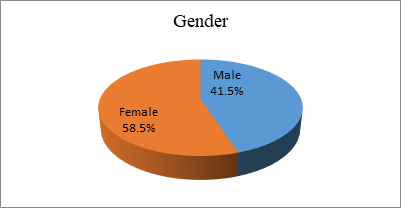
The study's target population was workers in Bangladesh's RGM sector. As shown in Figure 1 shows that 41.5% of the 120 RMG industries respondents were male and 58.5% were female.
Gender (male and female) ratio of the respondents (Source: Survey, 2023)
According to Figure 2, the group with the highest percentage of respondents was those between the ages of 21 and 30 (42.5%), followed by those between the ages of less than 40 and more than 31 (40%).
Age distribution of the respondents (Source: Survey, 2023)
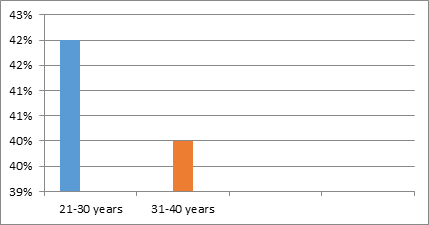
Figure 3 shows that of those, about half (47.3%) had worked for the companies for 1-3 years, 20.2% had done so for more than 10 years, 22.7% for 4-5 years, and 9.8% had done so for between 6 and 10 years.
Working experience of the respondents (Source: Survey, 2023)
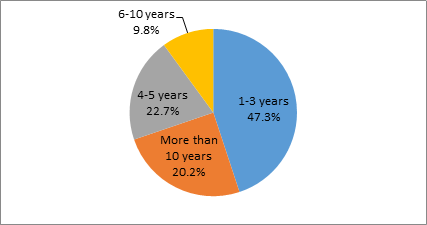
Table 1 displays the demographic data on the respondents. The data was produced using the statistical software SPSS 23.0. The majority of the respondents (58.5%) were female, while 41.5% were male. The age range of the responders was 21–30 for 42.5%. The 31–40 age accounts for over 40% of the total population. A total of 0.0% of the respondents had no schooling whatsoever, while 3.9% were postgraduates (M. Phil/PhD), 10.0% were undergraduates/graduate, 19.8% were higher secondary, and 0.5% were primary school students. There were 23.5% of operators, 49.8% of others, 14.8% of supervisors, 6.0% of inspectors, 2.7% of sample men, and 3.2% of technicians of the respondents. Of those who took the survey, 70% had less than five years of experience, 20.2% had six to ten years, and 9.8% had eleven years or more.
Table 1.
Demographic profile of respondents
|
Category |
% |
Category |
% |
|
Gender |
Education |
|
|
|
Male |
41.5 |
Primary |
.5 |
|
Female |
58.5 |
Secondary |
65.8 |
|
Marital Status |
Higher Secondary |
19.8 |
|
|
Married |
74.2 |
Degree/ Graduate |
10.0 |
|
Unmarried |
20.0 |
Post Graduate (M. Phil/PhD) |
3.9 |
|
Single |
5.8 |
Position |
|
|
Age |
Operator |
23.5 |
|
|
21 - 30 |
42.5 |
Supervisor |
14.8 |
|
31- 40 |
40.0 |
Technician |
3.2 |
|
41- 50 |
13.3 |
Inspector |
6.0 |
|
51- 60 |
3.3 |
Sample man |
2.7 |
|
More than 60 |
.8 |
Others |
49.8 |
|
Total Work Experience |
|
|
|
|
1 -3 yrs |
47.3 |
|
|
|
4 - 5 yrs |
22.7 |
|
|
|
6 - 10 yrs |
20.2 |
|
|
|
More than 10 yrs |
9.8 |
|
|
Correlation Test
According to Table 2, communication climate and dispute resolution have a strong positive correlation (r=0.496, p=0.000). Every variable in the table is significant, as evidenced by the P values of less than 0.05.
Hypothesis testing
H1- There is a significant relationship between communication climate and dispute resolution. Table 2 has two useful indicators. One is the Pearson Relationship, sometimes referred to as the R-value. The type and quality of the link are reflected in the R-value. There is a strong positive correlation between communication environment and conflict resolution, with a R-value of 0.496.
Pearson correlation test
|
Correlations |
||||
|
Variable |
Communication_Climate |
Dispute_Resolution |
||
|
Communication_Climate |
Correlation |
1 |
.496** |
|
|
Sig. (2-tailed) |
.000 |
|||
|
Dispute_Resolution |
Correlation |
.508** |
1 |
|
|
Sig. (2-tailed) |
.000 |
.000 |
||
|
**. Correlation is significant at the 0.01 level (2-tailed). |
||||
The second helpful indication is the significance value or P-value. For the relationship to be significant, the P-value has to be 0.05 or below. The P-value of 0.000 is shown in the table. It follows that there is a clear connection between dispute resolution and the communication climate. Put otherwise, there is evidence to support Hypothesis 1, which claims that communication environment and conflict resolution are significantly correlated.
Multiple regressions
Multiple regressions examine several independent variables with the dependent variable to determine the possible linear relationship. Table 3 shows the results of model summry.
Regression model summary
|
Model Summary |
|||||
|
Model |
R |
R Square |
Adjusted R Square |
Std. Error of the Estimate |
Durbin-Watson |
|
1 |
.591a |
.349 |
.338 |
.25588 |
1.684 |
|
a. Predictor: (Constant), Communication_Climate b. Dependent Variable: Dispute_Resolution |
|||||
A substantial positive significant correlation exists between the independent variable (communication climate) and the dependent variable (conflict resolution), as shown by Table 3's r-square of 0.349. The variables' linear connection is shown in Table 4 below.
The result of ANOVA
|
ANOVAa |
||||||
|
Model |
Sum of Squares |
df |
Mean Square |
F |
Sig. |
|
|
1 |
Regression |
4.114 |
2 |
2.057 |
31.421 |
.000b |
|
Residual |
7.660 |
117 |
.065 |
|||
|
Total |
11.775 |
119 |
||||
|
a. Dependent Variable: Dispute_Resolution b. Predictor: (Constant), Communication_Climate |
||||||
Table 4 demonstrates the existence of an independent variable with a strong linear relationship to dispute settlement. The exact relationship between the two variables is shown in Table 5, which follows.
Table 5.
Coefficients of regression analysis
|
Coefficientsa |
||||||||
|
Model |
Unstandardized Coefficients |
Standardized Coefficients |
t |
Sig. |
Collinearity Statistics |
|||
|
B |
Std. Error |
Beta |
Tolerance |
VIF |
||||
|
(Constant) |
1.935 |
.337 |
5.734 |
.000 |
||||
|
Communication_ climate |
.223 |
.055 |
.339 |
4.088 |
.000 |
.816 |
1.341 |
|
|
a. Dependent Variable: Dispute_Resolution |
||||||||
Table 5 indicates that the P value is less than 0.05. The independent variable seems to be substantially correlated with dispute settlement in a linear way. The variable's portion of the overall connection is shown by the B value.
Discussions
The objective of this study was to examine how the communication climate (CC) affects dispute resolution (DR). This study made an effort to examine the relationship between the outcome variable, in this instance DR, and the predictor components (CC). Consequently, we used SPSS analysis to quantify the impact of CC on DR. The conducted investigation demonstrated that CC significantly impacted DR. Furthermore, a substantial connection was discovered between CC and DR. However, RMG businesses need to continue offering a pleasant workplace if they want to keep their staff free from disputes. This example's findings align with those of previous research (Rahman et al., 2023; Yuan et al., 2022). Long-term performance in the ready-made garment industry is significantly hampered by disputes, albeit they may be lessened with improved owner-employee communication. However, happier employees are more adept at handling disagreements when they come up. Previous research has shown a substantial correlation between DR and CC. The "communication climate" is shown to be the most critical element influencing the effectiveness of dispute resolution strategies in the RMG manufacturing industry. The results of this research on the connections between ongoing communication and workplace conflict resolution have direct effects on productivity.
Implications and contributions of the study
This research provides novel insights about management and theoretical consequences for managers and policymakers, including communication environment and dispute settlement. The industrial sectors need a satisfied workforce and a supportive work environment via effective communication to achieve sustainable growth in the global supply chain. This study identifies the pertinent factors that the RMG sector in Bangladesh should use to actualize the results of this research and capitalize on the advantages of dispute resolution. The study's results indicate that key policymakers advocate for the government to formulate a unified and effective RMG business strategy, establish a law commission, and implement an aid system that acknowledges industrial activities. Consequently, the study's methodology and integrated research framework maintained its significance in the theoretical contribution.
The results suggest the development and implementation of programs aimed at enhancing the quality of the working environment via the introduction of improved communication, eventually leading to increased job satisfaction, performance, and productivity.
Limitations of the study
This research had certain limitations that must be acknowledged when assessing the results. These deficiencies pertain either to the sample and its size or to methodological or theoretical decisions. Data was gathered from just three of the 64 districts in Bangladesh: Dhaka, Gazipur, and Narayanganj. This research did not use a probabilistic method with sampling error, which may influence the results of any inquiry. The sample size must be taken into account. The research used just 120 responses from a total of 20,000 individuals on the personnel rosters of 10 firms. Future studies may explore potential internal or external influences beyond the current model.
Conclusion
Despite several limitations, this research will provide valuable insights to managers about the enhancement of good communication among all stakeholders within Bangladesh's readymade clothing sector. Researchers found a significant positive correlation between communication and dispute. This study's results indicate that professionals or managers are more predisposed to invest more effort in enhancing employee work satisfaction through continuous and effective communication. Moreover, we found that an enhanced communication atmosphere may elevate work satisfaction. This research found that one primary factor that most satisfies employees in a corporation is an effective communication environment. The coefficient table indicated that communication climate and dispute resolution have a strong positive correlation (r=0.496, p=0.000), while the relationship between the variables in the study is significant, as evidenced by the P values of less than 0.05. Consequently, we can ascertain that the communication atmosphere is a critical elements of job satisfaction that facilitate employee motivation and mitigate disputes in the workplace. This research concluded that satisfied workers exhibit more commitment to the organization than their dissatisfied counterparts.
References
Alam, M. N., Hassan, M. M., Bowyer, D., & Reaz, M. (2020). The effects of wages and welfare facilities on employee productivity: Mediating role of employee work motivation. Australasian Accounting, Business and Finance Journal, 14(4), 38-60. http://dx.doi.org/10.14453/aabfj.v14i4.4
Baidoun, S. D., Salem, M. Z., & Omran, O. A. (2018). Assessment of TQM implementation level in Palestinian healthcare organizations: the case of Gaza strip hospitals. The TQM Journal, 30, 98-115. https://doi.org/10.1108/TQM-03-2017-0034
Blake, R. R., & Mouton, J. S. (1964). The managerial grid. Gulf, Houston, TX. https://www.scirp.org/(S(czeh2tfqyw2orz553k1w0r45))/reference/ReferencesPapers.aspx?ReferenceID=2233815
Cho, Y. S., & Linderman, K. (2019). Metacognition-based process improvement practices. International Journal of Production Economics, 211(1), 132-144. https://doi.org/10.1016/j.ijpe.2019.01.030
Cronin, M. A., & Bezrukova, K. (2019). Conflict management through the lens of system dynamics. Academy of Management Annals, 13 (2), 770-806. https://doi.org/10.5465/annals.2017.0021
Deutsch, M. (2002). Social psychology’s contributions to the study of conflict resolution. Negotiation Journal, 18(4), 307-320. https://doi.org/10.1023/A:1021041903956
Dohrman, K. (2021). What impact can conflict resolution skills have on conflict experienced within culturally heterogenous virtual teams? Electronic Theses, Projects, and Dissertations, 1236. https://scholarworks.lib.csusb.edu/etd/1236
Doleman, G., Twigg, D., Bayes, S., & Chivers, P. (2021). Paediatric nurses’ satisfaction with organisational communication, job satisfaction, and intention to stay: A structural equation modelling analysis. Collegian, 28(4), 376-384. https://doi.org/10.1016/j.colegn.2020.11.005
Fairbrother, K., & Warn, J. (2003). Workplace dimensions, stress, and job satisfaction. Journal of Managerial Psychology, 18, 8-21. http://dx.doi.org/10.1108/02683940310459565
Farhana, K., Sneha, Z. Z., Mondol, S., Farin, F., & Mahamude, A. S. F. (2022). Business trend analysis of RMG industry in context of Bangladesh- a case study. International Journal of Industrial Management, 14(1), 515-528. https://doi.org/10.15282/ijim.14.1.2022.7327
Heinz W., & Koontz H. (1994). Effective organizing and organizational culture, management: A global perspective. McGraw-Hill, international editions.
Keyton, J. (2011). Communication and organizational culture: A key to understanding work experience. Thousand Oaks, CA: Sage.
Khan A. A., & Taher, A. (2014). Business communication and report writing. Abir Publication, 2014.
Mirdha, R. U. (2024, September 8). Unrest to hit RMG exports, many buyers are canceling their trips to Bangladesh. The Daily Star. https://www.thedailystar.net/business/economy/news/unrest-hit-rmg-exports-3697116
Mostafiz, M. I., Sambasivan, M., & Goh, S. K. (2021). The performance of export manufacturing firms: roles of international entrepreneurial capability and international opportunity recognition. International Journal of Emerging Markets, 16(8), 1813-1839. https://doi.org/10.1108/IJOEM-09-2019-0732
Neill, M. S., Men, L. R., & Yue, C. A. (2020). How communication climate and organizational identification impact change. Corporate Communications: An International Journal, 25(2), 281-298. https://doi.org/10.1108/CCIJ-06-2019-0063
Rahim, M. A. (2023). Managing conflict in organizations (5th ed.). Taylor & Francis. https://doi.org/104324/97810032861
Rahim, M. A., & Katz, J. P. (2019). Forty years of conflict: the effects of gender and generation on conflict-management strategies. International Journal of Conflict Management, 31(1), 1-16. https://doi.org/10.1108/IJCMA-03-2019-0045
Rahman, M. M., Rose, R. C., & Som, H. M. (2023a). Factors Influencing Effective Communication in the Ready-Made Garment Sector of Bangladesh. In Business Innovation and Engineering Conference (BIEC 2022) (pp. 26-43). Atlantis Press, Springer. https://doi.10.2991/978-94-6463-144-9_4
Rahman, M. M., Rose, R. C., Som, H. M., & Newaz, H. T. M. Q. (2023b). Assessing job satisfaction in the Bangladeshi readymade garment industry: a study of Shams styling wears limited using PLS-SEM modeling. International Journal of Management and Accounting, 5(4), 53-65. http://dx.doi.org/10.34104/ijma.023.053065
Sibajene, S. (2022). An analysis of school-community conflict management strategies in selected primary schools of Livingstone district (Doctoral dissertation). The University of Zambia. http://dspace.unza.zm/handle/123456789/7377
Smidts, A., Pruyn, A. H., & Van Riel, C. B. M. (2001). The impact of employee communication and perceived external prestige on organizational identification. Academy of Management Journal, 49(5), 1051-1062. http://dx.doi.org/10.2307/3069448
Todorova, G., Goh, K. T., & Weingart, L. R. (2022). The effects of conflict type and conflict expression intensity on conflict management. International Journal of Conflict Management, 33(2), 245-272. https://doi.org/10.1108/IJCMA-03-2021-0042
Tuhin, A. K. (2024, September 7). Why this labour unrest in RMG sector? The financial express. https://today.thefinancialexpress.com.bd/editorial/why-this-labour-unrest-in-rmg-sector-1726070045
van de Vliert, E., & Euwema, M. C. (1994). Agreeableness and activeness as components of conflict behaviors. Journal of Personality and Social Psychology, 66(4), 674-687. https://doi.org/10.1037/0022-3514.66.4.674
Winter, S., & Lasch, R. (2016). Environmental and social criteria in supplier evaluation–lessons from the fashion and apparel industry. Journal of Cleaner Production, 139, 175-190. https://doi.org/10.1016/j.jclepro.2016.07.201
Yuan, D., Gazi, M., Issa, A., & Rahman, M. (2022). Assessment of Both Personal and Professional Aspects to Measure Job Satisfaction Levels among Garment Workers: Empirical Evidence from a Developing Country. International Journal of Environmental Research and Public Health, 19(24), 16868. https://doi.org/10.3390/ijerph192416868
Recommendations for future research
Additional research is necessary to investigate the mediating and moderating influence of other factors, including organizational climate, on variables of work ethics, social compliance, and conflict management strategies, etc. Consequently, more inquiry is necessary to evaluate the factors and enhance the probability of readymade garments and textiles achieving sustainable development. Future research may extensively study the potential influence of other internal or external issues beyond the present model.
Acknowledgments
The participants in the data collection procedure were employees in the ready-made garment (RMG) industry in Bangladesh. The researchers express their profound thanks to the respondents and the management of all RMG factories for their help throughout the investigation. The authors like to convey their profound appreciation to Professor Dr. Abdul Awal Khan for his indispensable support throughout the study process. The authors express their profound gratitude to Professor Emeritus Datuk Dr. Raduan Che Rose and Professor Dr. Hishamuddin Md. Som for their valuable guidance in developing an accurate conceptual framework for the study.
Conflict of interest
Regarding this study, the authors have declared that they have no financial ties that may present a conflict of interest.

Page 1 of
Download Count : 52
Visit Count : 729
Keywords
Dispute Resolution; Organizational Performance; Communication Climate


Author(s) Information


How to cite this article
Rahman, M. M., Newaz, H. T. M. Q., Khan, M. A., Jalil, M. A., & Tanya, R. K. (2024). Exploring the relationship between dispute resolution and organizational performance: an empirical study on the impact of communication climate. International Journal of Behavior Studies in Organizations, 11, 12-22. https://doi.org/10.32038/jbso.2024.11.02
Acknowledgments
The participants in the data collection procedure were employees in the ready-made garment (RMG) industry in Bangladesh. The researchers express their profound thanks to the respondents and the management of all RMG factories for their help throughout the investigation. The authors like to convey their profound appreciation to Professor Dr. Abdul Awal Khan for his indispensable support throughout the study process. The authors express their profound gratitude to Professor Emeritus Datuk Dr. Raduan Che Rose and Professor Dr. Hishamuddin Md. Som for their valuable guidance in developing an accurate conceptual framework for the study.
Funding
Not applicable.
Conflict of Interests
Regarding this study, the authors have declared that they have no financial ties that may present a conflict of interest.
Open Access
This article is licensed under a Creative Commons Attribution 4.0 International License, which permits use, sharing, adaptation, distribution and reproduction in any medium or format, as long as you give appropriate credit to the original author(s) and the source, provide a link to the Creative Commons license, and indicate if changes were made. You may view a copy of Creative Commons Attribution 4.0 International License here: http://creativecommons.org/licenses/by/4.0/