







Original Research
County Readiness for eTourism Using Systematic Gap Analysis: The Case of Jordan


- Abstract
- Full text
- Metrics
The primary focus of this study is to establish a mechanism for assessing a country readiness for eTourism using two paradigms: systematic review and gap analysis. This assessment will be conducted by applying eTourism technology aspects as the main detriments of eTourism and behavioral aspects as moderating factors to generate a three-level gap index. The systematic review for determining gap analysis will be based on a framework developed in the literature of the eTourism Technology Acceptance Model (ETAM). This study, based on ETAM, develops its own framework for the systematic review. A comparative study was performed on two dimensions. The first dimension involves the examination of technology-related factors, encompassing security, accessibility of mobile applications, support for mobile payments, user interface design, and quality. To improve understanding of how tourists assess the four technological aspects, the second dimension included two moderating factors: attitude and trust. Based on the systematic review, this paper demonstrates a methodology for calculating individualized gaps for the six factors, as well as compounded gap indexes for the two dimensions and the total composite gap index (CGI) for all six factors through the utilization of an Excel spreadsheet. Based on the overall assessment, as the authors deduced from the discussions, Jordan's readiness for eTourism still needs further improvements to its eTourism factors. Future investigations will involve the implementation of a framework, such as Expert Choice, to emulate the methods utilized in this research. In addition, the outcome of this endeavor should suggest potential avenues for continuous improvement and diversification of eTourism research.
County Readiness for eTourism Using Systematic Gap Analysis: The Case of Jordan
Ghazi Alkhatib*, Sinamis Bayouq |
1Hashemite University (retired), Zarqa, Jordan 2Department of Paper Submission, University of Bedfordshire, Airport Street, Amman, Jordan |
| ABSTRACT |
The primary focus of this study is to establish a mechanism for assessing a country readiness for eTourism using two paradigms: systematic review and gap analysis. This assessment will be conducted by applying eTourism technology aspects as the main detriments of eTourism and behavioral aspects as moderating factors to generate a three-level gap index. The systematic review for determining gap analysis will be based on a framework developed in the literature of the eTourism Technology Acceptance Model (ETAM). This study, based on ETAM, develops its own framework for the systematic review. A comparative study was performed on two dimensions. The first dimension involves the examination of technology-related factors, encompassing security, accessibility of mobile applications, support for mobile payments, user interface design, and quality. To improve understanding of how tourists assess the four technological aspects, the second dimension included two moderating factors: attitude and trust. Based on the systematic review, this paper demonstrates a methodology for calculating individualized gaps for the six factors, as well as compounded gap indexes for the two dimensions and the total composite gap index (CGI) for all six factors through the utilization of an Excel spreadsheet. Based on the overall assessment, as the authors deduced from the discussions, Jordan's readiness for eTourism still needs further improvements to its eTourism factors. Future investigations will involve the implementation of a framework, such as Expert Choice, to emulate the methods utilized in this research. In addition, the outcome of this endeavor should suggest potential avenues for continuous improvement and diversification of eTourism research. |
Introduction
Gap analysis is a valuable tool utilized by businesses to facilitate strategic planning. Its primary purpose is to detect gaps between an organization's present condition and its envisioned future state. It is commonly utilized in several fields, such as information technology (IT), to assess the effectiveness and efficiency of technologies, systems, and processes.
The focus of this work is on doing a gap analysis in the field of eTourism. In this context, gap analysis refers to the systematic assessment of the current state of tourism in a country, specifically in terms of its digital capabilities and online presence. Discrepancies or gaps pertaining to digital technologies and strategies are recognized in relation to the existing state and the desired future state. This analysis aims to identify areas needing improvement and develop strategies to strengthen the digital competitiveness and effectiveness of the business within the tourism industry.
The eTourism gap analysis may encompass various significant domains, which are as follows: (ChatGBT, 2023).
- Evaluation of Website and User Experience: Undertaking an assessment of the design, functionality, and user experience of the organization's website. This entails the evaluation of user engagement functionalities, responsiveness on mobile devices, relevance of content, and ease of navigation.
- Evaluation of the Online Booking and Reservation System Implemented by Travel Agents: A comprehensive analysis of the system's operational capabilities, encompassing the seamless integration of payment gateways, the efficiency of the booking process, and the timely dissemination of real-time availability changes.
- An examination of the digital marketing strategies employed by the company, including an evaluation of the effectiveness of its search engine optimization (SEO) techniques, online advertising efforts, and presence on social media platforms. This may involve evaluating the level of client involvement, the efficacy and extent of digital marketing efforts by travel agencies, and the level of integration with social media platforms.
- Mobile Applications: Assessing the functioning, usability, and potential to provide supplementary benefits to users of travel agents' mobile applications, if available. This may involve evaluating the accessibility of features such as mobile payment systems, tailored suggestions, and GPS-based navigation.
- Evaluation of Personalization and Data Analytics: An examination of the organization's implementation of analytics technology and tools to monitor and analyze consumer preferences, behavior, and patterns. This entails evaluating the organization's ability to utilize data-driven decision-making, customize consumer experiences, and customize marketing campaigns.
- Implementing and monitoring changes: Organizations then execute the remediation plan, implementing the necessary changes and closely monitoring their progress. Regular evaluation and adjustment are essential for effective gap closure and continuous improvement.
By conducting a comprehensive gap analysis in eTourism, countries can identify specific areas that need improvement and develop strategies to address those gaps. This may entail the integration of data analytics skills, allocation of resources towards new technologies, optimization of digital marketing efforts, or enhancement of the website or mobile application. The primary goal is to strengthen the organization's digital competitiveness, augment customer acquisition, and improve overall customer satisfaction within the digital landscape of the tourism industry. The present section provides a comprehensive review of the existing literature on the topic.
The researchers in the study conducted by Hyasat et al. (2023) examined the skills gap within the tourist industry in Jordan. The author used a sampling survey methodology to examine the gaps in skill levels between university graduates with different majors and the requirements of the tourism business. The study's findings indicate that there is an insufficient connection between the academic and professional employment requirements, particularly in relation to digital abilities, which exhibit the most significant gap in competencies.
The authors of the study conducted by Mohanty and Mohanty (2019) examined the gaps in skills between tourism education and the tourism business in the State of Odisha, India. The aforementioned study has determined that there is a gap between the education provided in the field of tourism and the practical abilities required in the tourism business. The authors (Lee et al., 2016) give a case study that examines gap analysis within the hotel service industry in Taiwan. The study conducted a survey and compared three distinct cohorts: tourists, managers, and employees. The investigation has determined that the most notable discrepancy underscores the need for improvement in service delivery. Chavan and Bhola (2013) identified the presence of a gap between tourists and service providers in the hospitality industry, specifically within hotels and tour operators.
Research Methodology
The research approach encompasses three key components: a systematic review, a gap analysis, and a framework for eTourism. These parts are utilized to identify the characteristics that require analysis in the context of eTourism. Subsequently, a mechanism is employed to calculate the gaps, culminating in the determination of a composite gap index that pertains to the state of eTourism in Jordan. Figure 1 below depicts the interconnectedness among them.
Figure 1.
Research methodology components
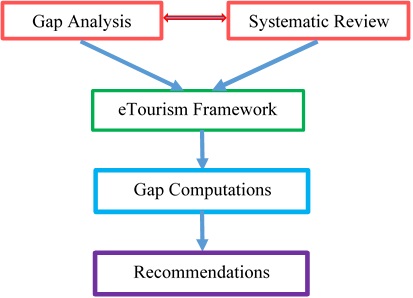
Both the process of conducting a gap analysis and a systematic review necessitates the deliberate choice of a framework that will be subjected to the analysis and review. Instead of constructing a novel framework, a pertinent framework is chosen from existing literature, as discussed in the work of Alkhatib and Bayouq (2020). The framework has identified several technological elements that have an impact on eTourism. These aspects include security measures, the availability of mobile applications, support for mobile payment systems, and the design and quality of the user interface. These characteristics can be categorized as the first dimension within the framework. In order to enhance comprehension of how tourists would perceive and evaluate the impact of these four technological elements, the second pillar of the gap analysis framework pertains to two key moderating characteristics: trust and attitude. There are a total of six factors that need to be considered. This research approach is a paradigm shift in the theoretical foundation of eTourism to include a decision-making aspect (Bagozzi, 2007).
The primary emphasis of a systematic review study is on employing clear, structured, and complete methodologies for conducting literature searches, as well as the necessity of formal synthesis of research outcomes (Bearman et al., 2012). The subsequent phase entails undertaking a comprehensive literature analysis that focuses on research findings that substantiate these criteria in a general context, with a specific emphasis on studies pertaining to Jordan.
The last stage involves the computation of the gaps between the target level defined in this paper as out of 10 and the current level for each factor, as decided by the systemic review, followed by the calculation of two sub-gap indexes, as well as a composite gap index (CGI) encompassing all factors. The process involves assigning numerical values to the optimal level of recognized practices for each factor, followed by determining the current evaluation of each factor. The difference between the two is calculated as gaps, whereby larger gaps necessitate more focus for enhancement. The CGI is ultimately determined by calculating the totals of the gaps relative to the overall intended level that has been allocated to each factor by giving a percentage out of 100. All elements are assigned equal value; hence, no weighting mechanism is applied. Appendix C demonstrates how this research met the overall foundation of the principles of PRISM methodology (Page et al., 2021).
Systematic review structure
The present study aims to examine the technological factors that align with the specified Behavioral Parameters of the ETAM framework in order to evaluate their influence on customers' intention to utilize eTourism platforms in Jordan. These factors include the security measures implemented on the platform, the provision of mobile payment support, the design and quality of the website, as well as the availability of mobile applications. As the following sections illustrate, those aspects cannot be discussed separately as they strongly overlap with each other.
The following Figure 2, as developed by the authors, demonstrates the approach of the discussions on the technological factors that blend together to a certain degree. At the same time, a stronger blend is the link between technological factors and trust and attitudes.
Figure 2.
Systematic review discussion structure, as constructed by the authors
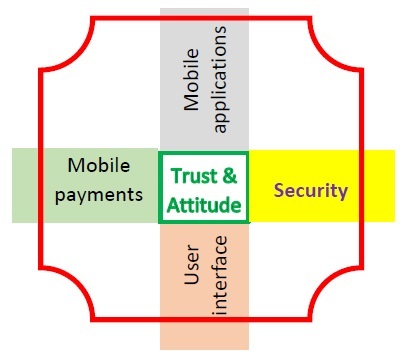
The above figure is based on the published framework included in Appendix A. The framework clearly demonstrates the interrelationships between and among the six factors in the middle of the figure. The four rectangular are the four technological factors of security, accessibility of mobile applications, support for mobile payments, and user interface design. The middle small square represents the two intervening or moderating factors of trust and attitudes, indicating that both interact with the four technological factors and will be embedded throughout the discussions on the four factors. Finally, the outer line, shown in ‘Red’ color, represents the overlap among the four technological factors, but to a lesser degree.
Systematic review: main technological factors intertwined with the two moderating factors
The ensuing discussions cite relevant references, from open research and Jordan-based, in support of the four technological factors and their inextricably intertwined relationships within themselves and with the two moderating factors.
The security factor
The concept of security encompasses the ability to exercise authority and regulate the entry of data and operating system files within a system. The security of a system is contingent upon its capacity to safeguard itself against unauthorized access or intrusion (Cs.umd.edu, 2023). Security is a crucial aspect that is consistently taken into account in all e-commerce endeavors. Given that both business entities and customers engage in communication through intangible online platforms that operate globally across various stations and nodes, it is imperative to exercise additional caution in ensuring the authentication of all users to facilitate secure operations on these platforms (Al-Mamary et al., 2014; O'Brien & Marakas, 2010). Merely possessing an aesthetically pleasing and well-constructed interface should not be deemed sufficient evidence to establish the safety and trustworthiness of an e-commerce platform for conducting operational and financial activities. Certain deceptive websites employ visually appealing interfaces to entice users into interacting and progressing through several stages without realizing the potential risks of divulging personal information or falling victim to faceless individuals who may hijack their credit card details.
The perceived trust of users in e-commerce platforms is primarily influenced by the level of security and control they experience during transactions, which in turn favorably impacts their desire to utilize online platforms (Kim et al., 2011). The inclusion of these measurements is crucial in fostering customers' confidence and favorable disposition towards the use of eTourism platforms (Kisswani & Bakri, 2010; Yoon & Occeña, 2015).
When eTourism platforms are able to ensure the security of their clients' transactions, it will result in an automatic rise in trust, leading clients to willingly disclose their private information and engage in online payments with confidence. According to Prasidya (2018), the eTourism business is expected to play a significant role in driving the global economy ahead. According to Dewanjee and Vyas (2016), there remains a lack of clarity on the precise definition of computer crimes and the formulation of legislation that might instill greater confidence in users, ensuring their protection under the law. The slower adoption of eTourism platforms in Jordan can be attributed to the prevailing preference for face-to-face conventional tourism, which is a significant factor in this issue.
The Jordanian government places a strong priority on addressing cyber security concerns, particularly in safeguarding various online platforms, especially the burgeoning eTourism platforms. The establishment of robust security protocols for online payment platforms is crucial in enhancing the level of protection against potential cyber threats. This entails maintaining vigilant firewalls and security certifications at all times to safeguard the interests of clients (Cbj.gov.jo, 2023). At present, several universities in Jordan provide academic programs focused on cyber security with the aim of cultivating knowledge and understanding regarding this matter. In 2012, the Ministry of Information and Communications Technology formulated the National Information Assurance and Cyber Security Strategy, commonly referred to as NIACSS (2012). Unfortunately, there is currently no information or progress report regarding the plan in question or its execution.
Based on the findings of Sahli and Legohérel (2015), there is a significant correlation between the perceived usefulness and benefits of eTourism platforms and the level of trust customers place in them. Specifically, eTourism platforms that employ robust security measures are perceived as more trustworthy by users compared to less secure platforms that are primarily used for browsing destinations and prices without engaging in actual transactions. There exists a positive relationship between the perceived usefulness/benefits and trust and the resultant attitude of customers. This attitude, in turn, directly influences their inclination to utilize the platform. However, the implementation and maintenance of robust security measures in eTourism platforms result in elevated operational costs for service providers in Jordan. This may lead to hesitancy among business owners to engage in this domain, thereby causing delays in adopting eTourism platforms as having a mobile application.
Having mobile applications
The utilization of mobile phones for online activities is prevalent among individuals due to the convenience it offers. It is postulated that integrating a compatible Mobile Application for eTourism platforms will likely result in an increase in user adoption. This can be attributed to the perceived advantages of enhanced flexibility, utility, and ease of use associated with such applications (Tan et al., 2017). Mobile applications, sometimes referred to as "M-Apps," are software programs that are specifically developed for mobile devices and their respective operating systems. The capabilities of devices are enhanced through the utilization of specific tasks, as noted by Tan et al. (2017) and Hoehle and Venkatesh (2015). M-Apps can be described as software applications that are capable of performing various functions on smartphones (Hew et al., 2015). The emergence of M-Apps has disrupted the conventional business model, presenting novel avenues for mobile market prospects. This is due to the availability of applications catering to users' diverse needs and desires (Wang et al., 2013). Mobile applications (M-Apps) have garnered significant global attention, making it crucial for business owners, such as tourism agencies, to comprehend customers' perceptions regarding the utilization of M-Apps. This understanding serves as a means of differentiation, enabling businesses to attain optimal advantages and maintain their competitive edge (Wang et al., 2013). Mobile applications, also referred to as M-Apps, provide users with convenient access to a variety of services and sources of information, eliminating the need for web browsers. These applications include features such as travel information and trip guides, enabling users to access these resources effortlessly. These technologies provide consumers with the advantages of flexibility and efficiency in their everyday tasks. These platforms offer a significant degree of customization and convenience, enabling consumers to efficiently search for items or services, access comprehensive information on their characteristics, make price comparisons and avail themselves of discounts and promotional offers. Push notifications are utilized, and the application has the capability to function offline by downloading necessary content (Tan et al., 2017). It has been stated that M-Apps are more user-friendly compared to desktop apps and websites because to their simplistic design and comprehensive instructions, making them more accessible for individuals who are new to the platform. This will afford users of the M-App a pleasurable experience, thereby prolonging their engagement with the M-App. Consequently, this will foster customer loyalty, enhance interaction with mobile shoppers, amplify the effectiveness of promotional activities, and positively influence customers' disposition towards utilizing eTourism platforms. These outcomes will ultimately benefit the e-business (Tan et al., 2017).
Additionally, empirical evidence has demonstrated that the provision of support for mobile applications (M-Apps) contributes to the enhancement of customers' touristic experiences. This is attributed to the ability of customers to utilize M-Apps throughout their visits, enabling them to efficiently search for and locate various amenities such as restaurants, transit options, medical services, and recreational activities. According to the studies conducted by Tan et al. (2017) and Ukpabi and Karjaluoto (2017), there is evidence to suggest that the integration of mobile applications (M-Apps) has a favorable impact on the acceptance and adoption of eTourism platforms. Hence, it is imperative for Jordanian tourism organizations to contemplate the inclusion of a mobile application (M-App) in conjunction with their website as they undertake the process of digitizing their services in order to capitalize on the numerous benefits it offers.
The proposed study suggests that in order to cater to the diverse needs of travelers, M-Apps designed for travel enterprises should be configurable. According to Chang et al. (2016), it is recommended that managers integrate the elements of eTourism websites and uphold a favorable perception of destination images in order to ensure customer acceptance and adoption. Despite the numerous advantages, some users argue that the utilization of mobile applications (M-Apps) on small screens, such as those found on mobile phones and tablets, restricts their ability to browse and search the internet effectively. This limitation is attributed to the perceived small size and crowded nature of these devices. The potential consequences of this action may negatively impact the overall reputation and image of the eTourism platform brand.
M-Apps developers encounter numerous hurdles, including constraints related to input capabilities, screen dimensions, as well as specifications such as memory capacity and computing power. In order to enhance the effectiveness and user experience of M-Apps, developers are required to explore novel approaches that prioritize efficiency, simplicity, and user-friendly design. Additionally, they should strive to integrate M-Apps seamlessly into consumers' everyday routines, offering practical and user-friendly functionalities (Ukpabi & Karjaluoto, 2017; Hew et al., 2015). In addition, it is imperative for developers to possess a comprehensive comprehension of the fundamental reasons and values that propel clients towards the adoption and utilization of eTourism platforms and applications (Wang et al., 2013). It is imperative for Jordanian tourism companies to thoroughly contemplate these factors when transitioning to eTourism in order to guarantee enhanced levels of participation.
Previous research has determined a positive association between the endorsement of M-Apps and customers' perceptions of usefulness, benefit, enjoyment, and ease of use. This positive relationship is observed when customers perceive M-Apps as compatible with their lifestyle, needs, and shopping preferences. Consequently, this compatibility leads to a higher likelihood of customers accepting and utilizing eTourism platforms that incorporate M-Apps (Ukpabi & Karjaluoto, 2017; Hew et al., 2015). According to Brasel and Gips (2014), the tactile nature of touch facilitates a heightened sense of control for users when interacting with touchscreen devices such as smartphones and tablets. This enhanced perception of control contributes to an improved user experience, rendering it more convenient and valuable from their standpoint. According to Sahli and Legohérel (2015), the likelihood of embracing and utilizing eTourism platforms is expected to be enhanced.
Supporting online/mobile payment
The term "online payment" pertains to the electronic transfer of funds (Atintegrated.com, 2023). According to Slade et al. (2015), it is posited that platforms that facilitate secure online payments are seen as being more seamless, interoperable, and convenient. The proliferation of mobile Internet has exhibited significant advancements on a global scale, with a rapid increase in the number of Internet users. This growth underscores the criticality of e-commerce platforms across many industries. In order to provide a comprehensive commercial service including the entire purchase cycle on e-commerce platforms, it is imperative to take into account the significance of mobile payments (MP). Initially, the adoption of "MP" was limited among consumers due to concerns regarding its perceived risk and significant uncertainty. Establishing confidence among users is of utmost significance in order to facilitate the acceptance and utilization of MPs, given their strong integration with e-commerce apps. Mobile payment (MP) has garnered significant interest from organizations as a critical application that supports electronic business (Zhou, 2014; Slade et al., 2015).
Mobile banking applications (MP) enhance users' capacity to conveniently access a range of services and information, such as checking account balances, conducting money transfers, and managing payments, through the use of mobile devices, including mobile phones and tablets. MP is a platform that facilitates the integration of mobile devices with verified payment systems, enabling users to engage in online financial transactions via mobile networks utilizing their mobile devices. The ability for users to conveniently input their credit/debit card information during the initial setup of an application has been made possible by the advancement of network technologies and mobile devices. This information is subsequently stored and eliminates the need for users to repeatedly enter it each time they access or utilize the application (Slade et al., 2015).
Members of Parliament (MPs) are utilized for diverse purposes, such as facilitating the payment of utility bills and the procurement of products or services. In the field of eTourism, Mobile Applications (MPs) play a crucial role in facilitating the entire process of tourism booking. This is mostly due to their ability to enhance the perceived usefulness and convenience of use for users. According to Ukpabi and Karjaluoto (2017) and Qatawneh et al. (2015), there is a contention that customers who are offered a secure and feature-rich eTourism platform, along with adequate training on its usage, are likely to experience a heightened level of satisfaction. Consequently, this leads to increased trust and a positive disposition towards utilizing the eTourism platform, be it a website or a mobile application.
One primary benefit of mobile payments (MP) in the field of electronic tourism (eTourism) is its ubiquity, which allows users to transcend spatial limitations and engage in mobile payments from any location and at any given moment. This characteristic offers significant convenience to clients. The utilization of mobile applications (MPs) has been found to enhance users' sense of reachability, compatibility, and convenience. Zhou (2014) conducted a study that demonstrated the significant impact of these characteristics on users' propensity to utilize MPs.
Qatawneh et al. (2015) conducted a study that provided evidence that implementing MPs resulted in several positive outcomes. These outcomes included an increase in transaction speed, a reduction in transportation costs and instances of robbery, as well as improvements in merchants' liquidity and buyers' happiness with online buying. Despite the aforementioned benefits associated with mobile payment, a significant majority of individuals in Jordan continue to favor cash transactions. This preference can be attributed to a lack of trust, primarily stemming from concerns regarding the susceptibility of networks to hacking and interception of information. Such apprehensions have a detrimental impact on customers' trust and inclination towards adopting mobile payment methods (Slade et al., 2015).
The security element significantly impacts MP systems, as it plays a crucial role in customers' willingness to engage in financial transactions. According to Slade et al. (2015), trust plays a crucial role in the adoption of mobile payment (MP) systems. It is identified as the primary predictor of behavior and system adoption since it has a negative impact on the perceived risk associated with utilizing MP systems. Research findings have indicated that the adoption of mobile payments (MP) has exhibited higher levels of success in Asian and developing countries compared to Europe and North America, as evidenced by studies conducted by Slade et al. (2015). Nevertheless, it is worth noting that in the context of Jordan, Members of Parliament (MPs) have not yet witnessed widespread acceptance, as shown by the official website of the Central Bank of Jordan (Cbj.gov.jo, 2023).
According to a report by Orange, a prominent telecommunications operator in Jordan, it has been announced that in 2019, they will introduce a mobile money service called Orange Money. This service will enable customers to deposit money into an account that is linked to their mobile phone number. Additionally, customers will be able to securely pay bills, top up their accounts, transfer and receive money, as well as make online payments both domestically and internationally (Orange.jo, 2023). The aforementioned mobile payment services are currently offered by Zain, a prominent telecommunications operator in Jordan, under the name Zain Cash (Jo.zain.com, 2023). According to CliQ (2023), the online payment service is also accessible in Jordan. The manual delineates the privacy policy; however, it does not provide explicit emphasis on security measures.
The presented figures provide compelling evidence that the infrastructure in Jordan is well-prepared to embrace mobile payment systems implemented by both public and private entities. Establishing user confidence in e-business platforms and associated online systems, specifically in the context of Jordanian tourism companies, is of utmost significance. This trust-building endeavor is crucial for ensuring customer retention, securing corporate success, and fostering sustained usage by both existing customers and potential prospects. It is imperative for organizations to ensure the provision of robust, dependable, and secure mobile payment (MP) systems. Additionally, they should undertake efforts to raise awareness among the target audience regarding these systems, highlighting the most up-to-date security measures applied on e-commerce platforms. This is expected to enhance customers' perception of usefulness and benefits, performance expectancy, ease of use, enjoyment, and satisfaction, thereby positively influencing their trust and attitude towards the adoption and usage of the eTourism website/M-App and its MP systems (Chen & Li, 2016; Zhou, 2013; Sahli & Legohérel, 2015).
Platform (website/m-app) design and quality
The presence of a website is crucial for the digitalization of a business as it enhances productivity, effectively communicates the functions of the organization's electronic services, and fosters market expansion (Ku & Chen, 2015; Chung et al., 2015). The proliferation of mobile phone users has witnessed significant annual growth, prompting individuals to favor the utilization of electronic services through mobile applications (M-Apps) due to their perceived ease, flexibility, and convenience. Consequently, businesses are compelled to develop well-crafted mobile applications in order to maintain their competitive edge (Wang et al., 2013). eTourism websites and mobile applications enable travelers to access and evaluate reviews and feedback provided by fellow tourists. Additionally, these platforms facilitate the exploration, booking, and online payment of comprehensive travel itineraries. Subsequently, tourists are able to contribute their own evaluations and feedback regarding their experiences.
It is well accepted that the incorporation of user-friendly designs in eTourism platforms enhances the ease and enjoyment of their usage, hence resulting in an increase in consumers' perceived utility, benefit, and pleasure (Chen et al., 2010). Numerous attributes have a significant role in determining the quality of website and mobile application design, as well as influencing customers' pleasure, trust, attitude, and acceptance. Security indicators play a crucial role in ensuring the high quality of platforms, safeguarding personal data and transactions, and enhancing customers' trust and the usability of websites and mobile applications. According to Hamidizade et al. (2009), several factors should be considered when constructing e-business platforms. These factors include ensuring error-free functionality, prioritizing customer satisfaction, delivering prompt services to tourists, incorporating an appealing logo, guaranteeing the completion of orders, utilizing appropriate homogeneous shapes and colors, incorporating high-resolution images and backgrounds, implementing a user-friendly navigation system, and creatively packaging and customizing information content.
The inclusion of a search engine in a website or mobile application is of utmost importance, particularly in the context of eTourism. This feature serves as the primary point of entry for a significant portion of website and mobile application users. To enhance its effectiveness, search engine optimization (SEO) techniques are employed to optimize the website's ranking in search engine lists. By achieving a higher ranking, the likelihood of users visiting and utilizing the website is increased (Khraim, 2015).
A search engine refers to a type of computer software designed to locate and retrieve specific terms or keywords inside various sources such as documents, websites or mobile applications, newsgroups, and informational databases. It performs the task of gathering and analyzing information and storing the obtained results in databases (Shafiee et al., 2016).
One crucial aspect of a website and mobile application features, particularly in the field of eTourism, is the provision of multi-language support. In the country of Jordan, the predominant language spoken by the local population is Arabic, however, a significant portion of the population, including both locals and expatriates, has proficient or advanced English language abilities. According to statistical data from Statista (2023), it has been observed that the predominant language utilized on the Internet is English, accounting for approximately 58.8% of global Internet users. This is followed by Russian, which constitutes 5.3% of Internet users, while Spanish and Arabic account for 4.3% and 0.9% respectively. Given the focus of this research on eTourism in Jordan, it is imperative that eTourism platforms operating in Jordan can accommodate a bilingual interface, specifically in English and Arabic. This is essential in order to effectively serve to a wider range of customers.
In the field of eTourism, the design of a website or mobile application is widely recognized as a critical determinant of customers' inclination to utilize the electronic services provided by the platform. Furthermore, it plays a significant role in fostering the long-term viability of the business. Numerous studies have posited that the aesthetic appeal and user-friendliness of a website or mobile application significantly impact the duration of user engagement and their inclination to adopt or utilize said platform. The findings of the study conducted by Shafiee et al. (2016) indicate that there is a favorable relationship between high-quality website design and customers' satisfaction, perceived enjoyment, perceived usefulness/benefit, and trust. However, individuals possess varying preferences and criteria when it comes to determining attractiveness and beauty. Consequently, incorporating distinctive elements into a website or mobile application cannot be readily standardized.
According to Hill et al. (2019), customer satisfaction refers to an individual's emotional response to the acceptance and utilization of computer applications. The aforementioned factors may serve as incentives for clients to endorse the website/M-App to their acquaintances, hence augmenting the pool of potential customers (Ku & Chen, 2015).
The concept of website/M-App design pertains to the technological aspects encompassing the visual aesthetics, arrangement, and navigational elements of the website/M-App (Ku & Chen, 2015). The design of websites and mobile applications can be categorized into three distinct areas: visual design, social cue design, and content design.
Visual design refers to the aesthetically appealing and captivating visual attributes of a website or mobile application that are intended to attract and engage users. The term "it" pertains to the visual and architectural components that establish the initial impression on clients. The aesthetic visual design of a website or mobile application has the ability to elicit emotional responses from clients, thereby attracting their attention and engagement. The utilization of colors, visuals, layout/space, and information display has been discussed by Shafiee et al. (2016).
According to Hasan (2016), empirical evidence demonstrates that a website or mobile application featuring unattractive visual design has the potential to elicit negative emotional responses from users, leading to feelings of frustration and annoyance. Efficient navigation can be facilitated with the use of appropriate headings, hypertexts, and links that direct users back to the homepage of a website or mobile application from any sub-pages. According to Devi and Verma (2018), hypertexts facilitate rapid access to substantial volumes of content.
The design of social cues pertains to the enhancement of customer engagement on the website or mobile application by incorporating social media functionalities such as photos, video streams, and social blogs/forums. On the other hand, content design refers to the informational elements of the website or mobile application, including graphics and text. The aforementioned components encompass corporate data (such as contact details, background information, and frequently asked questions) and comprehensive details regarding products or services (including descriptions, features, pricing, and policies related to delivery and returns).
According to Hasan (2016), it is imperative for e-business owners, such as eTourism firms, to prioritize the content design of their website or mobile application. This is crucial in order to avoid overwhelming visitors with useless material that could potentially serve as a distraction, thereby hindering their future engagement with the platform. Research has demonstrated that the implementation of content design has a positive impact on User Information Satisfaction. This term pertains to the extent to which users perceive the information offered on a website or mobile application as effective, valuable, and aligned with their specific needs and expectations.
One additional function of a website or mobile application (M-App) is its ability to facilitate "Interactivity." Interactivity refers to the reciprocal exchange between humans and technological systems, showcasing the degree to which users can alter the content within a system's environment through various means such as social interactions, information sharing, feedback, tourism news, and location-based maps. This fosters a sense of perceived control, enjoyment, satisfaction, and attitude among customers towards the eTourism website or M-App.
The presence of high interactivity on a website or mobile application indicates the presence of effective and accessible user support tools. This aspect has a positive impact on the overall design quality of the website or mobile application, as well as the quality of eTourism services. It allows customers to have a certain level of control over the travel information that is exchanged, enabling them to explore, book, and make payments for various tourism services (Ku & Chen, 2015).
The comprehensive service quality of the website/M-App should encompass all aspects of the services provided by the travel agency through their eTourism platform. This is supported by research conducted by Ku and Chen (2015), which demonstrates a strong correlation between service quality and consumer satisfaction in the context of online tourism experiences.
The authors of the study conducted by Atafar et al. (2012) showed that the perceived utility of customers, as a result of their experience using a well-designed website with rich and relevant material, has a significant influence on customers' trust and attitude. These variables, in turn, play a crucial role in determining customers' desire to book hotels online.
The eTourism industry places significant importance on interactivity and service quality, which are also considered crucial. Researchers have confirmed that these factors have a positive correlation with users' attitudes, trust, perceived enjoyment, perceived ease of use, and perceived benefit/usefulness. This, in turn, increases the likelihood of users accepting and using the website or mobile application, as evidenced by studies conducted by Sahli and Legohérel (2015) and Shafiee et al. (2016).
Gap computations
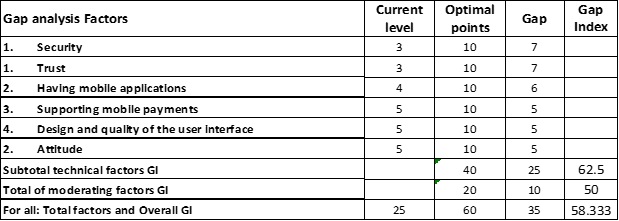
The subsequent charts depict calculations derived from the Excel spreadsheet. The maximum achievable value for all factors is 10. All factors are assigned equal weight, although it is possible for these weights to be modified in subsequent investigations. Figure 3 displays the evaluation of the six factors including the gap, optimal level, and the current level. For the purpose of the computations, the value of 10 is used as the optimal level. Other evaluators may choose any other suitable number as they see fit.
Figure 3.
Gaps between the optimal level and the evaluation of current state listed from the smallest gap to largest gap
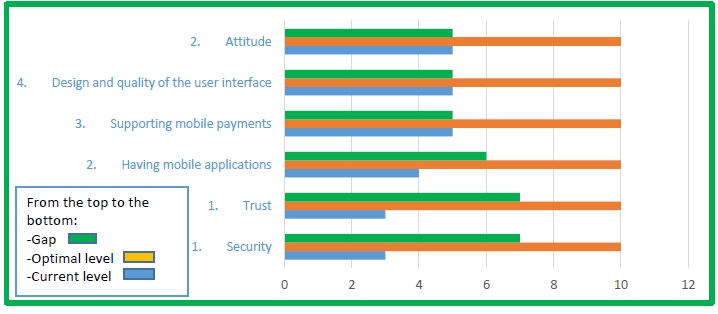
Figure 3 exhibits a notable disparity between security and trust, indicating a pressing need for prompt attention to address this discrepancy.
The following diagram, as shown in Figure 4, illustrates the primary dimensions of the four technological components and the two moderating factors. The data shown in Figure 3 indicates that the gap index (GI) for the four technical variables is marginally larger than that of the two moderating factors. The gap index for the moderating factors of trust and attitudes stands at 50%, while the gap index for the four technical factors is higher at more than 60%. This indicates that the four technical factors gaps must be addressed before dealing with the two moderating factors gaps. The composite gap index (GI) is marginally below 60%, suggesting that further efforts are required to enhance the condition of eTourism in Jordan in order to align with the broader discourse observed in the systematic review.
Figure 4.
The overall composite gap index (GI) for all six factors and the two dimensions sub factors GI.
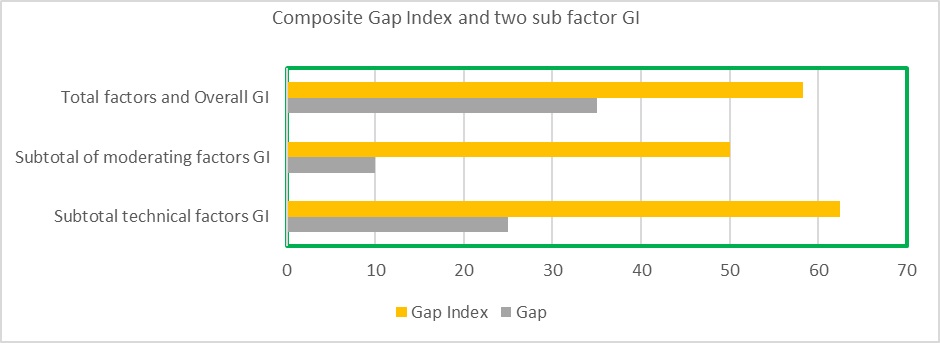
The Excel spreadsheet, as depicted in Appendix B, was created for the purpose of calculating the gaps for each factor and the two subtotal gap indexes (GI) for the two dimensions: the two moderating factors and the four technical factors, as well as the overall composite GI for all factors, as shown in Figures 3 and 4 above.
Subsequently, the relevant stakeholders, including governmental entities and IT-focused institutions, will deliberate upon the adequacy of this threshold. The decision-making process will also involve determining which gaps are deemed unacceptable and in need of improvement, as well as aiding in the prioritization of elements that contribute to gap improvement. In the context of Jordan, notable evaluators encompass The Ministry of Tourism and Antiquities (www.mota.gov.jo), Jordan Tourism Board (visitjordan.com), and the Information and Communication Technology Association – Jordan (Intaj.net).
Conclusions
This study introduced an innovative methodology to assess a country’s preparedness for eTourism by employing gap analysis and conducting a systematic assessment based on a framework derived from existing scholarly literature. The utilization of the gap analysis method in conducting comprehensive systematic reviews is substantiated by a wealth of literature derived from several articles and various countries. Furthermore, the incorporation of Jordanian references and practices was included throughout the discourse, providing insights into the most effective and current condition of eTourism in Jordan. The study found that security and trust exhibited the most significant gaps, with a magnitude of 7 on a scale of 10, as assigned by the authors. In a related research on the use of e-commerce in Dubai, UAE, the author cited security concerns, as supported in this study, that impede the adaptation of e-commerce by travel agents (Zaidan, 2016). The gaps in attitudes, user interface design, and mobile payment support were approximately equivalent. In a related research areas, authors highlighted the importance of website quality, as highlighted in this study, to achieve positive customers’ perception of product quality and enhance their purchase intentions (Wells et al., 2011).
The composite gap index for Jordan is just below 60%, suggesting that Jordan has to make a substantial improvement in achieving its readiness for eTourism. In the other hand, the sub-gap index for the four technical factors exhibited higher by more than 10% than for the sub-gap index of the two moderating factors. This suggests that the technical factors hold more significance than the two moderating factors in ensuring the success of eTourism in Jordan. As supported by this study, Acheampong et al. (2017) highlighted the negative effect of insecurity and customers’ negative attitudes toward using the E-payment system. In a literature survey, another research highlighted the importance of trust in tourism and hospitality. Shen et al. (2022) addressed the factor attitude as a moderator role in Chinese culture and as a factor for developing tourism behaviors during COVID-19. All these studies present the analysis of trust and attitudes within a general framework that includes other factors.
Then, the concerned stakeholders, such as government departments and other IT-based organizations, will decide if this is acceptable. They will also decide which unacceptable gaps will require improvements and assist in prioritizing gap improvement factors. In Jordan, such evaluators include The Ministry of Tourism and Antiquities (www.mota.gov.jo), Jordan Tourism Board (visitjordan.com), and the Information and Communication Technology Association – Jordan (Intaj.net). Naturally, they may consult the most prominent travel agent. The authors also recommend reviewing and evaluating current websites for some travel agents. This study is also recommended to be conducted every few years to check for any improvements in gap indexes.
Future research could use a quantitative method such as an analytical hierarchical process (AHP); Expert Choice is the prominent recommended software package, which allows assigning weights to each of the six factors as well as their interrelationships and comes with an overall index to the framework and devise recommendations for prioritizing improvements.
This research approach is limited to the four technological factors and the two moderating factors, as well as it applies to Jordan. Other studies may introduce more and different factors and their interrelationships. Then, the research methodology of this paper can be used to come up with the different gap indexes.
Appendix A. The framework was published in the literature and used to develop the systematic review method, as shown in Figure 2.
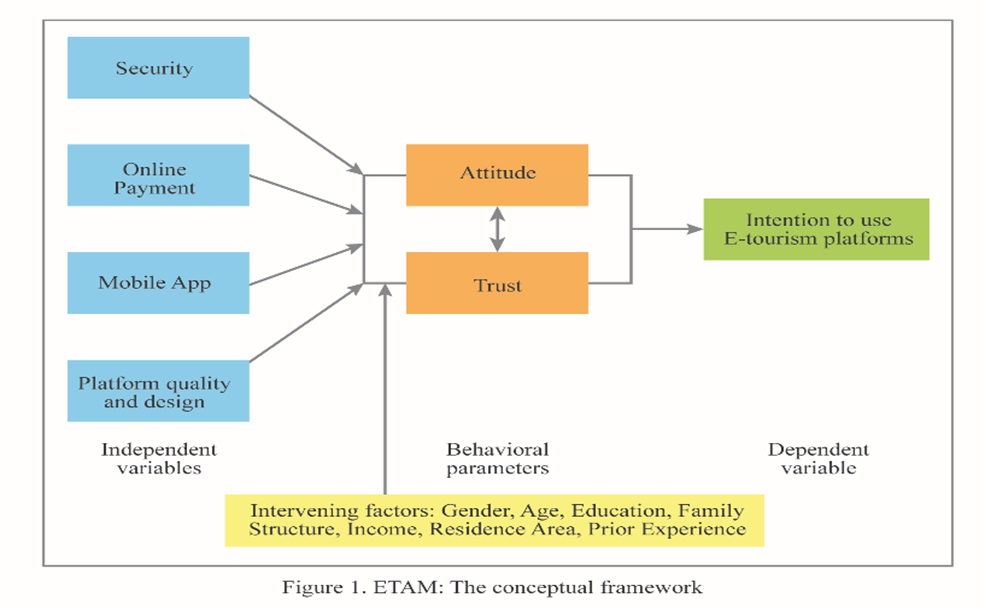
Source: Alkhatib, & Bayouq (2020)
Appendix B. The data source in an Excel sheet shows all the background computations performed on gap analysis, as presented in Figures 1 and 2.
Appendix C. Meeting the PRISM systematic review
The checklist includes the following 12 items:
1. Identify the report as a systematic review. Done
2. Provide an explicit statement of the main objective(s) or question(s) the review addresses.
Done
3. Specify the inclusion and exclusion criteria for the review. Only research related to the six factors and their interrelationship were included. Jordan statistics and research were included.
4. Specify the information sources (such as databases and registers) used to identify studies and when each was last searched. Only research papers as current as possible.
5. Specify the methods used to assess the risk of bias in the included studies. Not applicable
6. Specify the methods used to present and synthesise results. Used a framework developed by the authors.
7. Give the total number of included studies and participants and summarise relevant characteristics of studies. Since the paper used a previously published study as well, it is hard to determine the total citations used.
8. Present results for main outcomes, preferably indicating the number of included studies and participants. If meta-analysis was done, report the summary estimate and confidence/credible interval. If comparing groups, indicate the direction of the effect (that is, which group is favoured). Not applicable
9. Provide a brief summary of the limitations of the evidence included in the review (such as study risk of bias, inconsistency, and imprecision). Added to conclusion.
10. Provide a general interpretation of the results and important implications. Gap indexes were calculated
11. Specify the primary source of funding for the review. Not applicable.
12. Provide the register name and registration number. Not applicable
References
Acheampong, P., Zhiwen, L., Antwi, H., Akai, A., Otoo, A., Mensah, W., & Sarpong, P. (2017). Hybridizing an Extended Technology Readiness Index with Technology Acceptance Model (TAM) to Predict E-Payment Adoption in Ghana, Vol 2. (pp. 105-384).
Alkhatib, G., & Bayouq, S. T. (2020). A TAM-Based Model of Tech. Factors Affecting E-Tourism. International Journal of Tourism and Hospitality Management in the Digital Age, 5(2), 1. https://doi.org/10.4018/IJTHMDA.20210701.oa1
Al-Mamary, Y., Shamsuddin, A., & Aziati, A. H. (2014). The Meaning of Management Information Systems and its Role in Telecommunication Companies in Yemen. American Journal of Software Engineering, 2(2), 22-25. https://doi.org/10.12691/AJSE-2-2-2
Atafar, A., Khazeipur, J., & Purmostafa, M. (2012). Factors affecting the adoption of information technology in the tourism industry. Journal of Management tourism Studies, 7(18), 133-156. https://dorl.net/dor/20.1001.1.23223294.1391.7.18.7.1
Atintegrated.com. (2023). What Is Online Payment and How to Accept Payments Online. [online] Available at: https://www.atintegrated.com/e-commerce/what-is-online-payment [Accessed 20 September 2023].
Bagozzi, R. P. (2007). The legacy of the technology acceptance model and a proposal for a paradigm shift. Journal of the Association for Information Systems, 8(4), 244-254. https://doi.org/10.17705/1jais.00122
Bearman, M., Smith, C. D., Carbone, A., Slade, S., Baik, C., Hughes-Warrington, M., & Neumann, D. L. (2012). Systematic review methodology in higher education. Higher Education Research & Development, 31(5), 625-640. https://doi.org/10.1080/07294360.2012.702735
Brasel, S. A., & Gips, J. (2014). Tablets, touchscreens, and touchpads: How varying touch interfaces trigger psychological ownership and endowment. Journal of Consumer Psychology, 24(2), 226-233. https://doi.org/10.1016/j.jcps.2013.10.003
Cbj.gov.jo (2023). https://www.cbj.gov.jo. [Accessed October 1 2023).
Chang, I., Chou, P., Yeh, R., & Tseng, H. (2016). Factors influencing Chinese tourists’ intentions to use the Taiwan Medical Travel App. Telematics and Informatics, 33(2), 401-409. http://dx.doi.org/10.1016/j.tele.2015.09.007
ChatGBT 3.5 (October 2023).
Chavan, R. R., & Bhola, S. S. (2013). Gap Analysis of Stakeholders' Perception in Tourism Industry. MERC Global's International Journal of Management, 01(01), 68-77. https://dx.doi.org/10.2139/ssrn.2315644
Chen, X., & Li, S. (2016). Understanding Continuance Intention of MP Services: An Empirical Study. Journal of Computer Information Systems, 57(4), 287-298. http://dx.doi.org/10.1080/08874417.2016.1180649
Chen, Y., Hsu, I., & Lin, C. (2010). Website attributes that increase consumer purchase intention: A conjoint analysis. Journal of Business Research, 63(9-10), 1007-1014. https://doi.org/10.1016/j.jbusres.2009.01.023
Chung, N., Lee, H., Lee, S., & Koo, C. (2015). The influence of tourism website on tourists' behavior to determine destination selection: A case study of creative economy in Korea. Technological Forecasting and Social Change, 96(3), 130-143. http://dx.doi.org/10.1016/j.techfore.2015.03.004
CliQ (2023). https://www.jopacc.com/EN/Pages/CliQ_%E2%80%93_Instant_Payment_System. [Accessed 9 October 2023].
Cs.umd.edu (2023). UMD department of computer science. [online] Available at: https://www.cs.umd.edu/ [Accessed 10 September 2023].
Devi, K., & Verma, M. (2018). Web content and design trends of Indian Institute of Technology (IITs) libraries’ website: An evaluation. COLLNET Journal of Scientometrics and Information Management, 12(2), 165-181. http://dx.doi.org/10.1080/09737766.2018.1433100
Dewanjee, R., & Vyas, D. (2016). Cyber Crime: Critical View. International Journal of Science and Research (IJSR), 5(1), 85-87. https://www.ijsr.net/getabstract.php?paperid=NOV152579
Hamidizade, M., Rezaei, A., & Mojarad, F. (2009). A comparative study of the characteristics of design and marketing of luxury hotels websites (4 and 5 stars). Journal of humanities faculty special of Management, 20(24).
Hasan, B. (2016). Perceived irritation in online shopping: The impact of website design characteristics. Computers in Human Behavior, 54, 224-230. https://doi.org/10.1016/j.chb.2015.07.056
Hew, J., Lee, V., Ooi, K., & Wei, J. (2015). What catalyses mobile apps usage intention: an empirical analysis. Industrial Management & Data Systems, 115(7), 1269-1291. http://dx.doi.org/10.1108/IMDS-01-2015-0028
Hill, N., Brierley, J., & MacDougall, R. (2019). How to measure customer satisfaction (2nd ed.). New York - USA: Routledge Taylor & Francis Group. https://doi.org/10.4324/9781315253107
Hoehle, H., & Venkatesh, V. (2015). Mobile Application Usability: Conceptualization and instrument development. MIS Quarterly, 39(2), 435-472. http://dx.doi.org/10.25300/MISQ/2015/39.2.08
Hyasat, A., Amoruso, G., & Ianniello, A. (2023). A study on the skills gap analysis in the jordanian tourism sector. Geojournal of Tourism and Geosites, 47(2), 613-621. https://doi.org/10.30892/gtg.47229-1061
Jo.zain.com (20123). Zain Cash service. [online] Available at: https://www.jo.zain.com/english/zainservices/ZainCash/pages/default.aspx [Accessed 23 September 2023].
Khraim, H. (2015). The impact of search engine optimization on online advertisement: The case of companies using e-marketing in Jordan. American Journal of Business and Management, 4(2), 76-84. http://dx.doi.org/10.11634/216796061504676
Kim, M., Chung, N., & Lee, C. (2011). The effect of perceived trust on electronic commerce: Shopping online for tourism products and services in South Korea. Tourism Management, 32(2), 256-265. http://dx.doi.org/10.1016/j.tourman.2010.01.011
Kisswani, N. M., & Bakri, A. A. (2010). Security, ethics and electronic commerce systems: cybercrime and the need for information sharing security. International Journal of Liability and Scientific Enquiry, 3(3), 225. http://dx.doi.org/10.1504/IJLSE.2010.033357
Ku, E., & Chen, C. (2015). Cultivating travelers’ revisit intention to e-tourism service: the moderating effect of website interactivity. Behaviour & Information Technology, 34(5), 465-478. http://dx.doi.org/10.1080/0144929X.2014.978376
Lee, Y. C., Wang, Y. C., Chien, C. H., Wu, C. H., Lu, S. C., Tsai, S. B., & Dong, W. (2016). Applying revised gap analysis model in measuring hotel service quality. SpringerPlus, 5(1), 1191. https://doi.org/10.1186/s40064-016-2823-z
Mohanty, S., & Mohanty, A. (2019). A skill- gap study: An analytical approach with a special focus on Tourism Education and the Tourism Industry in Odisha. African Journal of Hospitality, Tourism and Leisure, 8(3). ISSN: 2223-814X. Copyright: ©2019 AJHTL/Author/s-OpenAccess-Online@ http//:www.ajhtl.com
National Information Assurance and Cyber Security Strategy (NIACSS) (2012). Available at: https://trc.gov.jo/EchoBusV3.0/SystemAssets.
O'Brien, J., & Marakas, G. (2010). Management information systems (10th ed.). McGraw Hill, New York, USA.
Orange.jo. (2023). [online] Available at: https://www.orange.jo/EN/Documents/annual_report/orange-annual-report-2018-en.pdf [Accessed 12 September 2023].
Page, M. J., Moher, D., Bossuyt, P. M., Boutron, I., Hoffmann, T. C., Mulrow, C. D., Shamseer, L., Tetzlaff, J. M., Akl, A. E., Brennan, S. E., Chou, R., Glanville, J., Grimshaw, J. M., Hróbjartsson, A., Lalu, M. M., Li, T., Loder, E. W., Mayo-Wilson, E., McDonald, S., … McKenzie, J. E. (2021). PRISMA 2020 explanation and elaboration: updated guidance and exemplars for reporting systematic reviews. http://dx.doi.org/10.1136/bmj.n160
Prasidya, T. (2018). Effect of quality of service, quality products, security and satisfaction as moderating variables to loyalty ON E-BANKING. Russian Journal of Agricultural and Socio-Economic Sciences, 83(11), 109-113. https://doi.org/10.18551/rjoas.2018-11.12
Qatawneh, A. M., Aldhmour, F. M., & Alfugara, S. M. (2015). The Adoption of Electronic Payment System (EPS) in Jordan: Case Study of Orange Telecommunication Company. Research Journal of Finance and Accounting, 6(22), 139-148.
Sahli, A., & Legohérel, P. (2015). The tourism Web acceptance model: A study of intention to book tourism products online. Journal of Vacation Marketing, 22(2), 179-194. https://doi.org/10.1177/1356766715607589
Shafiee, M., Rahimzadeh, S., & Haghighizade, R. (2016). The Effect of Implementing SEO Techniques and Websites Design Methods on E-Tourism Development: A Study of Travel Agencies E-Tourism Websites. 10th international conference on e-commerce with focus on e-tourism. http://dx.doi.org/10.1109/ECDC.2016.7492963
Shen, K., Yang, J., & Geng, C. (2022). How Residents' Attitudes to Tourists and Tourism Affect Their Pro-tourism Behaviours: The Moderating Role of Chinese Traditionality. Frontiers Psychology, Sec. Environmental Psychology, 12. https://doi.org/10.3389/fpsyg.2021.792324.
Slade, E., Dwivedi, Y., Piercy, N., & Williams, M. (2015). Modeling Consumers’ Adoption Intentions of Remote MPs in the United Kingdom: Extending UTAUT with Innovativeness, Risk, and Trust. Psychology & Marketing, 32(8), 860-873. https://doi.org/10.1002/mar.20823
Statista. (2023). Internet: most common languages online 2023 | Statistic. [online] Statista. Available at: https://www.statista.com/statistics/262946/most-common-languages-on-the-internet [Accessed 5 October 2023].
Tan, G., Lee, V., Lin, B., & Ooi, K. (2017). Mobile applications in tourism: the future of the tourism industry? Industrial Management & Data Systems, 117(3), 560-581. http://dx.doi.org/10.1108/IMDS-12-2015-0490
Ukpabi, D., & Karjaluoto, H. (2017). Consumers’ acceptance of information and communications technology in tourism: A review. Telematics and Informatics, 34(5), 618-644. http://dx.doi.org/10.1016/j.tele.2016.12.002
Wang, H., Liao, C., & Yang, L. (2013). What Affects Mobile Application Use? The Roles of Consumption Values. International Journal of Marketing Studies, 5(2). https://doi.org/10.5539/ijms.v5n2p11
Wells, J. D., Valacich, J. S., & Hess, T. J. (2011). What Signal Are You Sending? How Website Quality Influences Perceptions of Product Quality and Purchase Intentions. MIS Quarterly, 35(2), 373-396. https://doi.org/10.2307/23044048
Yoon, H. S., & Occeña, L. G. (2015). Influencing factors of trust in consumer-to-consumer electronic commerce with gender and age. International Journal of Information Management, 35(3), 352-363. https://doi.org/10.1016/j.ijinfomgt.2015.02.003
Zaidan, E. (2016). Analysis of ICT usage patterns, benefits and barriers in tourism SMEs in the Middle Eastern countries. Journal of Vacation Marketing, 23(3), 248-263. https://doi.org/10.1177/1356766716654515
Zhou, T. (2013). An empirical examination of continuance intention of MP services. Decision Support Systems, 54(2), 1085-1091. http://dx.doi.org/10.1016/j.dss.2012.10.034
Zhou, T. (2014). An Empirical Examination of Initial Trust in MP. Wireless Personal Communications, 77, 1519-1531. https://doi.org/10.1007/s11277-013-1596-8

Page 1 of
Download Count : 81
Visit Count : 235
Keywords
Technological Factors; Gap Analysis; Etourism; Country Readiness; Systematic Review

Author(s) Information



How to cite this article:
Alkhatib, G., & Bayouq, S. (2024). County Readiness for eTourism Using Systematic Gap Analysis: The Case of Jordan. European Journal of Studies in Management and Business, 29, 36-55. https://doi.org/10.32038/mbrq.2024.29.03
Acknowledgments
Not applicable.
Funding
Not applicable.
Conflict of Interests
No, there are no conflicting interests.
Open Access
This article is licensed under a Creative Commons Attribution 4.0 International License, which permits use, sharing, adaptation, distribution and reproduction in any medium or format, as long as you give appropriate credit to the original author(s) and the source, provide a link to the Creative Commons license, and indicate if changes were made. You may view a copy of Creative Commons Attribution 4.0 International License here: http://creativecommons.org/licenses/by/4.0/