








Original Research
Factors Influencing Buying Intentions of University Students in Mauritius Toward Online Shopping


- Abstract
- Full text
- Metrics
This paper identifies the factors influencing the buying intentions of university students in Mauritius towards online shopping, and a model has been proposed accordingly. To assess the relationship between the determinants of online shopping and online shopping intention, four independent variables, i.e., Perceived Usefulness (PU) and Perceived Ease of Use (PEOU), derived from the Technology Acceptance Model as well as two additional factors, Perceived Transaction Security (PTS), Perceived Trust (PT) were used. The dependent variable was Online Shopping Intention (OSI). Data was collected through an online survey at the University of Mauritius comprising 372 students. The results showed a positive correlation between the four independent variables, with PT having the strongest positive rho value of 0.720. The findings indicated valuable information for online retailers as these will enable them to enhance their online platforms and websites, thus enriching the online customer shopping experience. Furthermore, this study contributes to the literature on the relationship between the four determinants and online shopping intention in developing and small island economies.
Factors Influencing Buying Intentions of University Students in Mauritius Toward Online Shopping
Mridula Gungaphul* , Mookhuldev Mangra
Faculty of Law and Management, University of Mauritius, Reduit, Mauritius
Abstract:
This paper identifies the factors influencing the buying intentions of university students in Mauritius towards online shopping, and a model has been proposed accordingly. To assess the relationship between the determinants of online shopping and online shopping intention, four independent variables, i.e., Perceived Usefulness (PU) and Perceived Ease of Use (PEOU), derived from the Technology Acceptance Model as well as two additional factors, Perceived Transaction Security (PTS), Perceived Trust (PT) were used. The dependent variable was Online Shopping Intention (OSI). Data was collected through an online survey at the University of Mauritius comprising 372 students. The results showed a positive correlation between the four independent variables, with PT having the strongest positive rho value of 0.720. The findings indicated valuable information for online retailers as these will enable them to enhance their online platforms and websites, thus enriching the online customer shopping experience. Furthermore, this study contributes to the literature on the relationship between the four determinants and online shopping intention in developing and small island economies.
©EUROKD Publishing
Keywords:
Online Shopping, Buying Intention, Perceived Usefulness, Perceived Ease of Use, Perceived Transaction Security, Perceived Trust
Introduction
The Internet has transformed into a powerful communication tool that influences the way people live, acquire knowledge, earn a living, and conduct business, among many other things (Abhram, 2022; Duong & Liaw, 2021. The Internet has been one of the most important revolutionary tools (Zhang & Liu, 2023) that has contributed to changing static and structured markets all over the world across different sectors. It is widely accepted that everything from business to social interaction to shopping, is connected to the World Wide Web (Daroch et al., 2021). It has led to the integration of various combinations of marketing and communication strategies aimed at improving interactions with customers (Gavrila et al., 2023) who are increasingly using electronic commerce. The Internet has changed the way consumers shop because it is time-saving (Huseynov & Yildrim, 2016), convenient (Lennon et al., 2008), and provides the ability to compare products and sellers (Jahdav & Khanna, 2016). Consumers instantly get access to information on various products and brands on the websites and through various search engines within just one click away, compared to the traditional way of shopping where consumers spend days and much effort in search of the right product and seller (George, 2002). Furthermore, the COVID-19 pandemic has further altered the buying habits of many consumers (Castillo et al., 2023) who have found several benefits in online shopping due to restrictions such as lockdowns, social distancing, etc. One major customer segment using E-commerce and online shopping is university students who form part of Gen Y and Gen Z because of their high Internet usage (Duong & Liaw, 2021; Kuswanto, 2023).
Mauritius has been no exception and has experienced a huge boost in online shopping, which started before COVID-19 but accelerated during and after the pandemic. This boost can be attributed to the local Internet service providers, which have made the internet easily accessible to the population with a fixed Internet connection speed of 26.53 Mbps (Kemp, 2023). For a population of just under 1.3 million inhabitants, the total number of Internet subscribers has increased from 1,091,000 in 2016 to 1,648,000 in 2020, representing a 52% increase over four years and reaching 67.6 % in 2023 (Kemp, 2023). It was further reported that in 2023, 60% of active internet users were aged between 19 and 30 years (Kemp, 2023), thus highlighting the significant potential for online shopping for this segment of the population. Hence, this study seeks to identify the factors influencing online shopping intentions of young adults.
It should also be recognized that although online shopping provides numerous benefits, not all consumers are convinced about taking the plunge to shop online because of a lack of trust, perceived risks, and safety aspects, among other concerns (Daroch et al., 2021). The Technology Acceptance Model (TAM) by Davis (1989) has extensively been used to explain the buying behavior intentions of online shoppers. The TAM model shows that perceived usefulness and perceived ease of use are key predictors of online buying behavior. However, Ma and Ma (2012) found that perceived safety, risk, and trust (Gommans et al., 2001) also influenced the adoption of electronic commerce. Thus, this study extends the TAM and also assesses the impact of perceived usefulness, perceived ease of use, perceived transaction safety and perceived trust on online shopping intentions. Since a sizable proportion of young adults can be successfully reached through universities, the University of Mauritius students have been selected for this study.
Literature review
Online shopping has become increasingly popular with consumers. To keep up with this trend, marketers dealing with durable as well as non-durable products are constantly devising new ways to market their offerings to customers (Daroch et al., 2021; Tzeng et al., 2021). Consequently, various studies have been conducted on the determinants of consumers' online shopping, but few have focused on developing countries (Al Asheq et al., 2022) and even less on small island developing states such as Mauritius. This study attempts to make a modest contribution by using one of the most influential models in technology acceptance, that is, the Technology Acceptance Model (TAM) developed by Davis (1989), proposing two determining factors: Perceived Ease Of Use (PEOU) and Perceived Usefulness (PU). However, since the literature on online shopping has indicated additional, prominent factors influencing online shopping intentions of consumers, two additional factors, that is, perceived transaction security (PTS) and perceived trust (PT) (Gommans et al., 2001; Ma & Ma, 2012; Tran & Nguyen, 2022) are also considered in this paper.
Technology acceptance model (TAM)
The technology acceptance model (TAM) was based on the older Theory of Reasoned Action (Marikyan & Papagiannidis, 2023). The fundamental beliefs in the TAM model are centered on two main determinants, namely, Perceived Usefulness (PU) and Perceived Ease of Use (PEOU), which are the main measurements for behavioral intention to use IT technologies (Davis, 1989). TAM has been used extensively in predicting consumer behavior toward technology acceptance in various fields, namely information technology, management, marketing, and psychology (Musa et al., 2024; Pavlou, 2003; Venkatesh et al., 2003). Online shopping intention has been defined as “a situation where a consumer is willing and intends to make online transaction” (Pavlou, 2003). Davis (1989) asserts that the main purpose of TAM is to explain the determinants of computer acceptance and justify the behavioral intention behind acceptance of other computer technology, hence the justification for the increasing use of the TAM model in predicting the online buying behavior of consumers (Pavlou, 2003).
Final version of TAM by Venkatesh and Davis (1996)
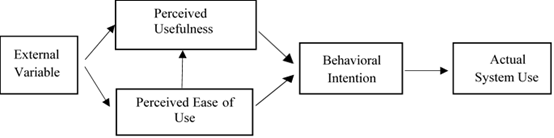
The TAM model encompasses two key determinants to predict a user’s behavioral intention (Figure 1). The first one is Perceived Usefulness (PU). According to Davis’s (1989), perceived usefulness is defined as “the degree to which a person believes that using a particular system would enhance his or her job performance” while the second factor, Perceived Ease of Use (PEOU), is defined as “the degree to which a person believes that using a particular system would be free of effort” (Davis, 1989).
Online shopping determinants of university students
Various studies investigating young adults' motivation toward online shopping have identified several factors including perceived transaction security and trust, attitude, personal online experience and skills, perceived usefulness, perceived ease of use, and website credentials. In a study conducted by Delafrooz et al. (2009) involving a sample of 370 postgraduate students in Malaysia, utilitarian orientation, convenience, price, and wider selection significantly impacted university students’ attitudes toward online shopping. The results of a similar study undertaken by Ma and Ma (2012) with a sample of 320 university students in the Chinese context highlighted perceived safety, prices, and quality of products and website features to significantly impact university students’ intention for online shopping. Additionally, Rahayu et al. (2020) used a sample size of 152 undergraduate students in Jakarta to show that their online shopping intention was determined mainly by perceived risk and perceived trust. Based on these findings, this paper extended the TAM model by including perceived transaction security and perceived trust to measure the predictive ability of the online buying intention of University of Mauritius’ students.
Perceived usefulness (PU) and intention to buy online
Davis (1989) has defined PU as “the degree to which a person believes that using a particular system would enhance his or her job performance”. However, for the online shopping platform, PU has been established as the capability to buy and choose between products and quick online shopping process, resulting in less time consuming (Fadhilla, 2017; Yulihasri et al., 2011). However, some inconsistencies are raised in the literature on the relationship of perceived usefulness in determining online shopping intention. For instance, the study of Van der Heijden (2004) indicated that factors such as trust and perceived usefulness did not have a significant positive influence on online purchase intentions, whereas Renny et al. (2013) found perceived usefulness to have a positive significant impact with online shopping intentions. The following hypothesis is thus formulated.
H1: There is a positive relationship between perceived usefulness and online shopping intention.
Perceived ease of use (PEOU) and intention to buy online
PEOU is regarded as the degree to which a user initiates an internal belief that creates expectations that using a new technology would be free of any effort Gitau and Nazuki (2014). For instance, the first contact between a user and the online shopping site would be the organisation’s website. PEOU, in this context, would be the expectation for a user-friendly website that the user will find easy to engage with. However, there are cases where the website may be easy to use at first but becomes less user-friendly as the user progresses with completing the online transaction (Gitau & Nazuki, 2014). Studies conducted on the influence of PEOU on online shopping intentions have highlighted convenience as a key motivating factor for online shopping intentions (Jiang et al., 2013). Dimensions of convenience for PEOU include easy access to search, easy access to product category, price and comparison, and seamless transaction (Seiders et al., 2000). Selamat, Jaffar and Ong (2009), established that consumers make use of those technologies that are perceived to be easier and more effortless to use, hence advocating that PEOU of online shopping platforms influences the adoption of online shopping. Thus, an online platform satisfying the criteria of simplicity, clean display, logical flow, and web layout that is efficient and user friendly (Akhmadi et al., 2021; Ellitan & Prayogo, 2022) will result in higher PEOU hence would have a positive significant relationship with online shopping intentions.
H2: There is a positive relationship between perceived ease of use and online shopping intention.
Perceived transaction security (PTS) and intention to buy online
One of the key concerns affecting the adoption of online shopping is security (Pavlou & Fygenson, 2006), and the ease of online shopping has presented significant security challenges not only for consumers but retailers as well (Saeed, 2023). Perceived transaction security (PTS) is the consumer’s judgment that the online transactions they conduct with retailers will be processed correctly and their personal and financial data will be safeguarded and treated in confidentiality to prevent negative consequences (Indiani & Fahik, 2020). Empirical studies have highlighted that consumers avoid engaging in online shopping because of PTS (D’Alessandro et al., 2012; Park & Kim, 2006; Saeed, 2023). In fact, PTS has been ranked as one of the most significant factors influencing online shopping intentions. In their study, Sadi and Noordin (2011) revealed that security, trust, and risk had a significant impact on mobile commerce. Ozkan et al. (2010) and Roy et al. (2017) argued that for consumers, transaction details are significant in their decision-making process and add that security and convenience are major determinants in influencing online transactions of consumers. Based on these views, PTS is considered to influence online shopping.
H3. There is a positive relationship between perceived transaction security and online shopping intention.
Perceived trust (PT) and intention to buy online
Thagard (1989) has defined trust as “the core of every human relationship and communication”. With the growth of E-Commerce, the concept of trust has caught the attention of many researchers. In a survey conducted by Cap Gemini Ernst and Young (2000) comprising of 6000 respondents, findings revealed that trust in E-commerce platforms was considered more important than price. According to Pavlou (2003), all interactions require trust, especially in those interactions conducted in an uncertain environment of an E-commerce platform. Trust is a significant factor for success in online shopping as it separates buyers from non-buyers (Kim & Park, 2013). Perceived trust (PT) is viewed as a critical aspect of online shopping situations that builds faith and confidence among the customers to buy online products that are consistent with the online retailers’ promise (Pushpakumara, 2020) and, in parallel, provides the level of confidence to customers based on the advertisement’s claim regarding price, product, quality, quantity among others (Budur et al., 2019).
It is quite hard to evaluate an online retailer’s product or service in an online environment compared to the traditional face-to-face market, which creates complexity in trust, resulting in negative online purchase intention. Typically, a customer who is normally exposed to much physical evidence such as sales agent encounters, eye contacts, gestures, communication tones, and product specifications will develop the first stage of trust between the buyer and the seller. However, in an online setting, the same buyer is only exposed to the website of the online retailer being his/her only type of interaction which disrupts the trust building process (Pushpakumara, 2020). Hence, PT is seen to be a significant factor in online shopping. In their study using a sample of 122 college students, Chen and Dibb (2010) concluded that the indicator for PT includes: company presentation on the website, how they induced brand awareness through the contents on their websites, navigational functionality, feelings of familiarity through the website of online retailer all being key measurements for PT that ultimately influences online shopping intentions of those students. Additionally, Rhee and Muhammad (2018) established that among the different indicators of PT, online word of mouth is the key measurement for the degree of trust between the online retailer and buyer, which creates close business relationships Bauman and Bachmann (2017). Most internet shoppers look for reviewers' and bloggers’ reviews and opinions before trusting an online retailer, which directly influences their e-commerce purchasing intentions. Studies conducted by Nwannebueze and Igwe (2021), Gibreel et al. (2018), and Al Asheq et al. (2022) observed that PT influences the online purchase intentions of customers. The following hypothesis is thus formulated.
H4: There is a positive relationship between perceived trust and online shopping intention.
Based on the literature, the following conceptual framework is proposed. It is derived from the dimensions of the TAM model and the dimensions of perceived transaction and perceived trust to study the factors influencing the buying intentions of university students toward online shopping, as illustrated in Figure 2.
Conceptual framework used in this study

Method
The survey method was adopted for this study to collect data, and an online questionnaire was used. Since the study focuses on online shopping and it has earlier been established that young adults represent a significant potential for this form of shopping, the target population is university students (Kuswanto, 2023; Duong & Liaw, 2021). Additionally, since the University of Mauritius has the highest enrolment rate of university students in Mauritius, this university was selected. A convenience sampling method was used to target students from all seven faculties on the campus. Thus, undergraduate and postgraduate students from Management, Law, Accounting and Finance, Science, Medicine, Agriculture, Engineering, Computing, Social Sciences, Humanities, etc. were surveyed based on availability. It should be noted that students attending the University of Mauritius come from diverse cultural and economic backgrounds as well as various geographic regions within the country. There is also a small number of international students. The criteria to participate in the survey were students who actively engaged or indulged at least once in online shopping activities. Ethical norms were ensured during data collection and processing. Participants were informed about the nature of the study prior to conducting the survey, and they decided to participate entirely. All the data were kept confidential and anonymous and used solely for the purpose of this study. A pilot test involving 16 students was conducted before the survey began to check for the accuracy and consistency of responses. The population size of the University of Mauritius is 11,000 students; a sample size of 372 students was deemed appropriate with a confidence level of 95% and a margin of error of 5%.
Measures
A structured questionnaire was developed to collect primary data. The questionnaire included close-ended questions measured on a five-point Likert scale ranging from "strongly agree" to "strongly disagree" that had been previously validated in past studies. The TAM model was measured by Perceived Usefulness (PU) and Perceived Ease of Use (PEOU). The TAM model was extended for this study with two additional scales to identify the buying intentions of university students toward online shopping: Perceived Transaction Security (PTS) and Perceived Trust (PT). PU and PEOU were each measured with six items adopted from Davis (1989). PTS was measured by three items adapted from (Liu et al., 2005; Raman & Annamalai, 2011). Four items proposed by Chen and Dibb (2010) and Rhee and Muhammad (2018) were used to measure PT. Additionally, for the dependent variable, three items adopted from Pavlou (2003) were used to measure online shopping intention. All the constructs were considered to be reliable, as indicated by the Cronbach Alpha results in Table 1.
Reliability test results
|
|
Item |
Cronbach Alpha |
|
Independent variable |
Perceived Usefulness (PU) (6 Items) |
0.706 |
|
Independent variable |
Perceived Ease of Use (PEOU) (6 Items) |
0.729 |
|
Independent variable |
Perceived Transaction Security (PTS) (3 Items) |
0.803 |
|
Independent variable |
Perceived Trust (4 Items) |
0.705 |
|
Dependent variable |
Online Shopping Intention (OSI) (3 Items) |
0.781 |
Analysis and discussion of findings
Demographic profile
The survey comprised of 372 students from the University of Mauritius. The sample was made up of male (53%) and female students (46%). Very few students declined to indicate their gender (1%). The majority of the respondents were aged between 19-23 (81%). Those over 23 years represented 19%, mostly final-year undergraduate or postgraduate students. In terms of field of study, respondents from the Faculty of Law and Management (52%) largely outnumbered the sample. Other respondents were from the Faculty of Information Communication and Digital Technologies (17%), Faculty of Agriculture (14%), Faculty of Engineering (7%), Faculty of Social Science and Humanities (6%) and Faculty of Science (5%). Since most respondents were full-time students, they were not employed or were in part-time jobs; thus, they did not have a steady monthly income and relied mostly on their pocket money, ranging from Rs 10,000 to Rs 15,000 (69%). Those earning more than Rs 15,000 represented 31%.
Correlation analysis
A bivariate correlation was conducted using the Statistical Package for Social Science (SPSS) version 21. Spearman Rho’s correlation was adopted to measure the relationship between the four independent variables (PU, PEOU, PTS, and PT) and the dependent variable.
Results of correlation coefficient
|
Item |
Correlation Coefficient |
Level |
|
Correlation between Perceived Usefulness and Online Shopping Intention of university students. |
0.215 |
Weak |
|
Correlation between Perceived Ease of Use and Online Shopping Intention of university students. |
0.245 |
Weak |
|
Correlation between Perceived Transaction Security and Online Shopping Intention of university students. |
0.421 |
Moderate |
|
Correlation between Perceived Trust and Online Shopping intention of university students. |
0.720 |
Strong |
The Spearman Rho’s correlation test in Table 2 shows the relationship between the independent variables of PU, PEOU, PTS, and PT with the dependent variable of OSI. The correlation coefficient value for PU is 0.215, PEOU is 0.245, PTS is 0.421, and PT is 0.720. The results indicate that all the independent variables have a significant relationship with the dependent variable. Furthermore, the correlation level between PT and OSI was the most significant, with rho = 0.720 signifying a strong positive correlation, followed by PTS with rho = 0.421, showing a moderate positive correlation with OSI. Meanwhile, PU with rho = 0.215 and PEOU with rho = 0.245 demonstrated a weak positive significance relationship with OSI.
Proposed model result
Figure 3 shows the tested model derived from the findings after testing the hypotheses. All the hypotheses are supported.
Proposed model result

Table 3 summarizes the findings of this study. The four hypotheses developed from the literature review are supported, and these are further discussed with each independent variable’s descriptive statistics.
Summary of findings
|
Hypothesized relationship |
Rs |
Results |
|
H1: PU (+ve) → Online Shopping Intention of University Students. |
0.215 |
Supported |
|
H2: PEOU(+ve) → Online Shopping Intention of University Students. |
0.245 |
Supported |
|
H3: PTS(+ve) → Online Shopping Intention of University Students. |
0.421 |
Supported |
|
H4: PU (+ve) → Online Shopping Intention of University Students. |
0.720 |
Supported |
Online shopping intention
A majority of students engage in online shopping (87 %). This finding is in line with that of Aldhmour and Sarayrah (2016) and Duong and Liaw (2021), who stated that university students who form part of Gen Y and Gen Z represent a major market segmentation for online business opportunities. Additionally, 71% agreed to continue engaging in online shopping activities, corroborating the findings of Aldhmour and Sarayrah (2016).
Perceived usefulness and online shopping intention
Renny et al. (2013) found that factors such as being fast, increased productivity, effort saving, boost in efficiency, and less time consuming are factors of PU that influence online shopping intention. Results for this study indicate an agreement rate for the following factors: 62% for easy factor, 67% for increased productivity, 77% for increased efficiency, and 64% for time-saving, which coincided with the findings of Renny et al. (2013). This confirms PU as an influencing factor for OSI due to the majority of agreement rates.
H1 was successfully supported with a positive correlation relationship of 0.215 between the two variables. This finding is in line with the results of Dharma et al. (2019), who concluded that perceived usefulness has a positive correlation with online shopping intention. This indicates that university students consider online shopping more useful than traditional shopping based on factors such as increased productivity, improved efficiency, improved effectiveness, and a significant reduction in time in shopping activity. The same reasoning was adopted by Renny et al. (2013) for the online shopping of airline tickets, where those factors were major contributing elements of perceived usefulness towards online shopping intention. The reasoning emanating from the above discussion indicates that perceived usefulness is a major influencing factor for the online shopping intention of university students due to its positive correlation coefficient; however, it must be noted that perceived usefulness has the least correlation relationship according to the results presented in Table 3.
Perceived ease of use and online shopping intention
Selamat, Jaffar, and Org (2009) stated that consumers use online platforms that are perceived to be easier and effortless, have seamless website interaction, and provide useful information display (Ellitan & Prayogo, 2022). The findings of the current study are similar, where the majority of respondents agreed or strongly agreed that ease of learning online shopping (83%), useful online information (77%), understandability, and seamless interaction (69%) in finding online shopping sites very easy to use (76%) influence their online shopping intention. Hence, PEOU is an influential factor in the intention of university students to shop online. Similar results were found by Jiang et al. (2013).
H2 postulated a direct positive correlation between perceived ease of use and online shopping intention of university students, which was successfully supported by a positive correlation relationship of 0.245 between the two variables. This finding coincides with the research results of Akhmadi et al. (2021), where a positive correlation was established between PEOU and OSI. This indicates that university students perceived that online shopping would be easier to use compared to traditional shopping based on effortless and easier shopping, seamless website interaction, useful information display, and flexible online retailers. Similar results were found by Ellitan and Prayogo (2022). The reasoning emanating from the above discussion indicates that the perceived usefulness element is a major influencing factor for the online shopping intention of students at the University of Mauritius due to its positive correlation coefficient. However, it must be noted that PEOU has a weak correlation strength with OSI based on the results obtained.
Perceived transaction security and online shopping intention
Park and Kim (2006) and Chen and Dibb (2010) argued that credit card data protection, effective guarantees and return policy and transaction data protection are key elements of PTS, which ultimately significantly impact online shopping intention. The findings of this research coincide with those of Park and Kim’s (2006) and Chen and Dibb’s (2010) since students the respondents indicated that they agreed to engage in online shopping if they believed that their credit card data was protected (73%), if online retailers provided effective guarantees and return policy (65%), and believed online retailers protected their transaction data (77%). These findings indicate that PTS influences the online shopping intention of university students, which coincides with the results of Lee (2009).
H3 postulated a direct positive correlation between perceived transaction security and online shopping intention of university students, which was successfully supported by a positive correlation relationship of 0.421 between the two variables. This finding concurs with the findings of Bahanan and Salim (2022), where a positive correlation was established between perceived transaction risks and the online shopping intention of university students. The results indicate that the perceived transaction security element is a major influencing factor for the online shopping intention of students at the University of Mauritius due to its positive correlation coefficient.
Perceived trust and online shopping intention
Chen and Dibb (2010) and Rhee and Muhammad (2018) found elements of the business’ logo, website familiarity feelings, online influencers' reviews, and privacy confidence to be important elements of PT, which has a significant impact on online shopping intention. The finding of this research coincides with Chen and Dibb (2010) and Rhee and Muhammad (2018) as University of Mauritius students engaged in online shopping if they believed that online website clearly displays their company logo (84%), consider online influencers review (72%) and privacy confidence (79%). Thus, PT is an influencing factor for online shopping intention.
H4 postulated a direct positive correlation between PT and the online shopping intention of university students, which was successfully supported by a positive correlation relationship of 0.720 between the two variables. This finding corroborates Nwannebueze and Igwe's (2021) findings, which identified a strong positive relationship between perceived trust and online shopping intention in the Nigerian market. The findings indicate that PT is a major influencing factor for the online shopping intention of students at the University of Mauritius due to its positive correlation coefficient. The positive correlation may be due to the limited physical exposure between the buyer and seller (Nwannebueze & Igwe, 2021), which disrupts the trust-building process. Thus, the more assurance the online retailer demonstrates through displaying reliability through proper logo presentation, online influencers reviews, privacy protection, and website familiarity interface display will allow the online buyer to increase their online shopping intention (Chen & Dibb, 2010; Rhee & Muhammad, 2018; Nwannebueze & Igwe, 2021).
Conclusion, limitations and suggestions for further research
The findings of this study indicate that university students perceive online shopping as easier, more productive, more effective, and less time-consuming than traditional shopping. Additionally, this study has successfully established a weak positive correlation between PU and online shopping intention. Furthermore, based on the results, it can be concluded that students’ online shopping intention is increased based on their perception of finding where the online sites are easy to use if they find useful information on online sites, clear understandability of e-commerce sites, and if they perceived the overall interface of the e-commerce website easy to use. Moreover, this study has succeeded in establishing a weak, significant positive correlation between PEOU and online shopping intention. Regarding PTS, it can be concluded that university students’ intention to shop online is increased based on their perception of whether the online retailer guarantees proper protection and confidentiality of transaction data and the proper provision of guarantees and return policy. Furthermore, this study has proved a moderate positive correlation between PTS and online shopping intention. Finally, it can be further concluded that university students’ intention to shop online is increased based on their belief if they find the online seller to abide by the data confidentially and privacy of the buyer, proof of positive online influencers’ reviews, proper website experience that induce feelings of familiarity, proper website construction with clear presentation of logo.
Online shopping businesses targeting young adults in Mauritius should ensure that they continue to make their e-commerce websites useful for their target market. Include creative edge to design innovative ads perceived as high information delivery by their audience and focus on improving the delivery channel to minimize the time the buyer takes to get their product/service. For example, online sellers can optimize their websites to reduce the loading time, prevent frustration among users, and include full product specification, comparison details, and varieties, which will result in students having higher perceived usefulness, increasing their probability of online shopping. Online retailers should note that the easier the technology is, the more useful the university students will perceive it. This implies that complicated processes and unnecessary display of hectic information should be eliminated from the e-commerce website. The e-commerce website should be mobile friendly, easy site access, simplified navigation features will make the Mauritian university students shop online as it will be perceived as easy to use. For transaction security, online retailers should clearly indicate clear information on guarantees and return policies on their websites so that customers feel that their interests are the top priority, as this greatly influences their online shopping intentions. Additionally, this study recommends that online retailers abide by the Data Protection Act concerning buyers’ transaction details to build assurance in their minds.
Although this research presented supportive findings and new insights concerning the online shopping intentions of university students using the TAM model with two added dimensions, the results may still come with some limitations. The study was mainly quantitative, using an online questionnaire that restricted the unearthing of the respondents' in-depth views and sentiments. Furthermore, given the academic scope of this study, the sample was restricted to 372 respondents from the University of Mauritius, hence the findings may not be generalized to all students and young adults. Future studies could consider other tertiary institutions on the island as well as young adults, not necessarily university students. A qualitative study could be conducted in future studies and include other factors beyond the model proposed in this study that influence online shopping intentions.
References
Abhram, W. ( internet as a modern-day communication medium. Journal of Mass Communication & Journalism, 12(3), 453. http://dx.doi.org/10.37421/2165-7912.22.12.453
Akhmadi, H., Aini, Q. F. Z., Saffana, A., & Runanta, D. (2021). Online purchase behaviour of food product during covid-19 pandemic: a study on consumer of bedukmutu marketplace. E3S Web of conferences 316, 0101. http://dx.doi.org/10.1051/e3sconf/202131601013
Al Asheq, A., Tanchi, K. R., Akhter, S., Kamruzzaman, M., & Islam, A. (2022). Examining university students’ behaviors towards online shopping: An empirical investigation in an emerging market. Innovative Marketing, 18(1), 94-103. http://dx.doi.org/10.21511/im.18(1).2022.08
Aldhmour, F., & Sarayrah, I. (2016). An investigation of factors influencing consumers’ intention to use online shopping: An empirical study in South of Jordan. The Journal of Internet Banking and Commerce, 21(2), 1-48. Retrieved from https://www.icontrolpollution.com/peer-reviewed/an-investigation-of-factors-influencing-consumers-intention-to-use-online-shopping-an-empirical-study-in-south-of-jordan-78452.html
Bahanan, A. N., & Salim, A. S. (2022). The relationship between perceived risk and online purchase intention. Research in Management of Technology and Business, 3(1), 112-128. https://doi.org/10.30880/rmtb.2022.03.01.009
Bauman, A., & Bachmann, R. (2017). Online consumer trust: trends in research. Journal of Technology Management & Innovation, 12, 68-79. https://doi.org/10.4067/S0718-27242017000200008
Budur, T., Faraj, K. M., & Karim, L. A. (2019). Benchmarking operations strategies via hybrid model: A case study of café-restaurant sector. Amazonia Investiga, 8(23), 842-854. Retrieved from https://amazoniainvestiga.info/index.php/amazonia/article/view/870
Cap Gemini Ernst & Young study (2000), “Perceptions of Trust”, February 13th 2004. ECommerce Alerts Issued by Bennett Gold, Chartered Accountants.Chen, J., & Dibb, S. (2010). Consumer trust in the online retail context: exploring the antecedents and consequences. Psychology & amp; Marketing, 27(4), 323-346. http://dx.doi.org/10.1002/mar.20334
D’Alessandro, S., Girardi, A., & Tiangsoongnern, L. (2012). Perceived risk and trust as antecedents of online purchasing behavior in the USA gemstones industry. Asia Pacific Journal of Marketing and Logistics, 24(3), 433-460. http://dx.doi.org/10.1108/13555851211237902
Daroch, B., Nagrath, G., & Gupta, A. (2021). A study on factors limiting online shopping behaviour of consumers. Rajagiri Management Journal, 15(1), 39-52. http://dx.doi.org/10.1108/RAMJ-07-2020-0038
Davis, F. (1989). Perceived usefulness, perceived ease of use & user acceptance of information technology. MIS Quarterly, 13(3), 319-340. http://dx.doi.org/10.2307/249008
Delafrooz, N., Paim, L. H., Haron, S. A., Sidin, S. M., & Khatibi, A. (2009). Factors affecting students’ attitude toward online shopping. African Journal of Business Management, 3(5), 200-209. https://doi.org/10.5897/AJBM.9000286
Dharma, N. P. T. M., Rossanty, Y., Ku Ariffin, K. H., & Zaini, N. I. B. M. (2019). An empirical examination of the factors influencing consumer’s purchase intention toward online shopping. Journal of Business and Retail Management Research (JBRMR), 13(4), 14-29. https://doi.org/10.24052/JBRMR/V13IS04/ART-02
Duong, X. L., & Liaw, S. Y. (2021). Psychometric evaluation of online shopping addiction scale (OSAS). Journal of Human Behavior in the Social Environment, 32(3), 402-414. http://dx.doi.org/10.1080/10911359.2021.1901824
Ellitan, L., & Prayogo, C. (2022). Increasing online purchase through perceived usefulness, perceived risk and perceived ease of use. Journal Ekonomi, Manajemem, Akuntansi, 1(2), 261-270. https://doi.org/10.56799/ekoma.v1i2.463
Fadhilla, F., & Farmania, A. (2017). E-commerce in indonesia: purchasing decision of shopping online. Proceedings of the 2017 International Conference on E-Business and Internet (pp. 60-64). http://dx.doi.org/10.1145/3092027.3092043
Gavrila, G. S., González-Tejero, B., Gómez Gandía J. A., & Ancillo, L. (2023). The impact of automation and optimization on customer experience: a consumer perspective. Journal of Humanities and Social Sciences Communications, 10(1), 877. http://dx.doi.org/10.1057/s41599-023-02389-0
George, J. (2002). Influences on the intent to make internet purchases. Internet Research, 12(2), 165-180. http://dx.doi.org/10.1108/10662240210422521
Gibreel, O., Alotaibi, D. A., & Altmann, J. (2018). Social commerce development in emerging markets. Electronic Commerce Research and Applications, 27, 152-162. https://doi.org/10.1016/j.elerap.2017.12.008
Gitau, K. A., & Nazuki, I. S. M. (2014). How perceived usefulness and perceived ease of use affect intent to online repurchase? Journal Management, 26(3), 481-496. http://dx.doi.org/10.24912/jm.v24i3.680
Gommans, M., Krishnan, K. S., & Scheffold, K. B. (2001). From brand loyalty to e‐oyalty: a conceptual framework. Journal of Economic and Social Research, 3(1), 43‐58. Retrieved from https://citeseerx.ist.psu.edu/document?repid=rep1&type=pdf&doi=4bbc331f307c45d57b004153816866fd485f4c42
Higueras-Castillo, E., Liébana-Cabanillas, F. J., & Villarejo-Ramos, A. F. (2023). Intention to use e-commerce vs physical shopping. Difference between consumers in the post-covid era. Journal of Business Research, 157(4), 113622. http://dx.doi.org/10.1016/j.jbusres.2022.113622
Huseynov, F., & Yıldırım, S. Ö. (2016). Internet users’ attitudes toward business-to-consumer online shopping: A survey. Information Development, 32(3), 452-465. https://doi.org/10.1177/0266666914554812
Indiani, N. L. P., & Fahik, G. A. (2020). Conversion of online purchase intention into actual purchase: The moderating role of transaction security and convenience. Verslas: Teorija ir praktika / Business: Theory and Practice, Vilnius Gediminas Technical University, Vilnius, 21(1), 18-29. https://doi.org/10.3846/btp.2020.11346%0A
Jahdav, V., & Khanna, M. (2016). Factors influencing online buying behavior of college students: a qualitative analysis. The Qualitative Report, 21(1), 1-15. http://dx.doi.org/10.46743/2160-3715/2016.2445
Jiang, S. L., Tractinsky, N., & Vitale, M. (2013). Consumer trust in an internet store. Information Technology and Management, 1(12), 45-71. http://dx.doi.org/10.1023/A:1019104520776
Kemp, S. (2023). Digital 2023: mauritius-datareportal-global digital insights [Preprint]. Last accessed in February 2023. https://datareportal.com/reports/digital-2023-mauritius
Kim, S., & Park, H. (2013). Effects of Various Characteristics of Social Commerce (S-Commerce) on Consumers’ Trust and Trust Performance. International Journal of Information Management, 33, 318-332. https://doi.org/10.1016/j.ijinfomgt.2012.11.006
Kuswanto, H., Pratama, W. B. H., & Ahmad, I. S. (2023). Survey data on students’ online shopping behaviour: A focus on selected university students in Indonesia. Data in Brief, 29, 105073. https://doi.org/10.1016/j.dib.2019.105073
Lee, M. C. (2009). Factors influencing the adoption of internet banking: An integration of TAM and TPB with perceived risk and perceived benefit. Electronic Commerce Research and Applications, 8(3), 130-141. http://dx.doi.org/10.1016/j.elerap.2008.11.006
Lennon, S. J., Ha, Y., Johnson, K. K. P., Jasper, C. R., & Damhorst, M. L., & Lyons, N. (2008). Rural consumers’ online shopping for food and fiber products as a form of outshopping. Clothing and Textiles Research Journal, 27(1), 3-30. http://dx.doi.org/10.1177/0887302X07313625
Liu, S. H., Liao, H. L., & Peng, C. J. (2005). Applying the technology acceptance model and flow theory to online e-learning users’ acceptance behavior. Issues in Information Systems, 6(2), 175-181. https://doi.org/10.48009/2_iis_2005_175-181
Ma, M., & Ma, R. (2012). The factors affecting the attitude of university students towards online shopping: a case study of students in honghe university. In Jin, D., & Lin, S. (eds.), advances in electronic commerce, web application and communication. Advances in intelligent and soft computing, vol 149. Springer, Berlin, Heidelberg. https://doi.org/10.1007/978-3-642-28658-2_79
Marikyan, D., Papagiannidis, S., & Stewart, G. (2023). Technology acceptance research: meta-analysis. Journal of Information Science, 0(0). https://doi.org/10.1177/01655515231191177
Musa, H. G., Fatmawati, I., Nutyakin, N., & Suyanto, M. (2024). Marketing research trends using technology acceptance model (TAM): a comprehensive review of researches (2002-2022). Cogent Business and Management, 11(1). http://dx.doi.org/10.1080/23311975.2024.2329375
Nwannebueze, E. E., & Igwe, S. R. (2021). The effect of trust and service quality on purchase decisions of online shoppers. International Journal of Advanced Academic Research, 7(10). Retrieved from https://www.ijaar.org/articles/v7n10/sms/ijaar-v7n10-Oct21-p7109.pdf
Ozkan, S., Bindusara, G., & Hackney, R. (2010). Facilitating the adoption of e-payment systems: theoretical constructs and empirical analysis. Journal of Enterprise Information Management, 23(3), 305-325. http://dx.doi.org/10.1108/17410391011036085
Park, C. H., & Kim, Y. G. (2006). The effect of information satisfaction and relational benefit on consumers online site commitments. Journal of Electronic Commerce in Organizations, 4(1), 70-90. http://dx.doi.org/10.4018/jeco.2006010105
Pavlou, P. A. (2003). Consumer acceptance of electronic commerce: Integrating trust and risk with the technology acceptance model. International Journal of Electronic Commerce, 7(3), 69-103. https://doi.org/10.1080/10864415.2003.11044275
Pavlou, P. A., & Fygenson, M. (2006). Understanding and predicting electronic commerce adoption: An extension of the theory of planned Behavior. MIS Quarterly, 30(1), 115-143. https://doi.org/10.2307/25148720
Pushpakumara, B. M. A. (2020). Customer self oriented and other oriented intrinsic values, brand trust and consumer-brand relationship: a conceptual review with reference to life insurance sector research proposition. Sri Lanka Journal of Marketing, 6(1), 80-98. http://dx.doi.org/10.4038/sljmuok.v6i1.37
Rahayu, A., Saparudin, M., & Hurriyati, R. (2020). Factors influencing online purchase intention: the mediating role of customer trust (a study among university students in jakarta). Advances in Economics, Business and Management Research, 117, 1-4. http://dx.doi.org/10.2991/aebmr.k.200131.001
Raman, A., & Annamalai, V. (2011). Web services and e-shopping decisions: a study on malaysian e-consumer. Ijca special issue on: wireless information. Networks & Business Information System, 2, 54-60. https://citeseerx.ist.psu.edu/document?repid=rep1&type=pdf&doi=5ef779d96a1658884fa44d256320aa64b6d7d768
Renny, Guritno, S., & Siringoringo, H. (2013). Perceived usefulness, ease of use, and attitude towards online shopping usefulness towards online airlines ticket purchase. Social and Behavioural Sciences, 81, 212-216. https://doi.org/10.1016/j.sbspro.2013.06.415
Rhee, J., & Muhammad, F. I. (2018). Constituents and consequences of online- shopping in sustainable e-business: an experimental study of online-shopping malls. Sustainability, MDPI, 10(10), 231-258. https://doi.org/10.3390/su10103756
Roy, S., Raju, A., & Mandal, S. (2017). An empirical investigation of e-retailer agility, customer satisfaction, commitment, and loyalty. Business: Theory and Practice, 18, 97-108. https://doi.org/10.3846/btp.2017.011
Sadi, A. H. M., & Noordin, M. (2011). Factors influencing the adoption of m-commerce: an exploratory analysis. Proceedings of the 2011 International Conference on Industrial Engineering and Operations Management, Kuala Lumpur, Malaysia, January 22-24, (pp. 492-499). Retrieved from http://ieomsociety.org/ieom2011/pdfs/IEOM073.pdf
Saeed, S. (2023). A customer-centric view of e-commerce security and privacy. Applied Science, 13(2), 1020. http://dx.doi.org/10.3390/app13021020
Seiders, K. B., Berry, L., & Gresham, L. (2000). Attention, retailers! How convenient is your convenience strategy? Sloan Management Review, 41(3), 79-89. Retrieved from https://sloanreview.mit.edu/article/attention-retailers-how-convenient-is-your-convenience-strategy/
Selamat, Z., Jaffar, N. & Ong, B.H. (2009). Technology acceptance in Malaysian banking industry, European Journal of Economics, Finance & Administrative Sciences, 1(17), 143-155.Thagard, P. (1989). Explanatory coherence. Behavioral and Brain Science, 12(3), 435-467. http://dx.doi.org/10.1017/s0140525x00057046
Tran, V. D., & Nguyen, T. D. (2022). The impact of security, individuality, reputation and consumer attitudes on purchase intention of online shopping: The evidence in Vietnam. Cogent Psychology, 9(1). http://dx.doi.org/10.1080/23311908.2022.2035530
Tzeng, S. Y., Ertz, M., Jo, M. S., & Sarigöllü, E. (2021). Factors affecting customer satisfaction on online shopping holiday. Marketing Intelligence & Planning, 39(4), 516-532. https://doi.org/10.1108/MIP-08-2020-0346
Van der Heijden, H. (2004). User acceptance of hedonic information systems. MIS Quarterly, 28(4), 695-704. https://doi.org/10.2307/25148660
Venkatesh, V., & Davis, F. D. (1996). A Model of the Antecedents of Perceived Ease of Use: Development and Test. Decision Sciences, 27(3), 451–481. https://doi.org/10.1111/j.1540-5915.1996.tb00860.x
Venkatesh V., Morris M. G., Davis G. B., Davis F. D. (2003). User Acceptance of information technology: toward a unified view. MIS Quarterly, 27(3), 425–478. https://doi.org/10.2307/30036540
Yulihasri, Islam, M. A., & Daud, K. A. (2011). Factors that influence customers buying. International Journal of Marketing Studies, 3(1). https://doi.org/10.5539/ijms.v3n1p128
Zhang, W., & Liu, X. (2023). The impact of internet on innovation of manufacturing export enterprises: Internal mechanism and micro evidence. Journal of Innovation & Knowledge, 8(3), 100377. https://doi.org/10.1016/j.jik.2023.100377

Page 1 of
Download Count : 54
Visit Count : 316
Keywords
Online Shopping; Buying Intention; Perceived Usefulness; Perceived Ease of Use; Perceived Transaction Security; Perceived Trust


Author(s) Information



How to cite this article:
Gungaphul, M., & Mangra, M. (2024). Factors Influencing Buying Intentions of University Students in Mauritius Towards Online Shopping. Marketing and Branding Research, 11(1), 12-26. https://doi.org/10.32038/mbr.2024.11.01.02
Acknowledgments
Not applicable.
Funding
Not applicable.
Conflict of Interests
No, there are no conflicting interests.
Open Access
This article is licensed under a Creative Commons Attribution 4.0 International License, which permits use, sharing, adaptation, distribution and reproduction in any medium or format, as long as you give appropriate credit to the original author(s) and the source, provide a link to the Creative Commons license, and indicate if changes were made. You may view a copy of Creative Commons Attribution 4.0 International License here: http://creativecommons.org/licenses/by/4.0/