








Original Research
The Impact of Digital Marketing on the Performance of Small and Medium–Sized Enterprises in North Macedonia


- Abstract
- Full text
- Metrics
This research paper investigates the impact of digital marketing on the performance of Small and Medium-sized Enterprises (SMEs) in North Macedonia. Digital marketing has emerged as a powerful tool for businesses to reach their target audience, enhance brand awareness, and increase sales revenue. However, the extent to which SMEs in North Macedonia have embraced digital marketing and the specific impact it has on their performance remains underexplored. Through a comprehensive literature review and empirical analysis, this study aims to shed light on the relationship between digital marketing strategies and SME performance indicators. The research methodology involves collecting data from a diverse sample of SMEs, analyzing the influence of digital marketing on outcomes such as sales revenue, customer acquisition, brand awareness, and so on. The findings of this study reveal that SMEs in North Macedonia are increasingly utilizing digital marketing strategies, with social media marketing and email marketing being the most used channels. Moreover, digital marketing is found to have a significant positive impact on SME performance, particularly in terms of increasing sales revenue and enhancing customer engagement. Overall, this research paper underscores the importance of digital marketing as a strategic tool for SMEs and provides valuable insights into the relationship between digital marketing initiatives and SME performance. It offers a foundation for future research in this area and emphasizes the need for continuous adaptation and innovation in the ever-evolving digital landscape.
The Impact of Digital Marketing on the Performance of Small and Medium–Sized Enterprises in North Macedonia
Teuta Veseli-Kurtishi
South East European University, Tetovo, North Macedonia
ABSTRACT
This research paper investigates the impact of digital marketing on the performance of Small and Medium-sized Enterprises (SMEs) in North Macedonia. Digital marketing has emerged as a powerful tool for businesses to reach their target audience, enhance brand awareness, and increase sales revenue. However, the extent to which SMEs in North Macedonia have embraced digital marketing and the specific impact it has on their performance remains underexplored. Through a comprehensive literature review and empirical analysis, this study aims to shed light on the relationship between digital marketing strategies and SME performance indicators. The research methodology involves collecting data from a diverse sample of SMEs, analyzing the influence of digital marketing on outcomes such as sales revenue, customer acquisition, brand awareness, and so on. The findings of this study reveal that SMEs in North Macedonia are increasingly utilizing digital marketing strategies, with social media marketing and email marketing being the most used channels. Moreover, digital marketing is found to have a significant positive impact on SME performance, particularly in terms of increasing sales revenue and enhancing customer engagement. Overall, this research paper underscores the importance of digital marketing as a strategic tool for SMEs and provides valuable insights into the relationship between digital marketing initiatives and SME performance. It offers a foundation for future research in this area and emphasizes the need for continuous adaptation and innovation in the ever-evolving digital landscape.
©EUROKD Publishing
Introduction
In the contemporary business landscape, Small and Medium-sized Enterprises (SMEs) constitute the backbone of economies worldwide, contributing significantly to job creation, innovation, and economic growth (Kuckertz, 2013). So, they (SMEs) are an essential contributor to the economic growth and development of many countries worldwide, including North Macedonia. However, the journey to sustained success for SMEs is fraught with challenges, including limited resources and intense competition. To overcome these hurdles and achieve enduring prosperity, SMEs are increasingly turning to digital marketing as a powerful lever for enhancing their performance (Binbasioglu & Turk, 2020). In this context, digital marketing has emerged as a critical tool for businesses to reach and engage their target audience, improve brand awareness, and drive sales revenue. Digital marketing innovation has the potential to positively impact firm performance by allowing companies to reach wider audiences, enhance customer engagement, and gather valuable data for targeted advertising. By embracing new technologies, companies can increase brand awareness, drive sales, and improve customer experience (Jung & Shega, 2023).
Digital marketing encompasses a multifaceted array of online strategies and tools designed to connect businesses with their target audiences in the digital realm. It encompasses various channels such as social media, search engines, email, content marketing, and paid advertising, allowing SMEs to craft tailored approaches that resonate with their specific clientele (Chaffey & Ellis, 2019). In an era where consumers are progressively migrating to the digital sphere for information, shopping, and social interaction, harnessing the potential of digital marketing is not merely an option; it is an imperative for SMEs seeking sustainable growth and competitiveness.
The objective of this research paper is to investigate the impact of digital marketing on the performance of SMEs in North Macedonia. While digital marketing has been widely studied in the context of developed economies, there is a lack of research on the specific challenges and opportunities faced by SMEs in emerging economies such as North Macedonia. By focusing on this specific context, this study aims to fill this gap in the literature and provide valuable insights into the role of digital marketing in enhancing the performance of SMEs in North Macedonia.
The study will employ a mixed-methods research design, combining quantitative and qualitative data collection and analysis techniques. The research will begin with a comprehensive literature review, which will explore the theoretical background of digital marketing and its impact on SME performance. Following this, data will be collected from a sample of SMEs across North Macedonia through surveys. The analysis will focus on key performance indicators such as customer acquisition, online engagement, and brand awareness and assess the influence of digital marketing on these outcomes.
The significance of this research lies in its contribution to the existing body of knowledge on the impact of digital marketing on SME performance in the specific context of North Macedonia. The findings of this study will provide insights into the challenges and opportunities faced by SMEs in the adoption and implementation of digital marketing strategies. Moreover, the study will offer practical recommendations for SMEs seeking to optimize their digital marketing efforts and enhance their competitiveness in the digital marketplace.
The aim of this paper is to examine how digital marketing affects the performance of businesses. In this regard, the following questions have been asked:
- What are the key digital marketing channels (e.g., social media, search engine optimization, email marketing) that have the most significant impact on the performance of SMEs?
- What are the main challenges and barriers that SMEs face in implementing successful digital marketing strategies?
This research paper is raising two hypotheses, by the help of which we will try to give response to our research questions:
H1: There exists a positive impact of digital marketing on the performance of SMEs in North Macedonia.
H2: The adoption of digital marketing practices will positively influence SMEs' ability to reach a wider target audience in North Macedonia.
Overall, this research paper underscores the importance of digital marketing as a strategic tool for SMEs in North Macedonia and emphasizes the need for continuous adaptation and innovation in the ever-evolving digital landscape. By understanding the specific impact of digital marketing on SME performance, stakeholders can make informed decisions, allocate resources effectively, and develop tailored strategies to enhance their competitiveness in the digital marketplace.
Literature review
Small and Medium-sized Enterprises (SMEs) play a crucial role in economic development, and understanding the impact of digital marketing on their performance is essential for both academics and practitioners. By examining the current body of knowledge, this review seeks to identify the key findings, trends, and gaps in research, providing a foundation for the subsequent empirical analysis of the research paper.
The Importance of Digital Marketing for SMEs:
Digital marketing has gained significant importance for SMEs worldwide due to its potential to level the playing field and enable cost-effective marketing strategies. It allows SMEs to reach a wider audience, enhance brand visibility, and engage with customers on various digital platforms. Many studies emphasize the role of digital marketing in driving sales, attracting new customers, and improving overall performance for SMEs (Jadhav et al., 2023; Taiminen & Karjaluoto, 2015).
Various digital marketing strategies have been examined in relation to their impact on SME performance. Social media marketing, search engine optimization (SEO), email marketing, and website development are commonly studied areas. Research suggests that effective utilization of social media platforms positively affects brand awareness, customer engagement, and sales revenue for SMEs (Huang & Sarigollü, 2012; Rauschnabel et al., 2016). SEO techniques, when implemented correctly, can lead to increased website traffic, higher search engine rankings, and improved customer acquisition (Chaffey & Smith, 2017). Email marketing campaigns have been found to enhance customer retention, loyalty, and overall sales performance (Kawira et al., 2019). Additionally, the development and optimization of SME websites contribute to increased online visibility, credibility, and customer trust (Seyedghorban et al., 2020).
Factors influencing digital marketing adoption
Several factors influence the adoption and implementation of digital marketing strategies by SMEs. Financial resources, digital marketing knowledge and skills, organizational readiness, and industry characteristics have been identified as critical determinants. Studies have highlighted the positive association between financial resources and SMEs' ability to adopt and benefit from digital marketing practices (Hollensen et al., 2017). Lack of knowledge and skills in digital marketing has been reported as a barrier to effective implementation (Forte & Salome, 2018). The readiness of an organization to embrace digital transformation and adapt to new technologies plays a crucial role in successful digital marketing integration (Hashim et al., 2015). Furthermore, industry characteristics such as the level of competition and customer behavior patterns impact the extent and effectiveness of digital marketing strategies (Chaffey & Ellis, 2019).
Digital Marketing Challenges and Opportunities for SMEs
While digital marketing offers numerous opportunities for SMEs, it also presents certain challenges. Limited resources, lack of digital marketing expertise, privacy and security concerns, and keeping up with rapidly evolving digital trends are among the commonly identified challenges for SMEs (Ali et al., 2023; Picoto & Pinto, 2021). However, digital marketing also provides SMEs with opportunities to target niche markets, personalize marketing campaigns, track and analyze consumer data, and gain a competitive advantage in the digital landscape (De Yogesh et al., 2021; Tous et al., 2018).
Methodology
Survey using stratified random sampling was conducted, with 165 companies from different areas in North Macedonia randomly selected for the study. The approach was a quantitative survey of small and mostly medium enterprises from different industries. The questionnaire is structured in four main sections: the first section contains questions for general information. The second group of questions helps in collecting data about digital marketing adoption; the third and fourth sections contribute to collecting data about impact of digital marketing on SMEs performance.
Results of analysis
Based on the survey results provided, we can interpret the data as follows:
The data in Table 1 shows that the survey participants were predominantly male (68%) compared to female participants (32%). Age distribution: The majority of respondents fell within the 25-34 age group (45%), followed by the 35-44 age group (30%). The 18-24 age groups accounted for 15% of respondents, while respondents aged 45 and above were less represented. Educational background: The largest proportion of respondents held a bachelor's degree (50%), followed by those with a master's degree (35%). Participants with a high school education or equivalent represented 10% of respondents, while a smaller percentage held a Ph.D. or higher (4%).
Positions within a company: most of the respondents are marketing manager 45%; owner 30%, 18% of them are employees and so on.
Section 2. Digital marketing adoption:
Adoption rate: Most SMEs surveyed (75%) reported currently using digital marketing strategies, while 25% had not yet adopted digital marketing.
Popular channels: Social media marketing was the most used digital marketing channel (70%), followed by search engine optimization (SEO) (55%) and email marketing (40%). Pay-per-click (PPC) advertising and influencer marketing were also utilized to a lesser extent.
Table 1.
Demographic information and digital marketing adoption
|
Variables |
|
Percentage |
Variables |
Percentage |
|
| Gender |
Male Female |
68 32 |
Digital marketing strategies |
Yes No |
75 25 |
|
Age |
18-24 25-34 35-44 45-54 55 above |
15 45 40 8 2 |
Position in SME |
Owner Marketing manager Sales manager Employee Other |
30 41 9 18 2 |
|
Educational background |
High school |
10 |
Popular channels |
Social media marketing |
70 |
|
Bachelor’s degree |
50
|
Search engine optimization (SEO) |
55 |
||
|
Master’s degree |
35 |
Email marketing |
40 |
||
|
PhD |
4 |
Pay-per-click (PPC) advertising |
20 |
||
|
Other |
1 |
Influencer marketing |
10 |
||
|
|
|
|
|
Other |
5 |
IImpact of digital marketing
According to the Figure 1., the percentages suggest that the most cited reasons for not adopting digital marketing are a lack of knowledge or skills (40%) and budget limitations (25%), followed by challenges related to resources, uncertainty about its effectiveness, and the belief that digital marketing is not relevant to their business, with lower percentages. These statistics offer insights into the key factors influencing the decision not to engage in digital marketing and can guide efforts to address these barriers in marketing strategies.
Figure 1.
Reasons for not adopting digital marketing

PPerception of impact: Most respondents (85%) perceived digital marketing to have a positive impact on SMEs in North Macedonia. As Figure 2 shows, 35% considered the impact to be very positive, while 50% considered it as positive. Only a small percentage (5%) perceived a negative impact.
Figure 2.
Perception of impact
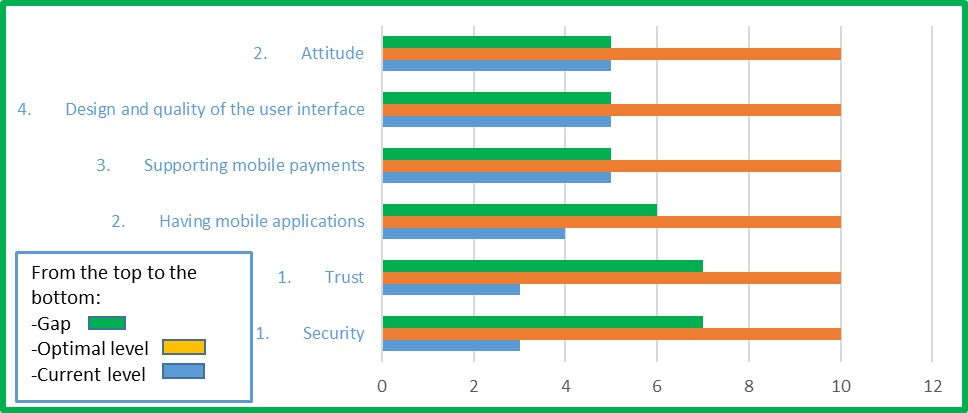
Benefits of digital marketing: The primary benefits identified by respondents included increased brand visibility (70%), expanded customer reach (65%), higher customer engagement (50%), improved customer targeting (45%), and cost-effectiveness compared to traditional marketing (60%), as illustrated in the Figure 3.
Figure 3.
Benefits of digital marketing
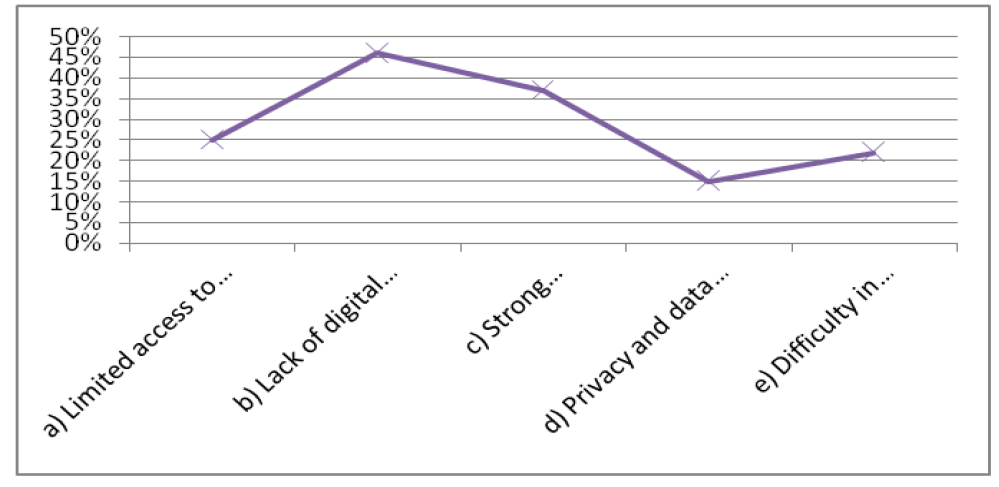
Challenges faced: Lack of digital marketing expertise was reported as the most significant challenge (40%), followed by strong competition from larger companies (35%). Limited access to digital infrastructure and difficulty in measuring ROI were also identified as challenges by a subset of respondents. The Figure 4 shows the trend of challenges faced.
Figure 4.
Challenges faced
SME Performance
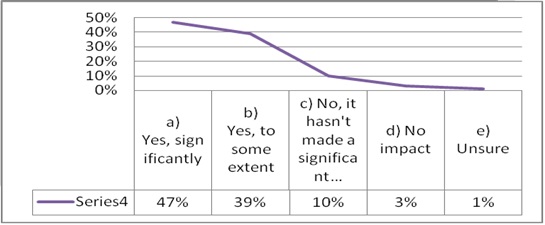
Impact on performance: The majority of respondents (85%) believed that digital marketing positively impacted the overall performance of SMEs in North Macedonia. Of these, 47% reported a significant positive impact, while 39% noted a positive impact to some extent, and 14% of them think that digital marketing has no impact on performance. The results are shown in the Figure 5.
Figure 5.
Impact on performance
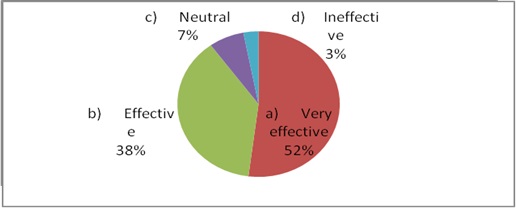
Effectiveness in achieving objectives: as we can see from chart 12, half of the respondents (52%) rated digital marketing efforts as very effective in achieving SMEs' business objectives, while 38% considered them effective. On the other hand, around 10% do not have a positive opinion. Figure 6 shows the pie chart of the effectiveness in achieving objectives.
Figure 6.
Effectiveness in achieving objectives
Conclusion
Based on the survey results, it is evident that digital marketing has a positive impact on the performance of SMEs in North Macedonia. The majority of respondents perceived digital marketing as having a positive effect, citing benefits such as increased brand visibility, expanded customer reach, higher engagement, and improved targeting.
However, challenges such as a lack of expertise and strong competition from larger companies were identified. It is essential for SMEs to address these challenges by investing in digital marketing training, collaborating with industry peers, and seeking opportunities to enhance their digital infrastructure.
By using digital marketing effectively, SMEs in North Macedonia can enhance their overall performance, reach a broader customer base, and compete with larger enterprises. Continued efforts in adopting and optimizing digital marketing strategies will contribute to the growth and success of SMEs in the country.
Recommendations
Improve digital marketing expertise: Since a significant percentage of respondents identified a lack of digital marketing expertise as a challenge, it is crucial for SMEs to invest in training programs or seek professional assistance to enhance their knowledge and skills in digital marketing strategies.
Increase access to digital infrastructure: Addressing the limited access to digital infrastructure can help SMEs in North Macedonia fully leverage the potential of digital marketing. Governments and relevant stakeholders should work towards improving digital infrastructure and internet connectivity in both urban and rural areas.
Stimulate collaboration and knowledge sharing: Encouraging collaboration among SMEs can facilitate the exchange of best practices and experiences in digital marketing. Establishing industry-specific forums, workshops, or online communities can promote knowledge sharing and create opportunities for SMEs to learn from each other.
Focus on measuring ROI: SMEs should prioritize establishing clear metrics and tracking mechanisms to measure the return on investment (ROI) of their digital marketing efforts. This will enable them to assess the effectiveness of their strategies and make informed decisions about resource allocation.
Stay updated with digital marketing trends: Digital marketing is constantly evolving, and SMEs need to stay updated with the latest trends and technologies. Continuous learning and staying informed about new platforms, tools, and consumer behavior patterns will help SMEs adapt their strategies and remain competitive.
Limitations of the research
1. The data come only from the north-western region of North Macedonia, therefore the research limits the generalization of the result.
2. The questionnaire does not contain specific questions about the level of sales, consumer perception and so on.
Future research in this area is recommended:
Future researchers could conduct similar analyzes in all the cities of North Macedonia and also to design a more in-depth questionnaire. This can help provide more accurate and comprehensive results for such research.
References
Ali, A., Pitafi, H., Moin, M. F., & Khan, N. A. (2023). Exploring factors affecting mobile-banking app adoption: a perspective from adaptive structuration theory. Aslib Journal of Information Management, 75(4), 773-795. http://dx.doi.org/10.1108/AJIM-08-2021-0216
Binbasioglu, H., & Turk, M. (2020). Mobile Technology Acceptance Among Turkish Travelers. In Digital Marketing Strategies for Tourism, Hospitality, and Airline Industries (pp. 111-140). IGI Global. http://dx.doi.org/10.4018/978-1-5225-9783-4.ch006
Chaffey, D., & Ellis, F. C. (2019). Digital marketing: Strategy, implementation and practice. UK: Pearson.
Chaffey, D., & Smith, P. R. (2017). Digital marketing excellence: planning, optimizing and integrating online marketing. London, Routledge. https://doi.org/10.4324/9781315640341
Forte, R., & Salomé Moreira, A. (2018). Financial constraints and small and medium-sized firms’ export propensity: evidence from Portuguese manufacturing firms. International Journal of the Economics of Business, 25(2), 223-241. http://dx.doi.org/10.1080/13571516.2018.1437011
Hashim, M. J., Osman, I., & Alhabshi, S. M. (2015). Effect of intellectual capital on organizational performance. Procedia-social and behavioral sciences, 211, 207-214. http://dx.doi.org/10.1016/j.sbspro.2015.11.085
Hollensen, S., Kotler, P., & Opresnik, M. O. (2017). Social media marketing. A practitioner guide. Opresnik management guides, 2.
Huang, R., & Sarigollü, E. (2012). How brand awareness relates to market outcome, brand equity, and the marketing mix. In Fashion Branding and Consumer Behaviors. Journal of Business Research, 92-99. Elsevier. https://doi.org/10.1007/978-1-4939-0277-4_8
Jadhav, G. G., Gaikwad, S. V., & Bapat, D. (2023). A systematic literature review: digital marketing and its impact on SMEs. Journal of Indian Business Research, 15(1), 76-91. https://doi.org/10.1108/JIBR-05-2022-0129
Jung, S. U., & Shega, V. (2023). The Impact of Digital Marketing Innovation on Firm Performance: Mediation by Marketing Capability and Moderation by Firm Size. Sustainability, 15(7), 5711. http://dx.doi.org/10.3390/su15075711
Kawira, K. D., Mukulu, E., & Odhiambo, R. (2019). Effect of Digital Marketing on the Performance of MSMES in Kenya. Journal of Marketing and Communication, 2(1), 1-23. Retrieved from https://stratfordjournals.org/journals/index.php/journal-of-marketing/article/view/258
Kuckertz, A. (2013). Entrepreneurship education: Status quo and prospective developments. Journal of Entrepreneurship Education, 16, 59-71. https://dx.doi.org/10.2139/ssrn.1862295
Picoto, W. N., & Pinto, I. (2021). Cultural impact on mobile banking use–A multi-method approach. Journal of Business Research, 124, 620-628. http://dx.doi.org/10.1016/j.jbusres.2020.10.024
Rauschnabel, P. A., Krey, N., Babin, B. J., & Ivens, B. S. (2016). Brand management in higher education: The University Brand Personality Scale. Journal of Business Research, 69(8), 3077-3086. http://dx.doi.org/10.1016/j.jbusres.2016.01.023
Tous, R., Gomez, M., Poveda, J., Cruz, L., Wust, O., Makni, M., & Ayguadé, E. (2018). Automated curation of brand-related social media images with deep learning Multimedia. Tools and Applications, 77(20), 27123-27142. https://doi.org/10.1007/s11042-018-5910-z
Seyedghorban, Z., Tahernejad, H., Meriton, R., & Graham, G. (2020). Supply chain digitalization: past, present and future. Production Planning & Control, 31(2-3), 96-114. http://dx.doi.org/10.1080/09537287.2019.1631461
Taiminen, H. M., & Karjaluoto, H. (2015). The usage of digital marketing channels in SMEs. Journal of Small Business and Enterprise Development, 22(4), 633-651. http://dx.doi.org/10.1108/JSBED-05-2013-0073
Yogesh, K. D., Ismagilova, E., Hughes, D. L., Carlson, J., Filleri, R., Jacobson, J., Jain, V., Karjaluoto, H., Kefi, H., Krishen, A., Kumar, V., Rahman, M. M., Raman, R., Rauschnabel, P. A., Rowley, J., Salo, J., Tran, G., & Wang, Y. (2021). Setting the future of digital and social media marketing research: Perspectives and research propositions. International Journal of Information Management, 59(1), 102168. http://dx.doi.org/10.1016/j.ijinfomgt.2020.102168
Declarations
How to cite this article:
Veseli-Kurtishi, T. (2024). The Impact of Digital Marketing on the Performance of Small and Medium –Sized Enterprises in North Macedonia. Marketing and Branding Research, 11(1), 1-11. https://doi.org/10.32038/mbr.2024.11.01.01
Acknowledgements
Not applicable.
Disclosure Statement
No potential conflict of interest was reported by the authors.
Funding Acknowledgements
Not applicable.
Ethics Approval
Not applicable.
Rights and Permissions
© 2022 European Knowledge Development Institute All rights reserved.
Marketing and Branding Research is published by the European Knowledge Development Institute (EUROKD). This is an open-access article under the terms of the Creative Commons Attribution (CC BY) License, which permits use, distribution, and reproduction in any medium, provided the original work is properly cited.

Page 1 of
Download Count : 1247
Visit Count : 3364
Keywords
Digital marketing; Small and Medium-sized Enterprises (SMEs); Performance; Business growth; Marketing strategies

Author(s) Information

How to cite this article
Veseli-Kurtishi, T. (2024). The Impact of Digital Marketing on the Performance of Small and Medium –Sized Enterprises in North Macedonia. Marketing and Branding Research, 11(1), 1-11. https://doi.org/10.32038/mbr.2024.11.01.01
Acknowledgments
Not applicable.
Funding
Not applicable.
Conflict of Interests
No, there are no conflicting interests.
Open Access
This article is licensed under a Creative Commons Attribution 4.0 International License, which permits use, sharing, adaptation, distribution and reproduction in any medium or format, as long as you give appropriate credit to the original author(s) and the source, provide a link to the Creative Commons license, and indicate if changes were made. You may view a copy of Creative Commons Attribution 4.0 International License here: http://creativecommons.org/licenses/by/4.0/