






Review Article
Unveiling the Power of Leadership Styles in Project Management: A Comprehensive Systematic Literature Review


- Abstract
- Full text
- Metrics
An Effective Leadership Style (LS) plays a pivotal role in determining the success of projects, making comprehensive research in Project Management (PM) essential. The Systematic Literature Review (SLR) in this article meticulously examines how different LSs impact project outcomes. Through systematic searches in reputable academic databases, we scrutinized peer-reviewed articles to uncover key insights. The primary aim of this review is to assess the effectiveness of various LSs within PM contexts, shedding light on their influence on project success and team performance. The results underscore the significance of transactional and transformational LSs in PM. Both styles contribute positively to project outcomes, but transformational leadership stands out as exceptionally impactful in boosting team motivation and overall project performance. By nurturing a sense of purpose and empowerment, transformational leaders inspire adaptability in the face of dynamic challenges. In conclusion, we encourage project managers to thoughtfully integrate transactional and transformational LSs to optimize project success. While transactional leadership ensures task completion and structure, transformational leadership fosters innovation and team commitment. This review advocates for a strategic fusion of these styles, cultivating a culture of excellence and achievement in project endeavors.
Unveiling the Power of Leadership Styles in Project Management: A Comprehensive Systematic Literature Review
Mohammad Ali Hatefi* , Mahdi Iranfar ,
Mohammad Senisel Bachari
Petroleum University of Technology (PUT), Energy Economics and Management Department, Tehran, Iran
Abstract:
An Effective Leadership Style (LS) plays a pivotal role in determining the success of projects, making comprehensive research in Project Management (PM) essential. The Systematic Literature Review (SLR) in this article meticulously examines how different LSs impact project outcomes. Through systematic searches in reputable academic databases, we scrutinized peer-reviewed articles to uncover key insights. The primary aim of this review is to assess the effectiveness of various LSs within PM contexts, shedding light on their influence on project success and team performance. The results underscore the significance of transactional and transformational LSs in PM. Both styles contribute positively to project outcomes, but transformational leadership stands out as exceptionally impactful in boosting team motivation and overall project performance. By nurturing a sense of purpose and empowerment, transformational leaders inspire adaptability in the face of dynamic challenges. In conclusion, we encourage project managers to thoughtfully integrate transactional and transformational LSs to optimize project success. While transactional leadership ensures task completion and structure, transformational leadership fosters innovation and team commitment. This review advocates for a strategic fusion of these styles, cultivating a culture of excellence and achievement in project endeavors.
Keywords: LS, PM, Transactional Leadership, Transformational Leadership, SLR
Introduction
Literature reviews have been recognized as crucial activities to evaluate the nature of knowledge generated within a particular subject area, its gaps, and potential future directions (Kosztyan et al., 2021). As aptly emphasized by Paul et al. (2021), literature reviews assume a pivotal role in “mapping and assessing the existing intellectual landscape, and in framing a research question aimed at advancing the existing body of knowledge”. More precisely, the significance of reviews stems from the realization that “comprehending most research requires a contextual understanding - where the outcomes of other studies form an integral part of this context” (Soares et al., 2023).
Systematic Literature Reviews (SLRs) offer an approach to synthesizing a wide range of research findings on a specific topic. Their methodical nature enhances the credibility and reliability of the insights derived from the review process. By systematically collecting, appraising, and synthesizing relevant studies, SLRs provide a comprehensive and unbiased overview of existing research, allowing researchers, practitioners, and policymakers to make informed decisions. The strength of SLRs lies in their ability to identify patterns, trends, and consistencies across diverse studies, facilitating the extraction of generalizable conclusions (Liberati et al., 2009). Therefore, utilizing SLRs is imperative for generating evidence-based recommendations, guiding future research directions, and informing strategic decision-making within various domains. This specific research, as hinted by Paul et al. (2021), will be in the form of a bibliometric domain-based SLR, highlighting statistics and trends in a review domain.
Rationale
In the realm of Project Management (PM for short), the optimization of Leadership Style (LS for short) has emerged as a critical avenue for enhancing project outcomes. While various leadership theories have been extensively explored in organizational and business contexts, their application within the PM domain remains relatively uncharted. This SLR aims to bridge this gap by comprehensively synthesizing existing research that investigates the relationship between different LSs and PM success.
Leadership and LSs
According to Robbins (2005), leadership is the skill to guide a group in attaining objectives. Distinct from management, having an official managerial position within an organization doesn't automatically guarantee effective leadership. The potential to influence can also originate beyond the established organizational structure. The leadership is the influence upon other individuals “to perform tasks or to solve problems in order to attain the goals of the organization” (Andersen, 2013).
LS refers to the approach and practices that leaders use to guide and influence their teams or organizations. According to Northouse (2001), LSs are the specific ways in which a leader interacts with their team and followers and achieves their goals. Each manager or leader possesses a distinct leadership approach; some exhibit greater openness and involvement, while others tend to be more assertive. Various LSs exist, including Transactional, Transformational, Authoritarian, Democratic, Participative, and Laissez-faire (Belout & Gauvreau, 2004). These styles are frequently sighted.
Transformational LS
Transformational leaders exert influence over their subordinates by stirring them emotionally (Ammeter & Dukerich, 2015). These leaders strive to empower their subordinates by fostering their self-reliance and boosting their self-assurance. Their approach is infused with enthusiasm and vigor, reflecting genuine concern for their subordinates' success (Spreitzer, 2003). Transformational leadership encompasses seven key traits: raising subordinate awareness, helping subordinates look beyond self-interest, helping subordinates find self-fulfillment, helping subordinates understand the need for change, investing managers with a sense of urgency, being committed to greatness, and adopting a long-range, broad perspective (Turner & Müller, 2005).
Transactional LSs
Transactional leaders employ a method of motivating subordinates by appealing to their self-interest (Yang et al., 2011). As a result, employees' bargaining position becomes weakened while that of the managers correspondingly strengthens. This LS encompasses three distinctive dimensions. First, contingent reward involves these leaders provide assistance to others in exchange for their efforts, alongside clarifying expectations and offering recognition upon goal achievement. Secondly, “management by exception (active)” entails these leaders specifying compliance standards and may administer penalties to staff not adhering to these standards (Nixon et al., 2012). Lastly, “management by exception (passive)” is evident when leaders refrain from outlining expectations, goals, or standards to staff. This often leads to a leader intervening only when issues arise (Nixon et al., 2012).
Laissez-faire LS
Also referred to as delegative LSs, this LS fosters a context where the group is empowered to make decisions independently, as the leader possesses minimal actual authority. Specifically, the leader's role encompasses responding to inquiries, offering information, and providing reinforcement to the group (Turner & Müller, 2005). Moreover, the leader exercises minimal evaluation and critique, thereby creating a non-threatening atmosphere. “The leader permits members to exercise their autonomy in decision-making. Decisions are frequently deferred, and the leader's response to urgent queries is delayed”. This approach cultivates a positive rapport between leaders and subordinates (Anantatmula, 2010). Subordinates under Laissez-faire leadership must seek alternative resources to assist them in reaching final decisions (Nixon et al., 2012).
Democratic LS
Leaders employing this approach offer guidance while enabling the group to exercise autonomous decision-making. Concretely, the leader fosters an environment where members define objectives and protocols, promoting self-direction and self-fulfillment among them (Hendriks & Karsten, 2013). Additionally, the democratic leader provides input and reinforces members' concepts. This style advocates for collaborative teamwork and consistently guides and mentors' staff towards the attainment of organizational objectives.
Autocratic LS
This LS stands in contrast to both Laissez-faire and Democratic LSs. Authoritarian leaders, often known as autocratic leaders, establish explicit expectations for tasks, their timelines, and the methodologies to be employed. A distinct separation exists between the leader and the followers. As per Pizzolitto et al. (2023), authoritarian leadership defines agendas, formulates group policies, delegates assignments to members, and makes decisions on behalf of the group without seeking input from subordinates. Ultimately, the leader assumes accountability for the group's advancement, yet minimal input from the group is incorporated. Interaction between group members is infrequent, with most communication directed towards the leader.
PM
A project is a set of tasks that must be completed within a defined timeline to accomplish a specific set of goals, or a “temporary endeavor undertaken to create a unique product, service or result” (PMI, 2017). There are many other definitions of a project such as a temporary organization (Lundin & Soderholm, 1995) but the main factors that differentiate between a project and regular operations are; their novelty, complexity, uniqueness, and cost and time constraints, which are characterized by high uncertainty, require more flexibility, and allow low standardization (Koster, 2009). Project managers are organized, goal-oriented professionals who use passion, creativity, and collaboration to design projects that are destined for success (PMI, 2017).
Project managers' leadership was identified as a factor that contributes to project success by Muller and Turner (2007), who conducted a thorough review of the literature. They later verified the effect of project managers' LS on project outcomes using both quantitative and qualitative methods. They also revealed that different types of projects required different styles of leadership.
Objectives
This research holds the potential to refine PM practices across industries by studying LSs' unique complexities in project environments. While leadership theories have been extensively examined, this SLR focuses on their practicality in dynamic PM settings. One research gap lies in LSs' applicability in PM, an area often overshadowed by organizational contexts in existing literature. This SLR aims to analyze studies that explore the implications of distinct LSs within project-oriented settings. The primary objective is to identify and assess LSs' efficacy in PM, discerning the most suitable styles for project demands. By offering a comprehensive review, this SLR guides project managers, practitioners, and policy-makers in selecting LSs that enhance project success.
Its impact extends beyond academia, serving as a foundation for future research in PM and LS. Practical implications aid project managers in aligning LSs with project goals. With a broad scope encompassing various methodologies and leadership dimensions, this SLR aspires to build a robust evidence base. Addressing research gaps and informing decision-making in PM shapes the direction of future LS research. This SLR synthesizes existing studies on LSs in PM, providing insights for practitioners, researchers, and policymakers. Evaluating LSs' applicability and impact informs decision-making and advances PM practices.
Based on the Context-Intervention Mechanism-Output (CIMO) scheme (Denyer & Tranfield, 2009) and the previously mentioned information, this article aims to answer the following research question: “which LS enhance the motivation and commitment of project teams, leading to higher positive impact on projects?”
Method
The methodology adopted for this research employs an SLR approach, which is a rigorous and structured method for gathering, evaluating, and synthesizing existing literature on a specific research topic. SLRs are widely recognized for their ability to minimize bias and subjectivity, providing a comprehensive and evidence-based analysis of the research question at hand.
In the first phase of the research, several databases were targeted; the focus was not on publishers but rather on any and all articles with the two key terms of “Leadership Style” and “Project Management”.
After gathering all relevant records, a systematic screening process is initiated to reduce the number of irrelevant records and refine the research. Once only relevant records remain, a full text analysis of the articles begins. The final stage involves synthesizing the findings, storing them in a spreadsheet, and deriving knowledge to answer the research question.
Data-bases
To find relevant articles that would help answer the research question, two AI-powered (Artificial Intelligence) databases were utilized, namely, Semantic Scholar and Consensus. Notably, AI-powered indicates that the database is driven by artificial intelligence, encompassing several machine learning mechanisms. Semantic Scholar is a free AI-powered research tool for scientific literature developed at the Allen Institute for AI. It uses advances in natural language processing, machine learning, and machine vision to provide summaries, highlights, and insights for scholarly papers. Consensus is also a free AI-powered search engine that helps you find answers and insights in scientific research papers. one can ask questions about any topic and get conclusions from peer-reviewed studies while also providing summaries, highlights, and analysis of the papers. Both these online tools index over 200 million academic papers sourced from publisher partnerships, data providers, and web crawls. According to their websites, they have partnerships with over 50 publishers and scholarly societies, including Elsevier, Springer Nature, IEEE, ACM, PubMed, arXiv, and many more.
Findings
Both the main focuses of the research question (“Leadership Style” and “Project Management”) were entered in the search engines to derive relevant articles that also match the time span of the research (the past decade). Other filters were also added to the search engines, such as preferred field of study or the type of journals, which helped narrow down the number of relevant research materials. This included setting the research time span, excluding some books and unreliable grey literature, and excluding irrelevant fields.
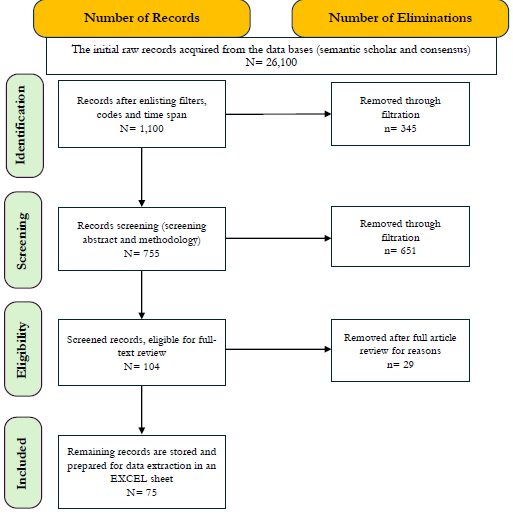
Without any filtration, about 26,100 related articles were found within the span of the last 10 years. By imposing much stricter limitations, the number was reduced to 1100. After another layer of analysis, focusing strictly on the title of the article and keywords, the number of remaining articles was reduced to 755. Following further investigation and duplicate elimination, the total number of articles reached 691. Those 691 articles were published after 2013 (until now 2023) and were either related to LSs or PM. Lastly, the authors read through the abstracts of each article, determining that 75 of them had an emphasis on both LSs and the project aspect; thus, the final number of articles that would be analyzed was 75. Figure 1 provides a flowchart of the complete selection process.
Systematic Selection of Records
Publication Regions And Timelines
The analysis of the collected data revealed interesting insights into the geographical distribution and publication timelines of the articles under scrutiny. The majority of articles originated from the United States, followed closely by China. A detailed breakdown of the percentages corresponding to each region can be found in Figure 2.
Regional Distribution of Records 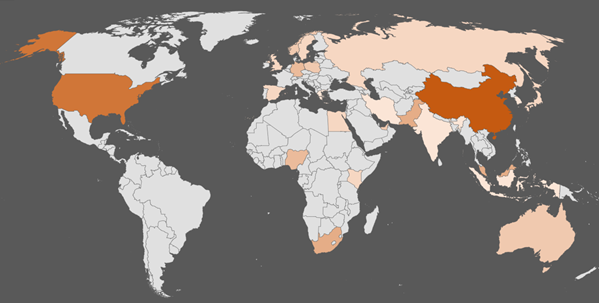
Moreover, it was observed that the temporal distribution of articles was concentrated in the latter half of the specified decade. This temporal pattern reflects the evolving interest in the subject matter within the research community.
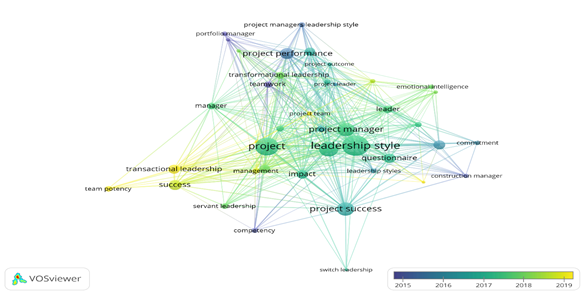
The main theme of the articles was LSs within PM, the main focus of the articles varied, some aimed at finding a relationship between LSs and project performance or success, others focused on the role of a specific LS of the PM, while others prioritized comparing LSs to find the most effective. There were many themes and keywords in the article, Figure 3 depicts a text-based network diagram of the most frequent words mentioned in the title, abstract and keywords of the analyzed articles.
Overlay Visualization of Reocourring Text Within Titles, Abstracts and Keywords Over Years Made Using VOS-Viewer
The collected records are presented in Table 1, which features the main focus of each record, the methodology used, the involved LSs, the case study, and the reference. In this table, MLQ depicts Multifactor Leadership Questionnaire, IT shows Information Technology, ANOVA stands for Analysis of Variance, PLS depicts Partial Least Squares, SEM presents Partial Least Squares Structural Equation Modeling, and SPSS is a statistical software denoted for Statistical Package for the Social Sciences.
Collected Records
|
Author/ Year |
Main focus |
Methodology |
Involved LSs |
Case |
|
(Yang & Chen, 2010) |
Investigate the relationships of the project manager’s LS with teamwork and cost performance |
Questionnaire |
Transactional, Transformational |
General |
|
Examines the relationship between Servant leadership and project success |
Interview |
Servant |
Construction projects |
|
|
the relationship between behavioral and managerial competency profiles of Project Managers |
Questionnaire |
Transformational, Transactional, Laissez-faire |
General |
|
|
(Ukpai et al., 2013) |
Examine the relationship between LS of IT professionals and IT project success |
MLQ |
Transformational, Transactional, Laissez-faire, Authoritative |
Software industry |
|
the impact of transformational leadership behavior of portfolio managers on project performance |
Questionnaire & ANOVA |
Transformational, Transactional, Laissez-faire |
Organizational projects |
|
|
(Yang et al., 2013) |
Validates a model for assessing the relationships among a project manager’s LS, teamwork, project |
Questionnaire & SEM |
Transformational, Transactional |
Organizational projects |
|
Assess project managers’ LSs using various criteria. |
Questionnaire |
Transformational, Transactional, Laissez-faire |
Construction projects |
|
|
Importance of Authentic leadership has been discussed theoretically |
Interview |
Authentic |
General |
|
|
Identify a LS, of which project managers can maximize the potential for achieving project success |
Literature review & interviews |
Transformational, Transactional, Laissez-faire |
Organizational projects |
|
|
Explore the similarities and dissimilarities between project manager’s leadership competencies and styles |
Interview |
Transformational, Transactional, Laissez-faire |
Construction projects |
|
|
Examines procurement approaches and the supervisory LSs of project participants |
Questionnaire |
Laissez-faire |
Construction projects |
|
|
Exploring the styles of leadership |
Literature review |
Transactional, Transformational, Laissez-faire |
General |
|
|
Studied the relationship between LS and project success |
Literature review |
Transactional, Transformational |
General |
|
|
Identify preferred leadership behaviors of managerial and supervisory positions |
Questionnaire |
Autocratic, Participative, Laissez-faire |
Construction projects |
|
|
LSs effect on project outcome |
Questionnaire |
Transformational, Transactional, Laissez-faire |
Construction projects |
|
|
Explore the relationship between different LS practices and project success |
Questionnaire & literature review |
Transactional, Transformational, Charismatic, Democratic, Laissez-faire |
Construction projects |
|
|
How project managers practice a coaching LS |
Semi-structured interviews |
Transformational, Transactional, Laissez-faire |
Organizational projects |
|
|
Differentiating between leadership competencies and Style |
Review |
Coaching |
Organizational projects |
|
|
Evaluate the effect of path-goal LSs on the commitment of employees |
Questionnaire |
Transformational, Transactional, Laissez-faire |
Construction projects |
|
|
Identify the leadership characteristics and styles of project managers |
Questionnaire |
Path-goal, Supportive |
Construction projects |
|
|
The different types of LSs, and the impact of each LSs on achieving project success |
Literature Review |
Transformational, Transactional, Laissez-faire |
Construction projects |
|
|
How corporate strategy influences the LS of project managers |
Questionnaire |
Participative, Democratic, Autocratic, Situational |
Organizational projects |
|
|
Interaction between LSs and management level |
Questionnaire MLQ & ANOVA |
Transformational, Transactional, Authentic |
Construction projects |
|
|
Examines the relationship between transactional leadership and project success |
MLQ |
Democratic, Transformational, Autocratic, Laissez- |
Organizational projects |
|
|
Establish a conceptual model for project-related factors that influence LSs |
Literature survey |
transactional |
General |
|
|
Assess the impact of LSs on quality performance |
Questionnaire & SPSS |
Transformational, Transactional, Laissez-faire |
Construction projects |
|
|
Analyze the type of leadership that can be more effective |
MLQ |
Facilitative, Coaching, Delegating |
General |
|
|
A study the project LSs |
Questionnaire |
Transformational, Transactional |
Organizational projects |
|
|
Examine LSs' mediating link of emotional intelligence of authorized leader |
MLQ |
Transformational, Transactional, Laissez-faire |
Construction projects |
|
|
Relationships between LS and emotional intelligence |
Online questionnaire |
Transformational, Transactional |
Construction projects |
|
|
The impact of Transformational LS on PM assets |
Questionnaire & PLS-SEM |
Transformational |
Organizational projects |
|
|
LSs applied by consultants’ project managers influenced the performance of construction projects |
Questionnaire |
Transformational |
Construction projects |
|
|
The LS is used by leaders in engineering companies |
Questionnaire |
Authoritative, Authoritarian, Democratic, Permissive, Transformational |
Organizational projects |
|
|
Differences between leadership and management, explores trends in the leadership literature. |
Literature Review |
Transformational, Transactional |
Organizational projects |
|
|
Investigate the interactional effects of project flexibility and project visibility |
Questionnaire & PLS-SEM |
Transformational, Transactional, Laissez-faire |
Organizational projects |
|
|
Present the findings of project manager competencies and project LSs |
Literature review & Questionnaire |
Transformational |
Organizational projects |
|
|
Determine the relationship between project manager’s LS and performance |
Questionnaire |
Democratic, Laissez-faire, Autocratic |
Construction projects |
|
|
Identify the relationship between some dimensions of transformational leadership |
Questionnaire |
Transactional, Transformational |
Organizational projects |
|
|
Effects of LSs employed |
MLQ & ANOVA |
Transformational |
Construction projects |
|
|
Examine various LSs as factors to the success or failure of the |
Questionnaire |
Transformational |
Organizational projects |
|
|
Effect of LSs on the project team |
Literature review |
Transformational, Transactional, Laissez-faire |
Organizational projects |
|
|
Examine the effect of LS on project performance |
Questionnaire & PLS-SEM |
Servant |
General |
|
|
Influence of internal control, LS, and teamwork on project success |
Questionnaire |
Transactional, Transformational |
Software industry |
|
|
Relationship between Servant LS and project success |
Questionnaire & PLS-SEM |
Servant |
Organizational projects |
|
|
The effects that Servant LS |
Questionnaire & PLS-SEM |
Transformational, Transactional, Laissez-faire |
IT projects |
|
|
LSs and project success relationship |
Interviews & Thematic analysis |
Transformational, Transactional, Laissez-faire |
Organizational projects |
|
|
Type of LSs adopted by construction project managers |
Questionnaire |
Transformational, Transactional, Laissez-faire |
Construction projects |
|
|
(Cross et al., 2020) |
Examine the effect of leadership skills and LS on project performance |
Interview |
Transformational |
General |
|
Examine the impact of servant LS on project team effectiveness |
Questionnaire & MSEM |
Transformational, Transactional, Laissez-faire |
Software industry |
|
|
Evaluate the effects of LS on project implementation |
Literature review |
Transformational |
General |
|
|
Examine the role of transformational LS in research and development project teams |
MLQ |
Laissez-faire, Delegating, Empowering, Ambidextrous |
Organizational projects |
|
|
Evaluate the influence of project team size on LSs |
Questionnaire and PLS |
Transformational, Transactional, Laissez-faire |
Organizational projects |
|
|
Effects among ambidextrous leadership and sustainability-based project performance |
Questionnaire & ANOVA |
Transactional, Transformational |
Construction projects |
|
|
interplay between empowering and directive LSs |
Questionnaire |
Servant |
Construction projects |
|
|
LS effect on PM effectiveness |
Questionnaire |
Transformational, Transactional, Laissez-faire |
Organizational projects |
|
|
Preferred Leadership of veteran project managers |
Online questionnaire |
Humble |
IT project |
|
|
Investigate actual and expected leadership of managers by comparing behavior model |
Questionnaire |
Servant, Supportive |
Construction projects |
|
|
Test the relationship between LSs using standard principles of project governance and project performance |
Questionnaire |
Transformational, Transactional |
Mega projects |
|
|
The effect of the transformational LS of site managers on the success |
Questionnaire |
Transformational, Transactional, Laissez-faire |
Construction projects |
|
|
Examine the mediating role of cooperative style to conflict resolution and team potency |
Questionnaire |
Transformational |
Organizational projects |
|
|
Investigate the effects of Transformational and Transactional LS on project success. |
Meta-analysis |
Transactional |
Organizational projects |
|
|
The impact of project manager's LSs on quality performance |
MLQ |
Transformational, Transactional |
Software industry |
|
|
Potential of contingent reward and empowering LSs to achieve project success. |
Questionnaire & PLS-SEM |
Transformational, Transactional, Laissez-faire |
IT projects |
|
|
Investigate the impact of servant leadership on project success |
Questionnaire |
Empowering, Contingent reward |
Software industry |
|
|
Whether different LSs |
Questionnaire & PLS-SEM |
Servant |
Organizational projects |
|
|
Depicts the influence of LSs in agile PM environment |
Review |
Directive, Participative |
Organizational projects |
|
|
Examine the influence of three different LS |
Questionnaire & SPSS |
Transformational, Servant, Situational |
Organizational projects |
|
|
Critical project manager's LS to influence construction |
Interview |
Transactional, Transformational |
Construction projects |
|
|
Evaluates the level of sustainable leadership among project managers |
Questionnaire |
Supportive, Transformational, Democratic, Charismatic |
Organizational projects |
|
|
(Tvedt et al., 2023) |
Describe how resilience unfolded in a project-based organization |
Interview |
authoritarian, Democratic, Laissez-faire |
Construction projects |
|
Transformational leadership's influence on project success |
Multi-Factor Leadership Questionnaire |
Transformational, Transactional, Passive avoidant |
Software industry |
|
|
Contextual study on LSs in PM |
Systematic review |
Transformational |
General |
Focus on Project Types
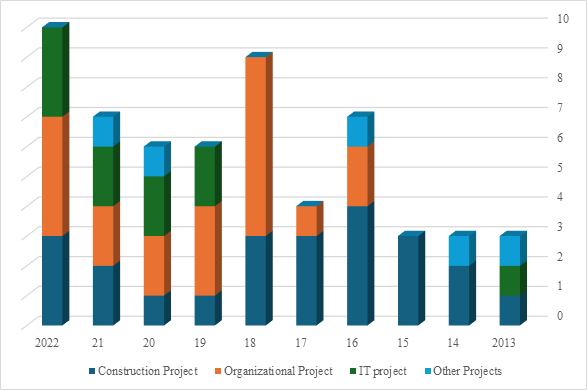
Among the articles scrutinized, a noteworthy portion, precisely 57 articles, focused on specific types of projects. These projects spanned various domains, with 40% centered on construction projects, 35% dedicated to organizational and business-related initiatives, and 16% honing in on the dynamic landscape of software development and IT projects. For a comprehensive breakdown of project types and corresponding data, please refer to Figure 4.
Records of Articles with Their Respective Project Catagory over the Years
Methodologies and Data Analysis
The methodologies employed in the analyzed articles encompassed a combination of literature reviews and questionnaire-based surveys. Intriguingly, a significant proportion of these questionnaires adhered to MLQ format, assessing personnel's LSs. For data analysis, the prevailing approach involved the use of statistical methods, notably ANOVA and PLS-SEM. Notably, SPSS emerged as the preferred software for conducting these analyses.
Inclusivity of Grey Literature
A distinctive feature of this SLR was its emphasis on comprehensiveness over pinpoint accuracy. To achieve this comprehensive perspective, the review cast a wide net, encompassing articles and research materials from the so-called “grey literature”. This entailed a meticulous examination of conference proceedings, book chapters, and related sources. In the final corpus of the SLR, two book chapters and 11 conference articles were thoughtfully incorporated.
Exploring LSs
Of the 75 records examined, various LSs were addressed, with Transformational, Transactional, Laissez-faire, Democratic, Autocratic, and Servant LSs prominently featured. Additionally, several substyles derived from these primary leadership paradigms, such as authentic, humble, and empowering LSs, were identified. Interestingly, a substantial portion of the articles predominantly favored the LS they analyzed. A breakdown of the distribution of the LSs can be seen in Figure 5.
Percentage of Articles with a Specific LS
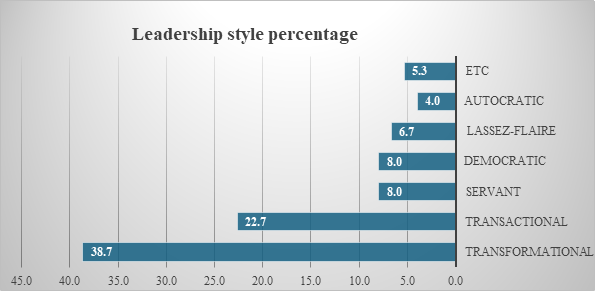
Transformational leadership, in particular, stood out, with over 80% of the articles examining this style in the context of PM voicing support for its efficacy. Both servant and democratic LSs also garnered predominantly positive assessments. However, the evaluation of transactional leadership yielded mixed outcomes, with 63% of the articles reporting a positive impact while the remainder lacked conclusive data or reported adverse effects. In contrast, autocratic and Laissez-faire LSs predominantly yielded negative outcomes and impacts on projects.
Review Process and Collaboration
In ensuring the integrity of the review process, a comprehensive approach was adopted. Initial screening of article titles and abstracts was conducted by two of the authors. Subsequently, a full-text review was carried out by two authors, a collaborative strategy aimed at minimizing bias and enhancing the review's objectivity.
Data Synthesis
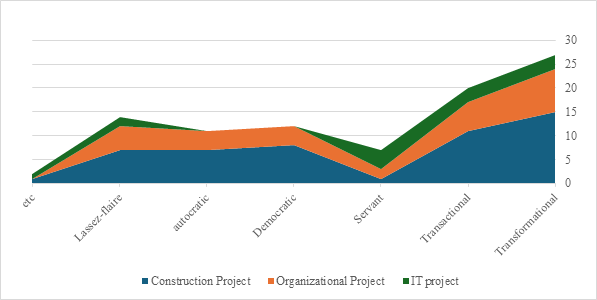
To facilitate the synthesis of data, an Excel spreadsheet was meticulously organized to include essential information such as title, authors, publication year, keywords, publisher, region of origin, project type, primary research question or focus, utilized methodology, examined LSs, main findings, and supplementary insights, Figure 6 presents a breakdown of the records depicting a certain LS with regard to its respective project type. This systematic organization aided in distilling and presenting a cohesive narrative of the literature under investigation.
Number of Articles with Regards of the Type of Project
Discussion
The systematic mapping indicates a pronounced dominance of transformational leadership in the PM literature: over 80% of studies that examined transformational leadership reported positive effects on project outcomes. This pattern aligns with earlier syntheses that attribute transformational behaviors to enhanced motivation, commitment, and adaptive performance in temporary and complex work arrangements. In project environments characterized by novelty and high uncertainty, transformational practices—such as articulating an inspiring vision, providing individualized consideration, and stimulating intellectual engagement—are repeatedly identified as mechanisms that mobilize discretionary effort and support innovation. These observed patterns, therefore, strengthen the argument that transformational leadership is particularly well suited to projects that demand knowledge work and team adaptability.
Although transformational leadership is consistently associated with favorable outcomes, the evidence for transactional leadership is heterogeneous. Approximately 63% of transactional-focused studies reported positive effects, while a notable minority found inconclusive or negative results. This heterogeneity is consistent with a contingency perspective: transactional practices (clear rewards, role clarity, corrective feedback) appear to improve performance in well-structured, schedule-driven projects but are less effective in innovation- or knowledge-intensive settings that require autonomy and creative problem solving. The findings therefore support the view that leadership effectiveness in projects depends on situational fit rather than on a single superior style.
Findings related to autocratic and Laissez-faire styles demand cautious interpretation. Several records in the corpus reported adverse impacts associated with Laissez-faire and authoritarian approaches—results that echo recent reviews highlighting risks of disengagement, poor communication, and reduced team learning under passive or overly directive leadership. However, the concentration of studies in certain sectors (notably construction) and geographic clusters suggests possible cultural and sectoral moderation: in some hierarchical or highly regulated contexts, directive approaches may secure short-term compliance while undermining longer-term adaptability and innovation. Explicit testing of cross-cultural and sectoral moderators is therefore recommended to clarify when and why these styles may produce different outcomes.
Methodological patterns observed across the reviewed literature also constrain interpretation. A heavy reliance on questionnaire instruments (many using MLQ items), cross-sectional designs, self-reported outcomes, and common statistical approaches (e.g., ANOVA, PLS-SEM) limits the ability to draw causal inferences. Inclusion of grey literature increased comprehensiveness but introduced heterogeneity in quality and reporting standards. To advance theory and practice, future research should prioritize multi-method designs (longitudinal and mixed methods), multi-source outcome measures (client reports, objective schedule/cost performance, behavioral traces), and experimental or quasi-experimental approaches where feasible. Such methodological improvements will help to unpack causal mechanisms (for example, mediation via team cohesion or psychological safety) and to identify boundary conditions (project type, cultural context) that remain insufficiently resolved.
Conclusion
The paper performed a Systematic Literature Review (SLR). This review synthesized 75 empirically oriented records to map how LSs relate to project outcomes across regions, sectors, and methods. The principal contributions are threefold: (1) confirmation of robust and preponderant evidence favoring transformational leadership for motivating project teams and enhancing adaptive performance; (2) identification of conditional effectiveness for transactional leadership—beneficial in structure-oriented projects but inconsistent in innovation-oriented contexts; and (3) the revelation of empirical gaps in sectoral coverage (notably limited attention to energy projects) and methodological shortcomings (dominance of cross-sectional surveys and MLQ-based measures) that constrain causal interpretation. Collectively, these results refine extant theory by supporting a contingency view of leadership effectiveness in projects and by pinpointing specific empirical blind spots.
For practitioners, the review implies a situationally adaptive approach: transformational competencies (visioning, coaching, intellectual stimulation) should be developed while retaining transactional tools (clear goals, reward systems) for contexts that require tight control. Organizations and professional bodies are advised to invest in leadership development that emphasizes diagnostic skills for matching leadership behaviors to project characteristics (complexity, uncertainty, stakeholder pressure), thereby facilitating an appropriate blend of styles for different project demands.
Finally, the review identifies several priorities for future research: comparative studies across sectors and cultures to test moderation effects; longitudinal and intervention-based designs to uncover causal mechanisms; and broader measurement strategies that incorporate multi-source and objective performance metrics. Addressing these gaps is expected to increase the practical utility of leadership research for project managers and to strengthen theoretical claims about which LSs matter, under which conditions, and why.
References
Abbas, M., & Ali, R. (2021). Transformational versus transactional leadership styles and project success: A meta-analytic review. European Management Journal. https://doi.org/10.1016/j.emj.2021.10.011
Aga, D. (2016). Transactional leadership and project success: the moderating role of goal clarity. Procedia Computer Science, 100. https://doi.org/10.1016/j.procs.2016.09.190
Ahmed, R., & Mohamad, N. (2014). Mapping project manager’s leadership competencies and styles to project success: a theoretical framework. The Journal of Modern Project Management, 2(2), 2.
Ahmed, R., & Mohamad, N. (2016). Differentiating between leadership Competencies and Styles: A Critical Review in Project Management Perspective. International Journal of Information Technology Project Management, 7, 58–71. https://doi.org/10.4018/IJITPM.2016010105
Ali, M., Zhang, L., Zhang, Z., Zada, M., Begum, A., Han, H., Ariza-Montes, A., & Vega-Muñoz, A. (2021). Can leaders’ humility enhance project management effectiveness? interactive effect of top management support. Sustainability, 13(17), 9526. https://doi.org/10.3390/su13179526
Alqatawenah, A. (2018). Transformational leadership style and its relationship with change management. Business: Theory and Practice, 19, 17–24. https://doi.org/10.3846/btp.2018.03
Al-Subaie, A., Faisal, Mohd. N., Aouni, B., & Jabeen, F. (2021). Investigating the role of leadership styles and governance on project performance in megaprojects. Polish Journal of Management Studies, 23, 45–58. https://doi.org/10.17512/pjms.2021.23.1.03
Ammeter, A., & Dukerich, J. (2015). Leadership, team building, and team member characteristics in high performance project teams. Engineering Management Journal, 14, 3–10. http://doi.org/10.1080/10429247.2002.11415178
Anantatmula, V. (2010). Project manager leadership role in improving project performance. Engineering Management Journal, 22, 13–22. http://doi.org/10.1080/10429247.2010.11431849
Andersen, J. A. (2013). Leadership research: Where Irrelevance Prevails. Dynamic Relationships Management Journal, 2, 3–14. http://doi.org/10.17708/DRMJ.2013.v02n02a01
Andi, A., Sugianto, K., & Khoesasih, A. F. (2021). Actual and expected transactional and transformational leadership behaviors of project managers. IOP Conference Series: Earth and Environmental Science, 907(1), 012025. https://doi.org/10.1088/1755-1315/907/1/012025
Anwer, S., Mohammad, A., Abdulrahman, B. S., Qader, K., Jamil, D., Gardi, B., & Sabah, K. (2022). Leading project teams: the role of leadership styles in dynamic work environment. International Journal of English Literature and Social Sciences, 7, 22–28. https://doi.org/10.22161/ijels.76.4
Belout, A., & Gauvreau, C. (2004). Factors influencing project success: the impact of human resource management. International Journal of Project Management, 22(1), 1–11. https://doi.org/10.1016/S0263-7863(03)00003-6
Berg, M., & Karlsen, J. (2016). A study of coaching leadership style practice in projects. Management Research Review, 39, 1122–1142. https://doi.org/10.1108/MRR-07-2015-0157
Bilal, A., Nabeel, A., Asadullah, M. A., Awan, H., & Asmi, F. (2020). Servant leadership: a new perspective to explore project leadership and team effectiveness. International Journal of Organizational Analysis, ahead-of-print. https://doi.org/10.1108/IJOA-12-2019-1975
Bjekić, R., & Strugar Jelača, M. (2020). The role of transformational leadership in R&D projects teams: The proposal of the research framework. Ekonomski Pogledi, 22, 109–123. https://doi.org/10.5937/EkoPog2002109B
Blaskovics, B. (2014). Impact of leadership styles on project success – the case of a multinational company. Dynamic Relationships Management Journal, 3, 21–36. https://doi.org/10.17708/DRMJ.2014.v03n02a02
Bonkoungou, W., Raisinghani, M., & Idemudia, E. (2022). A study of the impact of different styles of leadership on project quality performance: an empirical analysis. International Journal of Information Technology Project Management, 13, 1–14. https://doi.org/10.4018/IJITPM.290424
Buba, S. P. G., & Tanko, B. L. (2017). Project leadership and quality performance of construction projects. International Journal of Built Environment and Sustainability, 4(2). https://doi.org/10.11113/ijbes.v4.n2.177
Bulmer, E., Roca, M., & Blas, J. (2022). Sustainable leadership in project management. the need for a new kind of leadership. Highlights of Sustainability, 1, 224–232. https://doi.org/10.54175/hsustain1040016
Cserháti, G. (2023). Highlighting approaches to leadership style in project management: the need for a broader research approach to the context‐related use of leadership styles. Dynamic Relationships Management Journal, 12(1). https://doi.org/10.17708/DRMJ.2023.v12n01a07
Denyer, D., & Tranfield, D. (2009). Producing a systematic review. In The Sage handbook of organizational research methods. (pp. 671-689). Sage Publications Ltd.
Ell, A., Rehman, M., Javed, Y., Sultan, F., & Rehman, H. (2022). Impact of servant leadership on project success through mediating role of team motivation and effectiveness: a case of software industry. SAGE Open, 12. https://doi.org/10.1177/21582440221122747
Eltayeb, T., Ahmad, S., & Al-Hajri, M. (2019). The effect of leadership style on project performance: An empirical investigation in Saudi Arabia. Academy of Management Global Proceedings, 186. https://doi.org/10.5465/amgblproc.slovenia.2019.0186.abs
Famakin, I., & Abisuga, O. (2016). Effect of path-goal leadership styles on the commitment of employees on construction projects. International Journal of Construction Management, 16, 1–10. https://doi.org/10.1080/15623599.2015.1130601
Fischer, B., & Charef, L. (2022). Leadership in an agile project management environment. Journal of Leadership, Accountability and Ethics, 18, 2021. https://doi.org/10.33423/jlae.v18i4.4606
Ghanbaripour, A., Golmoradi, M., Langston, C., Skulmoski, G., & Arqoub, M. (2020). The effect of project manager’s management style on project delivery success in construction projects. International Journal of Construction Management, 22, 1–10. https://doi.org/10.1080/15623599.2020.1834684
Grzesik, K., & Piwowar-Sulej, K. (2018). Project managers’ competencies and leadership styles from the perspective of organizations functioning in Poland. Journal of Entrepreneurship, Management and Innovation, 14, 35–60. https://doi.org/10.7341/20181432
Gui, A., Fernando, Y., Wiwoho, A., Handoko, B., & Haron, H. (2019). The influence of internal control, leadership style, and teamwork to information system project success. KnE Social Sciences. https://doi.org/10.18502/kss.v3i22.5077
Haniff, A. G. L. J. R. (2016). Leadership in project management: the disjoint between theory and practice. Proceedings EurOMA.
Harwardt, M. (2020). Servant leadership and its effects on IT project success. Journal of Project Management, 5, 59–78. https://doi.org/10.5267/j.jpm.2019.7.001\
Hendriks, F., & Karsten, N. (2013). Theory of democratic leadership in action. Oxford University Press.
Holzmann, V. (2020). Applying project management to creative industries: the relationship between leadership style and project success. Journal of Organizational Culture, Communications and Conflicts, 24(1), 1–17.
Hosono, K., & Toyama, R. (2021). A study of changes and effects in the leadership style demonstrated by senior project managers a case study of the utilization of experience knowledge of senior experts in the SE sector of a Japanese IT company A.
Ibrahim, A. U., & Daniel, C. O. (2019). Leadership qualities and styles for successful project management in Nigeria. European Journal of Business and Management, 11(16), 1–4. https://www.iiste.org/Journals/index.php/EJBM/article/view/48370
Inganda, B. O. M. P. (2018). Influence of project leadership styles on project performance: a case of fair construction company in Rwanda. International Journal of Science and Research, 7(11).
Jiang, J. (2014). The study of the relationship between leadership style and project success. American Journal of Trade and Policy, 1, 51. https://doi.org/10.15590/ajtp/2014/v1i1/54054
Jung, Y., Jeong, M., & Mills, T. (2014). Identifying the preferred leadership style for managerial position of construction management. International Journal of Construction Engineering and Management, 3, 47–56. https://doi.org/10.5923/j.ijcem.20140302.02
Kariuki, J. (2018). The effect of project manager’s leadership style on performance of water projects in Kenya. European Scientific Journal, 14. https://doi.org/10.19044/esj.2018.v14n17p33
Khalique Ahmad, M., Abduhamid, A., Abd Wahab, S., & Nazir, M. (2023). Can the project manager’s transformational leadership lead to project success? empowerment, goal clarity, and CR leadership. International Journal of Information Technology Project Management, 14, 1–21. https://doi.org/10.4018/IJITPM.323206
Khalique Ahmad, M., Abdulhamid, A., Abd Wahab, S., Pervaiz, A., & Imtiaz, M. (2022). Direct and indirect influence of project managers’ contingent reward leadership and empowering leadership on project success. International Journal of Engineering Business Management, 14, 184797902110734. https://doi.org/10.1177/18479790211073443
Kissi, J., Dainty, A., & Tuuli, M. (2013). Examining the role of transformational leadership of portfolio managers in project performance. International Journal of Project Management, 31(4), 485–497. http://doi.org/10.1016/j.ijproman.2012.09.004
Kohut, I. V, & Luchko, H. Y. (2019). Project manager leadership styles in project team management. Efektyvna Ekonomika, 10. https://doi.org/10.32702/2307-2105-2019.10.77
Koster, K. (2009). International project management. Sage Publication.
Kosztyan, Z. T., Csizmadia, T., & Katona, A .I. (2021). SIMILAR – Systematic iterative multilayer literature review method. Journal of Informetrics, 15(1), 101111. https://doi.org/10.1016/j.joi.2020.101111
Larsson, J., Eriksson, P. E., Olofsson, T., & Simonsson, P. (2015). Leadership in civil engineering: effects of project managers’ leadership styles on project performance. Journal of Management in Engineering, 31, 04015011. https://doi.org/10.1061/(ASCE)ME.1943-5479.0000367
Lau, H., Tang, F., Ng, C., Martin, H., & Edwards, K. (2016). The interaction between leadership styles and management level, and their impact on project success. In Proceedings of International Structural Engineering and Construction (Vol. 3). https://doi.org/10.14455/ISEC.res.2016.162
Liberati, A., Altman, D.G., Tetzlaff, J., Mulrow, C., Gotzsche, P.C., Ioannidis, J.P.A., et al. (2009). The PRISMA statement for reporting systematic reviews and meta-analyses of studies that evaluate healthcare interventions: explanation and elaboration. BMJ, 339(339), b2700-b2700. http://doi.org/10.1136/bmj.b2700
Liphadzi, M., Aigbavboa, C., & Thwala, W. (2015). Relationship between leadership styles and project success in the south Africa construction industry. Procedia Engineering, 123, 284–290. https://doi.org/10.1016/j.proeng.2015.10.091
Liu, A., & Fang, Z. (2014). Project leadership styles in China. International Journal of Construction Management, 1, 1–10. https://doi.org/10.1080/15623599.2001.10773019
Ljevo, Ž., Vukomanović, M., & Džebo, S. (2018). Assessing the influence of PM on quality during the early phases of construction projects. Organization, Technology and Management in Construction: An International Journal, 9(1), 1584–1592. https://doi.org/10.1515/otmcj-2016-0029
Lundin, R. A., & Söderholm, A. (1995). A theory of the temporary organization. Scandinavian Journal of Management, 11(4), 437–455. https://doi.org/10.1016/0956-5221(95)00036-U
Micik, M. (2016). Leadership Styles s in Project Management. Vision 2020: Innovation Management, Development Sustainability, and Competitive Economic Growth.
Muhammad, S., Iqbal, S. M. J., Ur, S., Khan, S.-R., & Sang Long, C. (2014). Authentic leadership: an emerging issue in project management. Research Journal of Applied Sciences, Engineering and Technology, 8, 1377–1383. https://doi.org/10.19026/rjaset.8.1110
Muller, R., & Turner, J. R. (2007). Matching the project manager’s leadership style to project type. International Journal of Project Management, 25(1), 21–32. https://doi.org/10.1016/j.ijproman.2006.04.003
Nauman, S., Musawir, A., & Malik, S. (2019). Servant leadership and project success: parallel mediation by work engagement and project work withdrawal. Proceedings of the 2019 British Academy of Management (BAM) Conference.
Nixon, P., Harrington, M., & Parker, D. (2012). Leadership performance is significant to project success or failure: a critical analysis. International Journal of Productivity and Performance Management, 61(2), 204–216. https://doi.org/10.1108/17410401211194699
Northouse, P. G. (2001). Leadership: Theory and Practice. ScholarWorks at WMU. Retrieved from https://scholarworks.wmich.edu/books/651
Oke, A. (2013). Project management leadership styles of Nigerian construction professionals. International Journal of Construction Project Management, 5, 159–169.
Paul, J., Lim, W. M., O'Cass, A., Hao, A., & Bresciani, S. (2021). Scientific procedures and rationales for systematic literature reviews (SPAR‐4‐SLR). International Journal of Consumer Studies, 45. https://doi.org/10.1111/ijcs.12695
Pizzolitto, E., Verna, I., & Venditti, M. (2023). Authoritarian leadership styles and performance: a systematic literature review and research agenda. Management Review Quarterly, 73(2), 841–871. https://doi.org/10.1007/s11301-022-00263-y
Potter, E. M., Egbelakin, T., Phipps, R., & Balaei, B. (2018). Emotional intelligence and transformational leadership behaviours of construction project managers. Journal of Financial Management of Property and Construction, 23(1), 73–89. https://doi.org/10.1108/JFMPC-01-2017-0004
PMI (Project Management Institute). (2017). Guide to the PM body of knowledge (PMBOK® guide), 6th edition.
Pretorius, S., Steyn, H., & Bond-Barnard, T. (2017). Exploring project-related factors that influence Leadership Styles and their effect on project performance: A conceptual framework. South African Journal of Industrial Engineering, 28. https://doi.org/10.7166/28-4-1778
Pretorius, S., Steyn, H., & Bond-Barnard, T. (2018). Leadership styles in projects: current trends and future opportunities. South African Journal of Industrial Engineering, 29. https://doi.org/10.7166/29-3-2057
Raghavan, V., & Chinta, R. (2022). Influence of leadership style on information systems project outcomes. Journal of Computer Information Systems, 63, 1–14. https://doi.org/10.1080/08874417.2022.2121781
Raouf, S., & Khodeir, L. (2016). Investigating the Impact of Leadership Styles of Multicultural Collaborations Projects on Achieving Projects Success (MCCP) A Literature Review.
Rasheed, E., Rotimi, J., & Witton, F. (2019). Does leadership styles differ between a post-disaster and non-disaster response project? a study of three major projects in New Zealand. Buildings, 9, 195. https://doi.org/10.3390/buildings9090195
Renzi, T. (2020). The effect of leadership styles on project implementation. Open Journal of Leadership, 09, 198–213. https://doi.org/10.4236/ojl.2020.94012
Robbertse, C., & Amoah, C. (2022). Project manager’s leadership styles affecting construction productivity. Proceedings of International Structural Engineering and Construction, 9. https://doi.org/10.14455/ISEC.2022.9(1).CON-15
Robbins, S. P. (2005). Organizational behavior (11th ed ed.). Prentice Hall.
Sané, S., & Abo, P. (2021). Transactional leadership and success of international development projects (IDP): mediating effects of cooperative style to conflict resolution and team potency. Management Research Review, 44(12), 1623–1638. https://doi.org/10.1108/MRR-09-2020-0575
Saqib Khan, M., Khan, I., Akhtar, B., Ahmed Khan, Z., Khan, F. U., Jan, F., & Ahmad, R. (2014). Styles of leadership and ıts ımpact upon the projects success. Public Policy and Administration Research, 4(11), 48–52.
Soares, I., Fernandes, G., & Santos, J. M. R. C. A. (2023). Sustainability in project management practice: A literature review. 2023 IEEE International Conference on Engineering, Technology and Innovation (ICE/ITMC), 1–9. https://doi.org/10.1109/ICE/ITMC58018.2023.10332412
Somnoma Edouard, K., Sane, S., & Abo, P. (2021). Transformational leadership and success of international development projects (ID projects): moderating role of the project team size. Leadership & Organization Development Journal, ahead-of-print. https://doi.org/10.1108/LODJ-06-2020-0236
Sousa, M., Dias, I., Moço, I., Saldanha, A., Caracol, C., Akhunjonov, U., & Obrenovic, B. (2017). Project managers perceptions about more effective leadership styles. Journal Of International Business Research and Marketing, 2, 7–13. https://doi.org/10.18775/jibrm.1849-8558.2015.23.3001
Spreitzer, G. M. (2003). Leadership development in the virtual workplace. The Future of Leadership Development, 71–86. https://doi.org/10.4324/9781410608895
Tahir, M., & Naeem, H. (2017). The impact of switch leadership on project success: empirical evidence from UAE. European Scientific Journal, 13. https://doi.org/10.19044/esj.2017.v13n22p241
Traum, M., Howell, D. A., & Newman, L. C. (2013). Engineering design, PM, and community service connected through servant leadership. ASEE Annual Conference and Exposition, Conference Proceedings.
Trivellas, P., & Drimoussis, C. (2013). Investigating leadership styles, behavioral and managerial competency profiles of successful project managers in Greece. Procedia - Social and Behavioral Sciences, 73, 692–700. https://doi.org/10.1016/j.sbspro.2013.02.107
Turner, R., & Müller, R. (2005). The project manager’s leadership style as a success factor on projects: a literature review. Project Management Journal, 36, 49–61.
Tvedt, I., Tommelein, I., Klakegg, O., & Wong, J. M. (2023). Organizational values in support of Leadership Styles fostering organizational resilience: a process perspective. International Journal of Managing Projects in Business, 16. https://doi.org/10.1108/IJMPB-05-2022-0121
Ukpai, U., Lew, T. Y., & Sim, A. (2013). Relationship between leadership style and project success among IT professionals in Nigeria: implications to project management. Australian Journal of Basic and Applied Sciences, 7(12), 74–83. http://hdl.handle.net/20.500.11937/14160
Yang, L.R., & Chen, Y. T. (2010). Project manager’s leadership style linked with schedule and cost performance. In 2010 International Conference on Management and Service Science (pp. 1-4). IEEE. https://doi.org/10.1109/ICMSS.2010.5577222
Yang, L. R., Huang, C. F., & Wu, K. S. (2011). The association among project manager's leadership style, teamwork and project success. International Journal of Project Management, 29(3), 258–267. https://doi.org/10.1016/j.ijproman.2010.03.006
Yang, L. R., Wu, K.S., & Huang, C. F. (2013). Validation of a model measuring the effect of a project manager’s leadership style on project performance. KSCE Journal of Civil Engineering, 17. https://doi.org/10.1007/s12205-013-1489-0
Zaman, U., Nawaz, M., Tariq, S., & Humayoun, A. (2019). Linking transformational leadership and “multi-dimensions” of project success: Moderating effects of project flexibility and project visibility using PLSs-SEM. International Journal of Managing Projects in Business, 13. https://doi.org/10.1108/IJMPB-10-2018-0210
Zavari, M., & Afshar, M. R. (2021). The role of site manager transformational leadership in the construction project success. International Journal of Building Pathology and Adaptation, ahead-of-print. https://doi.org/10.1108/IJBPA-07-2021-0094
Zhang, L., Cao, T., & Wang, Y. (2017). The mediation role of leadership styles in integrated project collaboration: An emotional intelligence perspective. International Journal of Project Management, 36. https://doi.org/10.1016/j.ijproman.2017.08.014
Zhao, X., Hwang, B. G., & Lee, H. (2016). Identifying critical leadership styles of project managers for green building projects. International Journal of Construction Management, 16, 1–11. https://doi.org/10.1080/15623599.2015.1130602
Zheng, J., Gou, X., Guangdong, W., Zhao, X., Hongyang, L., & Liu, B. (2021). The ambidextrous and differential effects of directive versus empowering leadership: a study from project context. Leadership & Organization Development Journal, ahead-of-print. https://doi.org/10.1108/LODJ-12-2019-0509

Page 1 of
Download Count : 23
Visit Count : 141
Keywords
LS; PM; Transactional Leadership; Transformational Leadership; SLR


Author(s) Information


How to cite this article
Hatefi, M. A., Iranfar, M., & Bachari, M. S. (2025). Unveiling the power of leadership styles in project management: A comprehensive systematic literature review. International Journal of Behavior Studies in Organizations, 13, 57-77. https://doi.org/10.32038/jbso.2025.13.05
Acknowledgments
Not applicable.
Funding
Not applicable.
Conflict of Interests
No, there are no conflicting interests.
Open Access
This article is licensed under a Creative Commons Attribution 4.0 International License, which permits use, sharing, adaptation, distribution and reproduction in any medium or format, as long as you give appropriate credit to the original author(s) and the source, provide a link to the Creative Commons license, and indicate if changes were made. You may view a copy of Creative Commons Attribution 4.0 International License here: http://creativecommons.org/licenses/by/4.0/