




Original Research
Perceived Overqualification and Innovative Work Behavior: The Effects of Work Engagement and Organizational Support


- Abstract
- Full text
- Metrics
Strategic Human Resource Management (HRM) focuses on selecting employees who fit the organization’s culture while enhancing its competitive advantage. However, effective HRM extends beyond role alignment; it emphasizes continuous learning, career development, and nurturing employee motivation and commitment. This study explores how work engagement mediates and organizational support moderates the relationship between the overqualification of workers and innovative work behavior. Data were collected through online surveys. A total of 416 white collar-employees participated. The findings indicate that organizational support strengthens the relations between innovation and overqualification while work engagement mediates the relationship. These findings highlight the importance of organizational context in promoting innovation, showing that even overqualified employees can contribute to innovative behaviors when they are properly supported and motivated.
Perceived Overqualification and Innovative Work Behavior:
The Effects of Work Engagement and Organizational Support
M. Leyla YILDIZ , Eda Çalışkan
Marmara University, Türkiye
Abstract
Strategic Human Resource Management (HRM) focuses on selecting employees who fit the organization’s culture while enhancing its competitive advantage. However, effective HRM extends beyond role alignment; it emphasizes continuous learning, career development, and nurturing employee motivation and commitment. This study explores how work engagement mediates and organizational support moderates the relationship between the overqualification of workers and innovative work behavior. Data were collected through online surveys. A total of 416 white collar-employees participated. The findings indicate that organizational support strengthens the relations between innovation and overqualification while work engagement mediates the relationship. These findings highlight the importance of organizational context in promoting innovation, showing that even overqualified employees can contribute to innovative behaviors when they are properly supported and motivated.
Keywords:
Perceived Overqualification, Innovative Behaviors, Perceived Organizational Support, Work Engagement
The creativity of employees, who have transitioned into the role of knowledge workers, has become the most crucial element for businesses to generate innovation. Encouraging innovative work behavior among employees is the first crucial step in promoting organizational innovation. Considering the substantial impact of diverse leadership approaches on employee innovation (Zhang et al., 2024), it is crucial to not only recruit effective leaders but also to examine behavioral aspects (He & Li, 2024; Yıldız, 2021).
While prior research has examined the connection between Perceived Overqualification (PO) and Creative Work Behavior (CWB), along with the interactions of various other variables, it has not thoroughly investigated a model incorporating Work Engagement (WE) mediates and Perceived Organizational Support (POS) moderates.
In this light, the current study, which investigates how JE and POS mediate the effect of PO on their IWB, is valuable for expanding the existing literature and offering practical insights for organizations. The study commences with an examination of the theoretical framework and the formulation of hypotheses based on current literature. It then covers the research model, data collection methods, analyses, and key findings. Finally, practical recommendations and insights for future research are presented.
Theoretical Framework and Hypothesis Development
When we examine the studies on perceived overqualification in the relevant literature, we observe that they predominantly focus on the individual's attitudes towards the job, job performance outcomes, productive or counterproductive behaviors towards the job and organization, relationships with others in the organization, and the individual's health status (Kır & Akçakanat, 2021; Varma & Sandhya, 2019). This section will discuss the relationships among the study’ variables.
The link between PO and IWB
Person-job fit theory suggests PO occurs when employees believe their capabilities surpass their job requirements. This mismatch can lead to job dissatisfaction, causing employees to perform only the minimum required tasks. Consequently, it's often assumed that workers perceiving themselves as overqualified are less inclined to engage in innovative behavior. Numerous studies have explored the negative outcomes of PO (De Jong & Den Hartog, 2010; Fine & Nevo, 2008; Yıldız & Arda, 2018).
However, recent investigations have begun to examine potential benefits of overqualification (Erdogan et al., 2011; Gizlier, 2021; Luksyte & Spitzmueller, 2016). Research suggests that under favorable conditions, such as strong organizational support, workers feeling overqualified might apply their extra capabilities to creative and innovative challenges (Kaymakçı et al., 2022; Maynard et al., 2006). In supportive environments, PO could potentially drive innovation, transforming a perceived disadvantage into an organizational asset. Studies indicate that when workers view themselves as overqualified, unmet expectations can foster negative work attitudes, potentially resulting in decreased satisfaction and increased intentions to quit. Furthermore, research examining the connection between PO and IWB suggests a positive correlation, emphasizing the importance of managerial support (Kaymakçı et al., 2022; Luksyte & Spitzmueller, 2016).
The literature review reveals that multiple factors influence the PO-IWB relationship, with existing research supporting a link between these constructs (Kaymakçı et al., 2022; Luksyte & Spitzmueller, 2016). Consequently, the initial hypothesis is proposed as follows:
H1: PO is significantly related to IWB.
The Link between PO, WE, and IWB
Self-determination theory posits three psychological needs. These are autonomy, competence, and relatedness (Deci & Ryan, 2012; Ryan & Deci, 2002). Employees perceiving themselves as overqualified often lack sufficient challenges for full engagement, leading to inadequate motivation (Zhang et al., 2016; Lou & Ye, 2019). This perception can hinder their sense of competence, as they struggle to demonstrate their qualifications in their roles. Additionally, insufficient supervisor support can undermine their sense of relatedness and autonomy (He & Li, 2024; Lou & Ye, 2019).
While direct research on the mediating role of WE is limited, existing studies confirm connections between perceived overqualification and WE (Han et al., 2019; Lou & Ye, 2019), as well as between WE and IWB (Choi et al., 2015; Erer, 2021; Uzunbacak et al., 2018). The mediating role of WE has been supported in other contexts where innovative behavior is the dependent variable (Erer, 2021; Uzunbacak et al., 2018). Thus, the second hypothesis is presented as:
H2: WE mediates the impact of PO on IWB.
The Link between PO, POS, and IWB
The principles of Gouldner's (1960) "norm of reciprocity" underpin POS, explaining the interactions between organizations and their workers (Işık, 2019). The principle of reciprocity indicates that individuals who receive support tend to give back positively, nurturing a reciprocal relationship (Gouldner, 1960; Öztürk & Eryeşil, 2016). Also, According "social exchange theory" by Blau's (1964), in exchange for their contributions, employees expect some form of reward from the organization (Wayne et al., 1997).
POS refers to workers’ beliefs about how much their organization appreciates their performance and supports their welfare (Kurtessis et al., 2017). Employees who think their companies support them so they feel valued and recognized (Işık, 2019). Research suggests that employees who perceive strong organizational support tend to experience greater security and commitment to their organization (Eisenberger et al., 1986).
Although there is a lack of national publications specifically addressing the moderating role of POS between PO and IWB, studies by Luksyte and Spitzmueller (2016) and Ahmad and Qadir (2018) suggest the existence of such a moderating effect. Consequently, the last hypothesis of the research is as follows:
H3: POS moderates the relation between PO and IWB.
Method
All analyses of the variables in the study were conducted using SPSS 25 and AMOS software. The variables are normally distributed according to Skewness-Kurtosis Test (Tabachnick and Fidell, 2018).
Model
Given the assumption that WE might mediate the relationship between PO and IWB and POS might play a moderating role, the model of the research is shown in Figure 1.
Figure 1
Research Framework
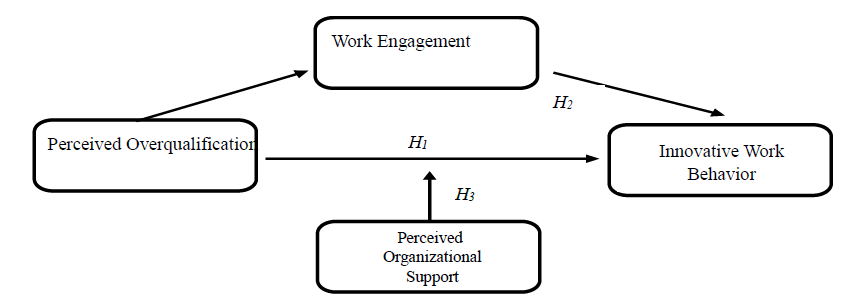
In the research model, POS serves as a moderator, while WE acts as a mediator in the relationships among these variables.
Sample
The research sample consists of 416 white-collar workers in Istanbul, selected using the convenience sampling method. The study's sample consists of 35% employees from the service and 20% from the industrial sector.
Among the participants in the study, 49.04% are women and 50.96% are men. In terms of age distribution, 16.83% are aged 18-25, 62.98% are aged 26-35, 16.59% are aged 36-45, and 3.61% are aged 46 and above. Regarding educational background, 65.63% are bachelor's degree holders, 26.20% have a master's degree or higher, and 8.17% have an associate degree or lower. The sample includes 131 individuals (31.49%) in managerial positions and 285 individuals (68.51%) in non-managerial positions. Geographically, 62.02% of the participants are from Istanbul, 30.2% are from Kocaeli, and 7.69% are from other cities.
Data Collection Instruments
The research questionnaire has five sections. The first section gathers demographic details, including birth date, gender, educational background, and income level, industry sector, experience in the field, time employed within the current organization, job title, and the city of employment. This foundational data is crucial for contextualizing the research findings.
The second section comprises scales that are pertinent to the research variables. To ensure content validity, the scales were carefully translated between Turkish and English by five professionals proficient in business English and two language experts to preserve the intended meanings of the items. The clarity and accuracy of these scales were further enhanced through reviews conducted by six academic professionals and 20 white-collar employees, resulting in necessary adjustments before finalizing the instruments.
To assess PO, a 9-item scale created by Maynard et al. (2006) was utilized. Sample items from this scale feature statements such as "I possess more skills than are required for my job" and "An individual with less education than I possess could perform effectively in my role." As indicated in Table 1, this unidimensional scale demonstrates strong reliability (with α = .86). Furthermore, the factors collectively account for 49.15% of the total variance, indicating a significant contribution to the construct being measured (KMO = .88 and Bartlett's chi-square = 1459.65, p < .001). The scale’s confirmatory factor analysis results show an acceptable fit (X²/df = 2.62, RMSEA = .07, CFI = .86, AGFI = .87, NFI = .85).
Findings from the Exploratory Factor Analysis of the PO Scale
|
Factor Name |
Question Statement |
Factor Loading |
Cronbach's Alpha |
Factor Explained Variance (%) |
||
|
Perceived Overqualification |
PO 1 |
.76 |
.86 |
49.15 |
||
|
PO 2 |
.71 |
|||||
|
PO 3 |
.68 |
|||||
|
PO 4 |
.75 |
|||||
|
PO 5 |
.64 |
|||||
|
PO 6 |
.71 |
|||||
|
PO 7 |
.64 |
|||||
|
PO 8 |
.70 |
|||||
|
PO 9 |
.66 |
|||||
|
|
Total |
.868 |
49.15 |
|||
|
KMO Validity |
|
|
.88 |
|||
|
Barlett |
Chi-square |
|
1459.65 |
|||
|
p |
|
0.001 |
||||
The IWB scale, which has six statements, was developed by Scott and Bruce (1994). Some of the statements in the scale were “I generate creative ideas” and “I support and encourage others' ideas.” The scale demonstrates high reliability, as indicated by a Cronbach's alpha of .93. The factors explain 74.16% of the variance, with a KMO measure of .90 and Bartlett's test yielding a significant chi-square value of 1950.25 (p < .001). Additionally, the confirmatory factor analysis results reveal a good model fit, indicated by the following statistics: X2/df=3.86X^2/df = 3.86, X2/df=3.86, RMSEA = .08, CFI = .97, AGFI = .88, and NFI = .96.
To evaluate WE, Utrecht Scale (UWES) shortened version developed by Schaufeli et al. (2006) comprising nine items that encompass the sub-dimensions: dedication, vigor, and absorption. Sample items from this scale include “I feel vigorous and strong in my work” and “I feel a desire to go to work when I wake up in the morning.” The exploratory factor analysis results for the Work Engagement scale are detailed in Table 2, further supporting the scale's validity and reliability.
The Findings of WE Scale’s Factor Analysis
|
Factor Name |
Question Statement |
Factor Loading |
Cronbach's Alpha |
Factor Explained Variance (%) |
|
|
W1 |
.85 |
|
|
|
Dedication |
W2 |
.85 |
.90 |
37. 69 |
|
|
W5 |
.77 |
|
|
|
|
W3 |
.90 |
|
|
|
Vigor |
W4 |
85 |
.90 |
28 |
|
|
W7 |
.82 |
|
|
|
|
W6 |
.75 |
|
|
|
Absorption |
W8 |
.73 |
.81 |
18. 36 |
|
|
W9 |
.73 |
|
|
|
Total |
|
|
.93 |
84.05 |
|
|
KMO Validity |
|
|
.88 |
|
Barlett |
|
Chi-square |
|
3454.88 |
|
|
|
p |
|
.001 |
The analysis confirmed a three-factor structure for the WE scale (α = .93 and total variance of 84.05%). The Kaiser-Meyer-Olkin (KMO) measure stood at .88, with Bartlett’s test yielding a significant chi-square value of 3453.99 (p < .001). Furthermore, the CFA indicated a satisfactory model fit, with values reported as χ²/df = 4.69, RMSEA = .08, CFI = .97, AGFI = .88, and NFI = .96.
For the assessment of POS, a 36-item scale was developed by Eisenberger et al. (1986). In the study utilized a 10-item short form. “My organization appreciates my contributions” and “My organization takes pride in my accomplishments.” are some of the items examples of the scale.
All scales employed a 6-point Likert scale. For the PO, POS, and IWB scales, ranging from “Strongly Disagree” to “Strongly Agree,” while the WE scale ranging “Never” to “Always.”
Findings
The frequency and normality test outcomes of the scales are detailed in Table 3:
Frequency and Normality Test Results for the Scale Levels
|
|
Ort. |
Min. |
Max. |
sd |
Skewness |
Kurtosis |
|
WE-Vigor |
12.19 |
3.00 |
18.00 |
3.56 |
-0.35 |
-0.40 |
|
WE-Dedication |
13.62 |
3.00 |
18.00 |
3.47 |
-0.81 |
0.42 |
|
WE-Absorption |
13.64 |
3.00 |
18.00 |
3.28 |
-0.62 |
0.02 |
|
WE |
39.46 |
9.00 |
54.00 |
9.32 |
-0.62 |
0.27 |
|
PO |
28.92 |
9.00 |
54.00 |
9.91 |
0.53 |
-0.13 |
|
IWB |
29.39 |
6.00 |
36.00 |
5.48 |
-1.00 |
1.31 |
|
POS |
40.29 |
10.00 |
60.00 |
9.72 |
-0.37 |
-0.02 |
To determine the relationships amidist the variables, correlation analysis had carried out, with the correlation coefficient "r" (spanning from -1 to +1) used to indicate the nature of these relationships. The findings of the correlation analysis are presented Table 4:
Correlation Analysis between Variables
|
M |
SD |
1 |
2 |
3 |
4 |
5 |
6 |
7 |
8 |
9 |
|
|
1. Gender |
1.5 |
0.50 |
- |
|
|
|
|
|
|
|
|
|
2. Age |
31.38 |
7.45 |
.168** |
- |
|
|
|
|
|
|
|
|
3. Educational Background |
3.159 |
0.64 |
12 |
-.12* |
- |
|
|
|
|
|
|
|
4. Duration of Work in the Sector |
3.08 |
1.65 |
.20** |
.53** |
-.07 |
- |
|
|
|
|
|
|
5. Duration of Work in the Institution |
2.59 |
1.59 |
.13** |
.49** |
-.12* |
.77** |
- |
|
|
|
|
|
6. Position |
1.695 |
0.46 |
-.27** |
-.30* |
.03 |
-.54** |
-.46** |
- |
|
|
|
|
7. Perceived Overqualification |
28.92 |
9.91 |
-.00 |
-.10 |
-.06 |
-.18** |
-.08 |
.16** |
- |
|
|
|
8. Work Engagement |
39.46 |
9.32 |
-.21** |
.07 |
.13** |
.15** |
.08 |
-.24** |
-.15** |
- |
|
|
9. Perceived Organizational Support |
40.29 |
9.72 |
.09 |
-.00 |
.12* |
.08 |
.04 |
-.23** |
-.26** |
.47** |
- |
|
10. Innovative Work Behaviour |
29.39 |
5.48 |
.13* |
.00 |
.06 |
.17** |
.10* |
-.22** |
.03 |
.48** |
.29** |
As presented in Table 4, the results showed an absence of statistically significant connection among PO and IWB. (p > .05). Accordingly, the first hypothesis (H1) is not supported. So, there is no a relationship between PO and IWB.
SEM Analysis
To analyze the multivariate model proposed in the research, Structural Equation Modeling was conducted. In Figure 2, the model diagram presents the standardized results, with arrow values representing the model’s the standardized path coefficients.
Structural Equation Model
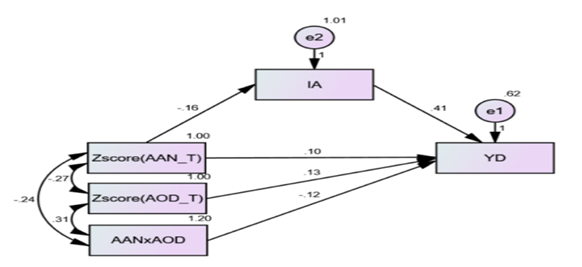
As seen in Table 5, the model constructed in the study exhibits good fit values.
Goodness-of-fit Values for the Structural SEM
|
Fit Index |
Obtained Value |
Interpretation |
|
Chi Square/sd |
3.63 |
Good Fit = <5 |
|
AGFI |
.95 |
Good Fit =>.85 |
|
GFI |
.99 |
Good Fit =>.90 |
|
NFI |
.97 |
Good Fit =>.95 |
|
IFI |
.98 |
Good Fit =>.90 |
|
CFI |
.98 |
Good Fit =>.95 |
|
RMSEA |
.08 |
Acceptable Fit = <.08 |
Discussion and Conclusion
This study primarily sought to analyze the effects of POS as a moderator and JE as a mediator in the PO-IWB relationship. A review of the literature on PO, which forms the foundation of the model constructed in this study, reveals that the majority of the existing research emphasizes the negative outcomes associated with perceived overqualification. Considering the psychological, sociological, and environmental factors contributing to perceptions of overqualification, particularly in national publications, it is evident that the adverse organizational outcomes of perceived overqualification are often highlighted. In countries like Turkey, where consistent economic growth is not observed, the number of universities has increased without corresponding quality, and a significant portion of the qualified workforce is employed in unskilled jobs, encountering the concept of perceived overqualification is inevitable. Therefore, it is crucial to conduct studies on perceived overqualification, especially in national contexts, to support employee well-being and sustainable employment policies during periods when qualified labor is engaged in unskilled jobs.
When examining studies on perceived overqualification and individuals' health conditions, it has been suggested that situations involving perceptions of overqualification may lead to health issues (Akın & Ulukök, 2016). Research has shown that perceptions of overqualification are linked to various negative outcomes, including depression, job stress, difficulties with focus, and concentration issues (Feldman, 1996; Güzel & Sığırcı, 2022). Furthermore, it has been suggested that perceived overqualification may also result in a loss of motivation (Akın & Ulukök, 2016; Güzel & Sığırcı, 2022) and challenges in decision-making (Feldman, 1996; Kır & Akçakanat, 2021).
The research model suggests that employees' feelings of overqualification may not necessarily result in negative consequences for organizations. The concept under study could potentially serve as a basis for strategic human resource practices aimed at long-term improvement of the institution's human capital, depending on various economic, social, and socio-psychological factors.
While some studies indicate a negative correlation between PO and IWB (Guang-Ping & Yu-Ang, 2022; Kanbur & Şen, 2020; Kaymakçı et al., 2022; Yıldız & Arda, 2018), other studies have demonstrated a positive relationship (Qui & Sun, 2022). Job turnover intentions and commitment mediate the relationship between PO and IWB. Şen and Çalışkan (2022) demonstrated a statistically significant positive relationship between white-collar workers' perceptions of overqualification and constructive role-extrinsic behaviors. Similarly, Qui and Sun (2022) indicate that perceived overqualification positively influences innovative behavior, with trust acting as a mediator.
Nonetheless, there is no research in the literature regarding mediating and moderating variables pertinent to the model proposed in this study. A thorough review indicates a lack of direct research analyzing the roles of WE in the connection between PO and IWB. Moreover, existing studies affirm the relationships between PO and WE (Han et al., 2019; Lou & Ye, 2019) as well as between WE and IWB (Choi et al., 2015; Erer, 2021; Uzunbacak et al., 2018).
While the correlation analysis conducted in this study does not reveal a direct link between PO and IWB, the structural equation model that incorporates POS as a moderator and WE as a full mediator demonstrates a significant relationship. Sobel Test results (z = -3.00, p < .005) support the intermediary function of job engagement, confirming its role as a mediator role and revealed a statistically significant moderating effect of POS. This aligns with the research conducted by Luksyte and Spitzmueller (2016), who explored how employees' perceptions of overqualification influenced innovative behaviors and identified POS as a moderating variable in a study involving 113 employees and 19 supervisors. Similarly, Kanbur and Şen (2020) highlighted the POS and IWB among 265 blue-collar workers in the wood industry. Given the limited research exploring the moderating role of POS, this study contributes to the existing literature. In conclusion, the proposed model is significant, as it investigates the moderating effect of perceived organizational support and the mediating impact of job engagement on the relationship between employees' perceptions of overqualification and their innovative behaviors. These results suggest that individuals who perceive themselves as overqualified are more inclined to display innovative behavior when they receive organizational support and maintain high levels of job engagement. While no direct correlation exists between PO and IWB when examined in isolation, the integration of mediating and moderating variables reveals a meaningful relationship. Notably, no prior studies in the literature have explored the model constructed in this research in relation to the identified variables.
Based on a review of studies on perceived overqualification, which forms the foundation of the model, it is evident that the literature mostly focuses on the negative outcomes of PO, leading to the perception of overqualification as an undesirable concept. However, this study’s results indicate that within a model in which organizational support is perceived, and job engagement is present, perceived overqualification becomes a desirable phenomenon rather than a condition to be eliminated. To achieve this, it is essential to reinforce employees' beliefs that their organization supports them and to implement practices that enhance job engagement. Increasing the material and moral support mechanisms provided by organizations, promoting strategic human resource practices such as rotation that supports person-job fit, ensuring that employees' basic needs for self-efficacy are met by institutions, and building psychological and physiological safety elements between individuals and organizations to enable employees to adapt to rapidly changing social, physical, and psychological working conditions can contribute to employees’ feelings aligned with their work, commitment to their jobs, and reinforce their belief in organizational support.
Limitations
The participant pool comprises white-collar employees from medium-sized enterprises situated in Istanbul and Kocaeli. It would be good to broaden the sample to encompass a more diverse group of participants for future research. Moreover, in future research, testing an expanded set of variables within a more complex model will broaden the scope of the finding.
Recommendations for Practitioners and Managers
In light of the findings from this extensive research model, several suggestions are put forward for organizations, HR professionals, and leaders:
To begin with, implementing job rotation programs within companies can prove advantageous, especially for white-collar workers who feel their current positions don't fully exploit their potential. This approach enables employees to apply their expertise across various departments, expanding their professional horizons. Such practices not only strengthen employees' ties to the organization but also reinforce the perception that their contributions are acknowledged and appreciated, thereby boosting engagement and perceived organizational support.
Next, creating personalized career trajectories can provide staff members with alternative growth prospects within the company. For individuals experiencing a disconnect between their abilities and job responsibilities, structured career planning can unveil new opportunities, encouraging them to consider lateral transfers or other professional paths. When workers feel their aspirations are recognized, their motivation and loyalty to the organization tend to improve, fostering a more efficient workforce.
Lastly, companies must demonstrate adaptability in the face of changing circumstances. The swift transformations brought about by the post-pandemic era have highlighted the necessity for flexibility in both work processes and policies. Employers’ adoption of practices such as remote work and flexible hours to accommodate employees' new needs helps employees feel more supported. Enterprises that embrace such adaptability often enjoy higher retention rates and engagement levels, while those adhering to outdated hierarchical structures risk losing valuable talent. Developing work models that align with current realities can help organizations retain their human capital and maintain competitiveness in a rapidly evolving landscape.
Suggestions for Future Research
Future research could investigate the impact of various leadership approaches on the interplay between overqualification, engagement, and innovation. Moreover, analyzing how differences among generations affect these relationships, particularly in the workforce following the pandemic, would provide valuable knowledge for developing targeted organizational approaches.
References
Ahmad, H., & Qadir, M. (2018). Dimensions of perceived overqualification, perceived organizational support and turnover intentions. Journal of Human Resources Management, 1, 18–33.
Akın, A., & Ulukök, E. (2016). Fazla nitelikliliğin bireysel ve örgütsel sonuçlarının incelenmesine yönelik kavramsal bir değerlendirme [A conceptual assessment to examine the ındividual and organizational consequences of overqualification]. İşletme Araştırmaları Dergisi, 8(4), 71–86. https://doi.org/10.20491/isarder.2016.207
Blau, P. M. (1964). Justice in social exchange. Sociological Inquiry, 34(2), 193–206. https://doi.org/10.1111/j.1475-682X.1964.tb00583.x
Choi, S. B., Tran. T. B. H., & Park, B. I. (2015). Inclusive leadership and work engagement: Mediating roles of affective organizational commitment and creativity, social behavior and personality. An International Journal, 43(6), 931–943. https://doi.org/10.2224/sbp.2015.43.6.931
De Jong, J., & Den Hartog, D. (2010). Measuring innovative work behavior. Creativity and Innovation Management, 19(1), 23–36. https://doi.org/10.1111/j.1467-8691.2010.00547.x
Deci, E. L., & Ryan, R. M. (2012). Self-determination theory. Handbook of Theories of Social Psychology, 1(20), 416–436. https://doi.org/10.4135/9781446249215.n21
Eisenberger, R., Huntington, R., Hutchison, S., & Sowa, D. (1986). Perceived organizational support. Journal of Applied Psychology 71(3), 500. https://doi.org/10.1037/t01207-000
Erdogan, B., Bauer, T. N., Peiró, J. M., & Truxillo, D. M. (2011). Overqualification theory, research, and practice: Things that matter. Industrial and Organizational Psychology, 4(2), 260–267. https://doi.org/10.1111/j.1754-9434.2011.01339.x
Erer, B. (2021). Örgütsel destek algısı ve yenilikçi iş davranışı ilişkisinde işe angaje olmanın rolü [The role of work engagement in the relationship between organizational support perception and innovative work behavior]. Türkiye Mesleki ve Sosyal Bilimler Dergisi, (5), 1–12. https://doi.org/10.46236/jovosst.874889
Feldman, D. C. (1996). The nature, antecedents and consequences of underemployment. Journal of Management, 22(3), 385–407. https://doi.org/10.1016/S0149-2063(96)90030-6
Fine, S., & Nevo, B. (2008). Too smart for their own good? A study of perceived cognitive overqualification in the workforce. The International Journal of Human Resource Management, 19(2), 346–355. https://doi.org/10.1080/09585190701799937
Gizlier, Ö. (2021). Algılanan aşırı nitelikliliğin çalışan sesliliği üzerindeki etkisi [The impact of perceived overqualification on employee voice]. Beykoz Akademi Dergisi, 9(1), 57–67. https://doi.org/10.14514/BYK.m.26515393.2021.9/1.57-67
Gouldner, A. W. (1960). The norm of reciprocity: a preliminary statement. American Sociological Review, 161–178. https://doi.org/10.2307/2092623
Guang-Ping, L. I., & Yu-Ang, C. H. E. N. (2022). The influence of perceived overqualification on the innovation behavior of the new generation of employees in the post-1990s. Science Research Management, 43(1), 184.
Güzel, Ş., & Sığırcı, H. (2022). Algılanan Aşırı Nitelikliliğin İş Doyumu Ve Örgütsel Özdeşleşme İle İlişkisi: Doktor ve Hemşireler Üzerine Bir Araştırma [The Relationship of Perceived Overqualification with Job Satisfaction and Organizational Identification: A Study on Doctors and Nurses]. Süleyman Demirel Üniversitesi Vizyoner Dergisi, 13(35), 756–775. https://doi.org/10.21076/vizyoner.1069902
Han, D., Chang, P. C., & Chang, S. (2019). Research on the influence mechanism of perceived overqualification and work engagement, Atlantis Press in 4th International Conference on Humanities Science. Management and Education Technology, 294–298. https://doi.org/10.2991/hsmet-19.2019.52
He, G., & Li, W. (2024). The Paradox of excess: how perceived overqualification shapes innovative behavior through self-concept. Curent Psychology. https://doi.org/10.1007/s12144-024-05703-4
Işık, M. (2019). Algılanan aşırı vasıflılık ve bireysel kariyer planlaması ilişkisinde algılanan örgütsel desteğin düzenleyicilik etkisi [The moderating effect of perceived organizational support on the relationship between perceived overqualification and individual career planning]. Bingöl Üniversitesi Sosyal Bilimler Enstitüsü Dergisi (Busbed), 9(18), 1015–1041. https://doi.org/10.29029/busbed.559814
Kanbur, E., & Şen, S. (2020). Algılanan aşırı nitelikliliğin yenilikçi davranış üzerine etkisi: Algılanan lider desteğinin aracılık rolü [The effect of perceived overqualification on innovative behavior: The mediating role of perceived leader support]. Third Sector Social Economic Review, 55(2), 1060–1077. https://doi.org/10.15659/3.sektor-sosyal-ekonomi.20.05.1197
Kaymakçı, R., Görener, A., & Toker, K. (2022). The perceived overqualification's effect on innovative work behaviour: Do transformational leadership and turnover intention matter? Current Research in Behavioral Sciences, 3, 100068. https://doi.org/10.1016/j.crbeha.2022.100068
Kır, A., & Akçakanat, T. (2021). Algılanan aşırı niteliklilik: Kavramsal bir değerlendirme[ Perceived overqualification: A conceptual assessment]. Visionary E-Journal/Vizyoner Dergisi, 12(31). https://doi.org/10.21076/vizyoner.833581
Kurtessis, J. N., Eisenberger, R., Ford, M. T., Buffardi, L. C., Stewart, K. A., & Adis, C. S. (2017). Perceived Organizational Support: A meta-analytic evaluation of organizational support theory. Journal of Management, 43(6), 1854–1884. https://doi.org/10.1177/0149206315575554
Lou, T., & Ye, M. (2019). Studying on the impact of perceived overqualification on work engagement: The moderating role of future work self-salience and mediating role of thriving at work. Open Journal of Social Sciences, 7(8), 24–36. https://doi.org/10.4236/jss.2019.78002
Luksyte, A., & Spitzmueller, C. (2016). When are overqualified employees creative? it depends on contextual factors. Journal of Organizational Behavior, 37(5), 635–653. https://doi.org/10.1002/job.2054
Maynard, D. C., Joseph, T. A., & Maynard, A. M. (2006). Underemployment, job attitudes, and turnover intentions. Journal of Organizational Behavior, 27(4), 509–536. https://doi.org/10.1002/job.389
Öztürk, M., & Eryeşil, K. (2016). Lider-üye etkileşimi ve örgütsel destek algılarının çalışanların işten ayrılma niyeti üzerindeki etkisi [The effects of leader-member exchange and organizational support perceptions on employees' turnover intention]. Selçuk Üniversitesi Sosyal Bilimler Meslek Yüksek Okulu Dergisi, 19(2), 123–141.
Qui, T., & Sun, C. (2022). Perceived overqualification and its impact on innovative behavior: The mediating role of trust. Journal of Business and Psychology, 37(2), 451–465. https://doi.org/10.3390/su14063493
Ryan, R. M., & Deci, E. L. (2002). Overview of self-determination theory: An organismic-dialectical perspective. In E. L. Deci & R. M. Ryan (Eds.), Handbook of Self-Determination Research (pp. 3–33). University of Rochester Press.
Schaufeli, W. B., Bakker, A. B., & Salanova, M. (2006). The measurement of work engagement with a short questionnaire: a cross–national study. Educational and Psychoogical Measurement, 66(4), 701–716. https://doi.org/10.1177/0013164405282471
Scott, S. G., & Bruce, R. (1994). Determinants of innovative behavior: a path model of individual innovation in the workplace. Academy of Management Journal, 37(3), 580–607. https://doi.org/10.2307/256701
Şen, A., & Çalışkan, E. N. (2022). Algılanan aşırı nitelikliliğin yapıcı rol dışı iş yeri davranışları üzerindeki etkisinde girişimcilik yöneliminin düzenleyici rolü [The moderating role of entrepreneurial orientation in the effect of perceived overqualification on constructive extra-role workplace behaviors]. Management and Political Sciences Review, 4(2), 86–107. http://doi.org/10.57082/mpsr.1183718
Tabachnick, B., & Fidell, L. (2018). Using multivariate statistics, 7th Edition. Pearson.
Uzunbacak, Ö., Akçakanat, Ö., & Çarıkçı, İ. (2018). Lider-üye etkileşimi ile yenilikçi iş davranışı arasındaki ilişkide algılanan örgütsel desteğin ve işe adanmışlığın rolü [The role of perceived organizational support and work engagement in the relationship between leader-member exchange and innovative work behavior]. Danışma Kurulu, 17.
Varma, P. N., & Sandhya, K. (2019). Perceived overqualification at workplace. Epra İnternational Journal Of Research and Development, 4(3), 107–110.
Wayne, S. J., Shore, L. M., & Liden, R. C. (1997). Perceived organizational support and leader-member exchange: A social exchange perspective. Academy of Management Journal, 40(1), 82–111. https://doi.org/10.2307/257021
Yıldız, B., & Arda, Ö. (2018). Algılanan aşırı nitelikliliğin yenilikçi işyeri davranışları üzerindeki etkisinde kolektif şükranın rolü [The role of collective gratitude in the impact of perceived overqualification on innovative workplace behavior]. Journal of Management and Economics Research, 16(2), 141161. https://doi.org/10.11611/yead.397924
Yıldız, M. L. (2021). Liderlik çalışmaları [Leadership studies]. Beta Yayınları.
Zhang, L., Bu, Q., & Wee, S. (2016). Effect of perceived organizational support on employee creativity: moderating role of job stressors. International Journal of Stress Management, 23(4), 400. https://doi.org/10.1037/str0000025
Zhang, Z., Liu, W., & He, W. (2024). How and when differentiated transformational leadership influences employees' taking charge? The roles of psychological availability and collectivism orientation. Leadership & Organization Development Journal, 45(1), 1–20. https://doi.org/10.1108/LODJ-05-2023-0253

Page 1 of
Download Count : 49
Visit Count : 161
Keywords
Perceived Overqualification; Innovative Behaviors; Perceived Organizational Support; Work Engagement

Author(s) Information


How to cite this article:
YILDIZ, M.L., & Çalışkan, E. (2024). Perceived overqualification and innovative work behavior: the role of work engagement and organizational support. International Journal of Behavior Studies in Organizations, 12, 23-35. https://doi.org/10.32038/jbso.2024.12.03
Acknowledgments
Funding
Not applicable.
Conflict of Interests
No, there are no conflicting interests.
Open Access
This article is licensed under a Creative Commons Attribution 4.0 International License, which permits use, sharing, adaptation, distribution and reproduction in any medium or format, as long as you give appropriate credit to the original author(s) and the source, provide a link to the Creative Commons license, and indicate if changes were made. You may view a copy of Creative Commons Attribution 4.0 International License here: http://creativecommons.org/licenses/by/4.0/